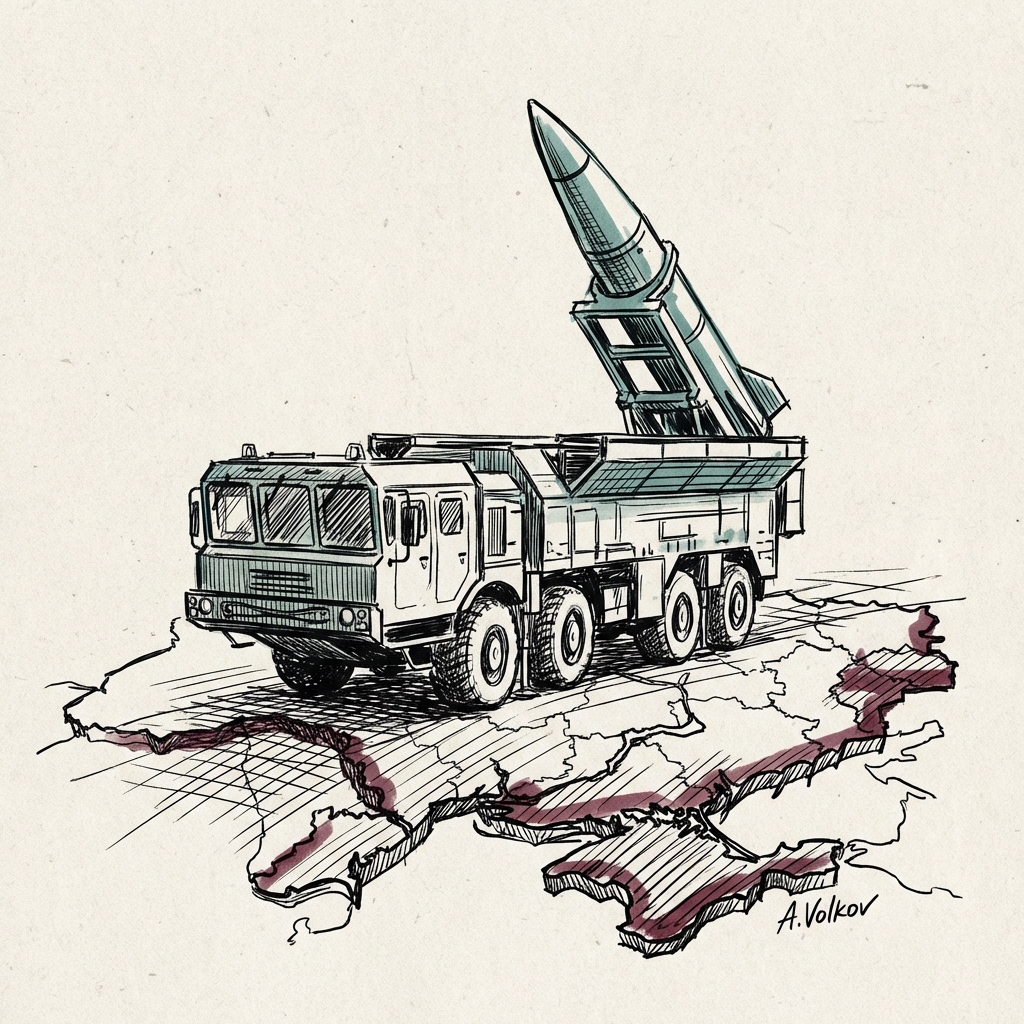
Iskander
Russia's primary short-range Ballistic missile; increasingly penetrating Ukraine's depleted PAC-3 cover.
Last refreshed: 13 July 2026 · Appears in 1 active topic
If Ukraine can threaten Iskander launchers on their way to Red Square, how exposed are they in the field?
Timeline for Iskander
Overnight barrage shifts no front line
Russia-Ukraine War 2026Ballistic intercept rate falls to zero
Russia-Ukraine War 2026Mentioned in: Iskander kills three in Kryvyi Rih
Russia-Ukraine War 2026Achieved a 56% penetration rate in the 14-15 June barrage, the highest of 2026
Russia-Ukraine War 2026: Iskander gap exposes the Patriot shortageDeployed in the barrage; only 15 of 34 intercepted
Russia-Ukraine War 2026: Russia torches the Lavra in night barrageBackground
The Iskander (9K720) is Russia's primary short-range Ballistic missile system, with two operational variants: the Iskander-M Ballistic missile (range up to 500 km) and the Iskander-K cruise missile carrier. Russia has employed Iskander extensively in mass strikes against Ukrainian cities, pairing ballistic rounds with cheap Shahed drones to overwhelm layered air defences. On the night of 14-15 June 2026, Russia fired 34 Iskander-M missiles as part of a 611-drone, 70-missile barrage; Ukraine intercepted only 15, a 56% penetration rate that represents Iskander's most effective performance of the war and the clearest signal yet that PAC-3 MSE stocks are rationed.
Ukraine has run a sustained counter-Iskander campaign through 2026, striking the launcher-repair ecosystem rather than launchers in the field. Between 1 and 15 March, Ukraine destroyed over 20 Russian air-defence assets across Crimea and occupied oblasts, degrading the defensive umbrella over Iskander transit routes. The Kremniy El plant in Bryansk, struck by Ukraine in March, manufactures guidance components used in Iskander systems. On 29 April, Russia stripped its Victory Day parade of all missile launchers and armoured vehicles for the first time in roughly twenty years, attributed by Western analysts to Ukraine's deep-strike reach threatening the transit of heavy hardware through Moscow Oblast.
Iskander's ballistic trajectory and terminal manoeuvring make it the hardest Russian delivery system for Ukraine to stop. Each PAC-3 MSE Intercept costs approximately $13.5 million; with US exports frozen pending a global inventory review, Ukraine cannot replace rounds faster than Russia fires them. The asymmetric economics favour Russia: Iskander rounds cost a fraction of the interceptors they consume. Until the export freeze lifts or alternative ballistic interceptors reach Ukraine in volume, penetration rates achieved through June 2026 will likely worsen. Russia included Iskander-M rounds again in the overnight barrage of 10-11 July 2026, part of a mixed strike of 6 Iskander-M/S-400 ballistic missiles, 4 Cruise Missiles, 2 anti-radar missiles and 121 drones; ISW recorded only marginal front-line movement on either side that night, underlining that missile volume alone no longer buys Russia decisive ground.
How many Iskander missiles did Ukraine intercept in June 2026?
Why can Ukraine not stop Russian Iskander missiles?
What is the range of the Russian Iskander missile?
Where is the Iskander guidance system manufactured?
Did Russia use Iskander missiles in the July 2026 barrage on Ukraine?

