Holon
Israeli city south of Tel Aviv, struck by Iranian cluster missiles as air defences failed.
Last refreshed: 30 March 2026
Can Israeli air defences protect a city of 200,000 from cluster munitions?
Timeline for Holon
Received missile debris falling near Knesset and Holy Sepulchre
Iran Conflict 2026: Debris near Knesset and Holy SepulchreHit by cluster missiles breaching Israeli air defences
Iran Conflict 2026: Cluster missiles breach Israel defencesBackground
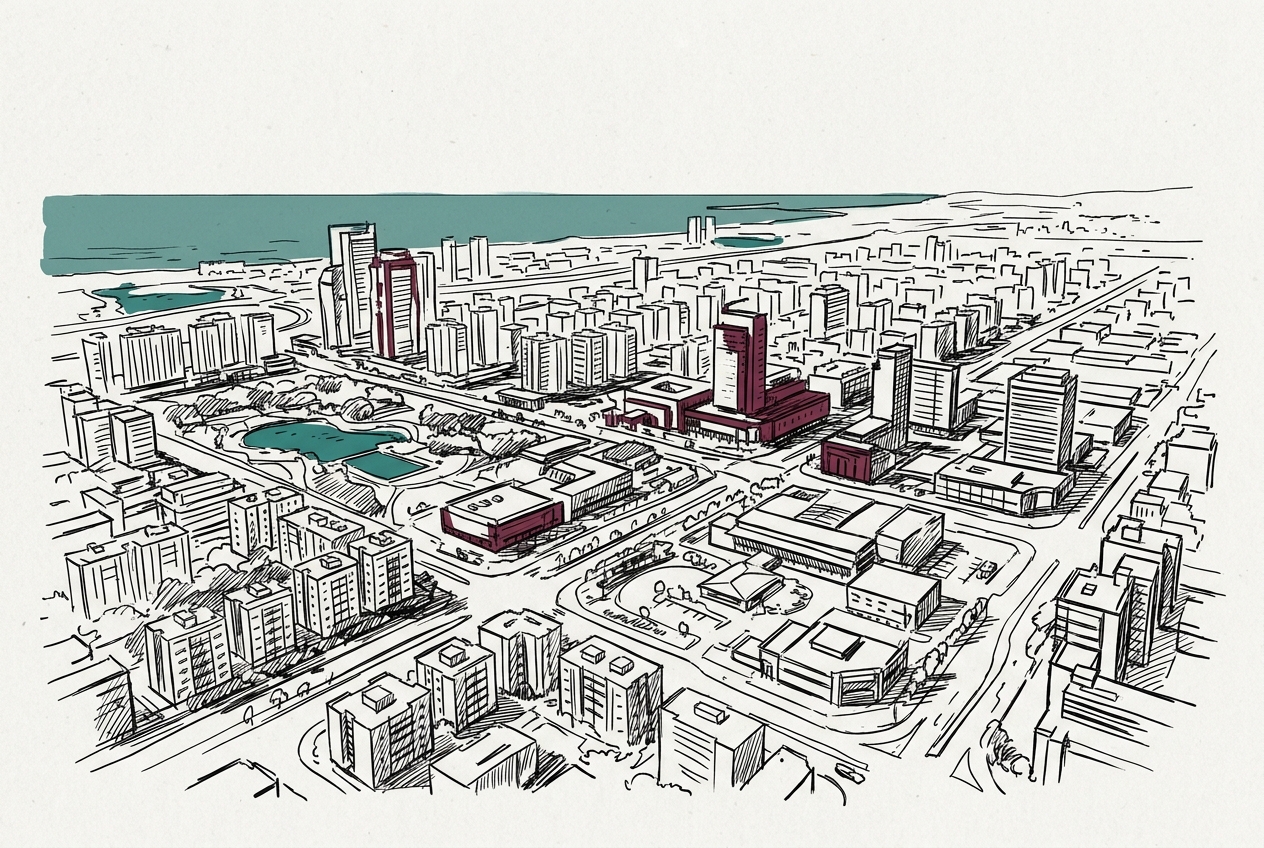
Holon is a city of roughly 200,000 people in the Tel Aviv District, on the southern fringe of the Tel Aviv metropolitan area in central Israel. Founded in 1940, it is one of Israel's most densely populated urban centres, home to a significant industrial zone and a large Russian-speaking community. Its position roughly 5 kilometres from Tel Aviv city centre places it within the coastal corridor that Iranian planners have long designated as a primary target zone.
Holon entered international headlines when Iran fired a barrage of ballistic missiles at Israel and impacts were confirmed in the city for the first time. At least 11 cluster missiles penetrated air defences, with one dispersing 70 submunitions across a residential area. The Israel Defense Forces (IDF) acknowledged it was "investigating" the gap in Iron Dome and Arrow-3 coverage that allowed the strikes through.
The confirmed hits represent a qualitative shift: not just kinetic impacts but area-saturation munitions in a dense civilian district. Iran's deployment of heavy warheads exceeding one tonne paired with cluster submunitions tested two distinct failure modes simultaneously. Whether Israel's layered air defence architecture can protect its most populated corridor remains the open question of the conflict.
What is Holon, Israel?
Was Holon hit by Iranian missiles?
How far is Holon from Tel Aviv?
What is the difference between the Holon and Shoham strikes in 2026?
Did Iron Dome stop the missiles that hit Holon?


