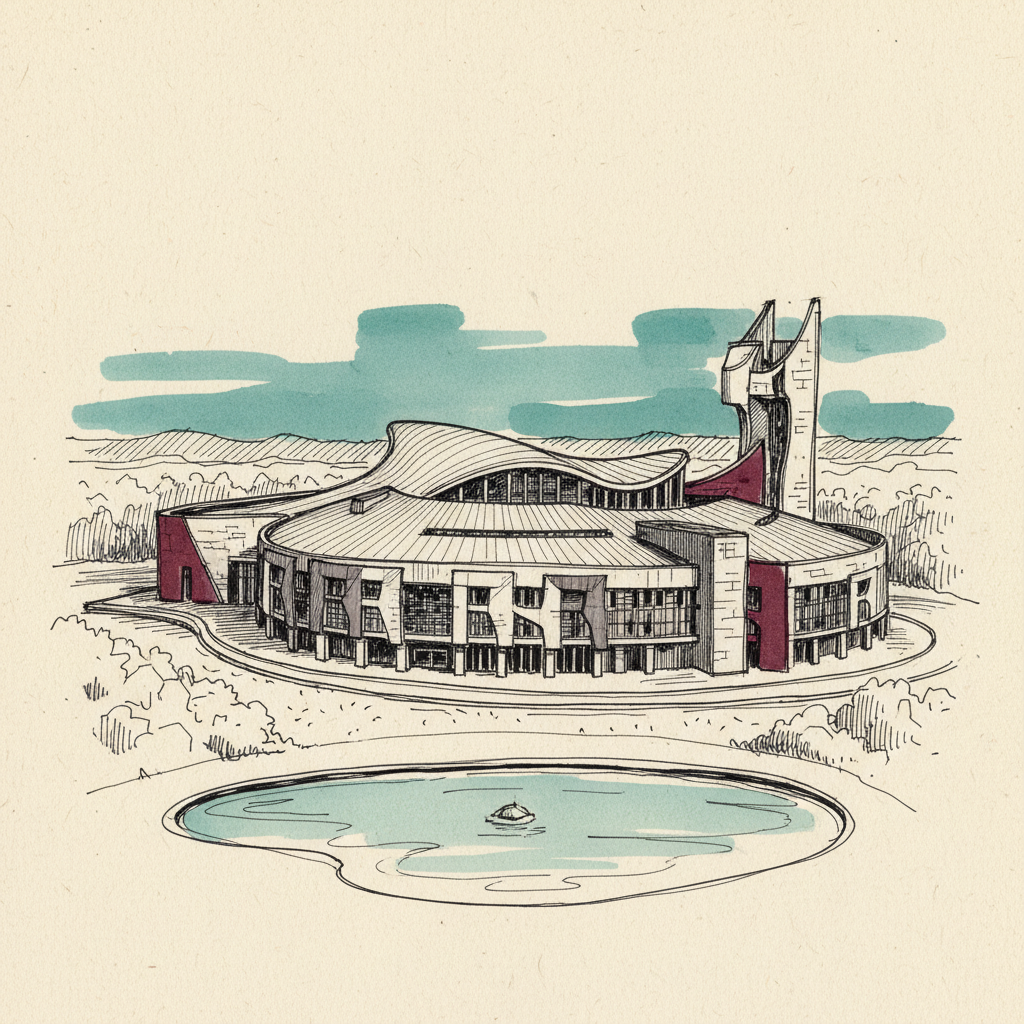
Holyrood
The Scottish Parliament building and the institution it houses; site of the 2026 election that brought Reform UK into Holyrood for the first time.
On 22 September 2026 MSPs voted 84 to 18 for the First Minister's right-to-decide motion, after first adopting Scottish Labour's child-poverty amendment 91 to 12.
Last refreshed: 7 October 2026 · Appears in 3 active topics
What does a five-party Holyrood mean for the SNP's ability to govern and pursue independence?
Timeline for Holyrood
Mentioned in: Marra's MSPs vote for right to decide
UK Local Elections 2026Mentioned in: Holyrood booked £1.1bn of ScotWind draws
Is Britain Actually Broke?Mentioned in: Scottish MSPs back data-centre planning pause
Data Centres: Boom and BacklashMentioned in: Lennon is off the Scottish Labour ballot
UK Local Elections 2026Mentioned in: Carol Ney quits Reform over a post
UK Local Elections 2026Background
Holyrood is the seat of the Scottish Parliament in Edinburgh, Scotland's devolved legislature. It passes legislation, approves budgets and scrutinises the Scottish Government. Its 129 members are elected by the Additional Member System, which tops up constituency seats with regional-list seats.
The election of 7 May 2026 left no party with a majority. The SNP won 58 seats, seven short of 65; Labour and Reform UK, entering Holyrood for the first time, took 17 each, the Scottish Greens 15 and the Scottish Conservatives 12. Turnout was 53.0%.
On 16 September 2026 MSPs voted 80 to 26, with 15 abstentions, for a motion that no data-centre planning decision be taken until national guidance is published.
The chamber backs a right to decide
The chamber held five divisions on 22 September 2026. Michael Marra's amendment, making child poverty "an immediate national priority" and recommitting to the 2030 target in the Child Poverty (Scotland) Act 2017, carried 91 to 12. The First Minister's motion as amended then carried 84 to 18. SNP, Labour and Scottish Green members voted for it; Scottish Conservative and Scottish Liberal Democrat members voted against. Reform UK's 17 MSPs voted in none of the divisions, and the amendment in Malcolm Offord's name was spoken to but never moved.
A motion of this kind states the Parliament's view and creates no legal duty. The wording echoes the Claim of Right rather than calling for a referendum.
Holyrood asks for a Section 30 order
At its first sitting on 26 May 2026, the new Parliament backed Swinney's demand for a Section 30 order by 72 votes to 55. Downing Street turned it down within hours, in a briefing to journalists, not in writing to Edinburgh.
Under the Scotland Act 1998 only the UK Government can make such an order, and the Supreme Court confirmed in 2022 that Holyrood cannot legislate for a referendum alone. On 7 July Andy Burnham told Scottish Labour MPs that he would refuse any Section 30 request, and offered extra devolved powers instead.