Henichesk
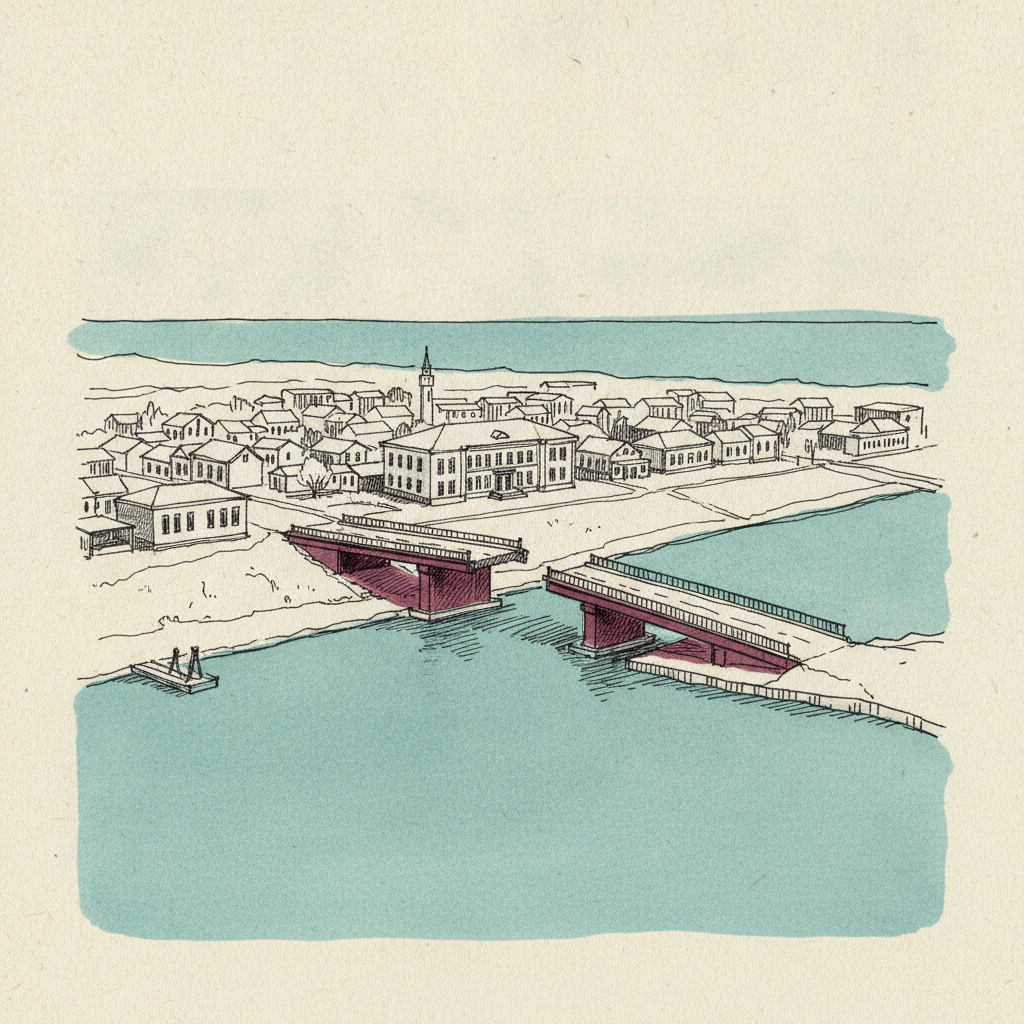
Henichesk is a port town in Russian-occupied Kherson Oblast on the north shore of the Azov Sea whose road bridge was reduced to a single lane by June 2026, constraining Russian east-bank logistics.
Last refreshed: 24 June 2026 · Appears in 1 active topic
Why does the Henichesk bridge matter so much to Russia's east-bank supply lines?
Timeline for Henichesk
Occupied Kherson town whose bridge was reduced to a single lane
Russia-Ukraine War 2026: Bridges cut on Kherson's east bankBackground
Henichesk is a small port town of roughly 20,000 people on the northern shore of the Azov Sea, at the narrow isthmus separating the Azov from the Syvash lagoons. It sits in what was Kherson Oblast and has been under Russian occupation since the early weeks of the 2022 invasion. The town's strategic importance derives almost entirely from its road bridge, which is the main overland link between the mainland and the Arabat Spit, a narrow peninsula running south along the Azov coast toward Crimea. In June 2026 Ukrainian strikes reduced the Henichesk bridge to a single usable lane, compounding the logistics degradation on Russia's east-bank supply network at the same time as the Dnipro Hydroelectric Dam and Preobrazhensky bridges were hit.
Russia occupies the entire left (east) bank of the Dnipro in Kherson Oblast following its November 2022 withdrawal from Kherson city. The east bank is a logistically shallow position: the Dnipro to the west and the Azov coast to the south create a near-peninsula of occupied territory. Russian forces depend on a small number of bridges and Crimea-linked routes to sustain front-line positions. Henichesk sits at the southern end of this axis; degrading its bridge forces Russian logistics to route through longer and more exposed detours or across water by pontoon.
Ukraine's interdiction campaign against Russian east-bank bridges is a central strand of its summer 2026 strategy. By reducing throughput at Henichesk while simultaneously targeting the Zaporizhzhia-axis infrastructure, Kyiv is attempting to constrain Russian resupply without having to cross the river in force. The Arabat Spit route that Henichesk guards also carries civilian traffic and potentially emergency routes for Crimea; any sustained closure raises the operational pressure on Russian planners.
Where is Henichesk and why does its bridge matter?
What damage did Ukraine do to the Henichesk bridge?
How does Russia supply its troops on the east bank of the Dnipro?

