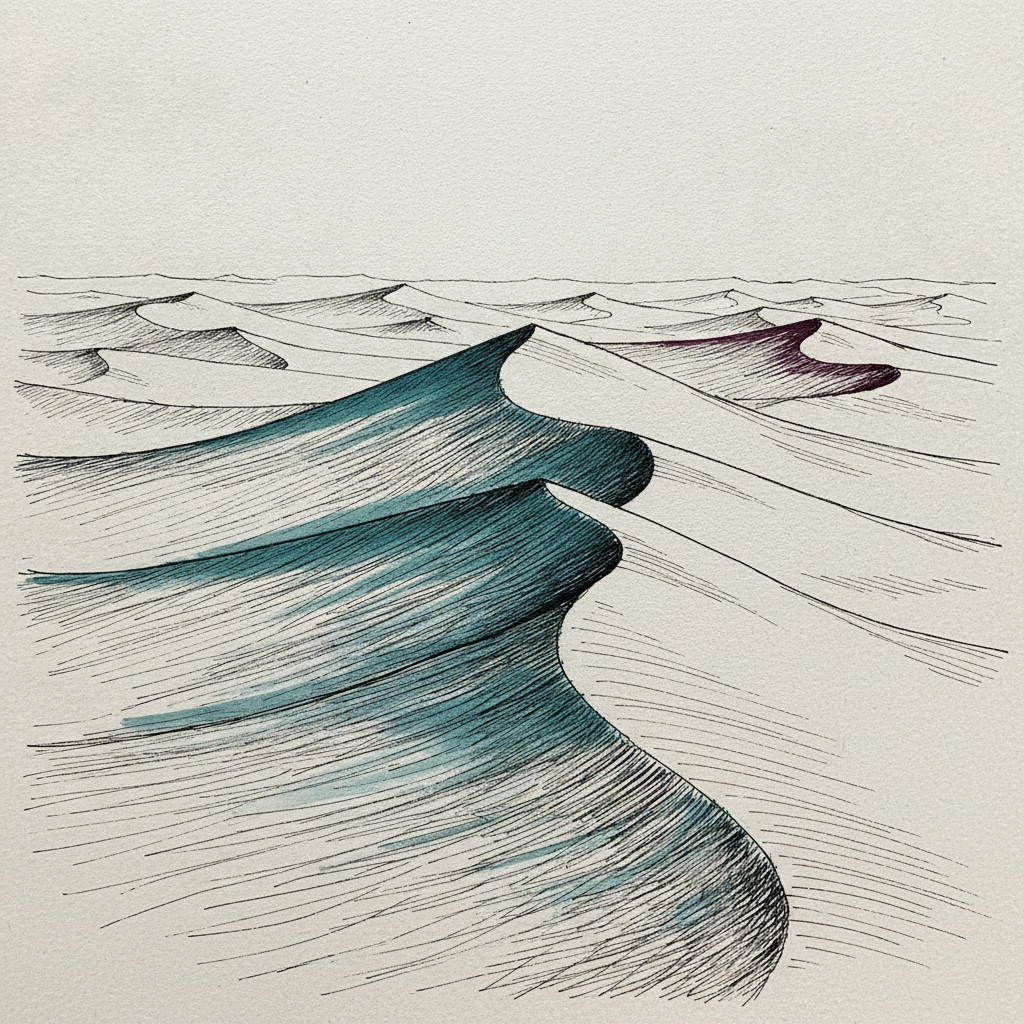
Empty Quarter
World's largest continuous sand desert, spanning Saudi Arabia, Oman, the UAE and Yemen.
In 1968, Saudi Aramco found the Shaybah oil field beneath the Empty Quarter, a 550,000-square-kilometre desert spanning Saudi Arabia, Oman, the UAE and Yemen.
Last refreshed: 22 October 2026
Why does the Empty Quarter matter to Gulf energy infrastructure?
Timeline for Empty Quarter
Attack on Dammam airport kills two
Iran Conflict 2026Mentioned in: 51 drones downed; one near embassies
Iran Conflict 2026Mentioned in: Iran targets Saudi Shaybah oilfield
Iran Conflict 2026Background
The Empty Quarter, or Rub al-Khali, covers about 550,000 square kilometres across Saudi Arabia, Oman, the United Arab Emirates and Yemen. Roughly 430,000 square kilometres lie in Saudi Arabia. Dunes, salt flats and gravel plains dominate a region where summer temperatures can exceed 50 degrees Celsius and annual rainfall is often below 50 millimetres.
The desert contains oil and gas resources beneath its sparsely populated surface. Saudi Aramco discovered the Shaybah oil field there in 1968 and later built production and transport facilities in the remote basin. The Empty Quarter also shapes borders and overland routes across the southern Arabian Peninsula. Its size, climate and limited water make permanent settlement rare, while energy sites and desert crossings give the region strategic value.
Reference
Why is it called the Empty Quarter?
How large is the Empty Quarter?
Where is the Empty Quarter?
What is the Empty Quarter?
Why is the Empty Quarter in the news?
Written with AI from Lowdown's published reporting. Not individually reviewed by an editor. Updated 22 October 2026. Editorial standards.