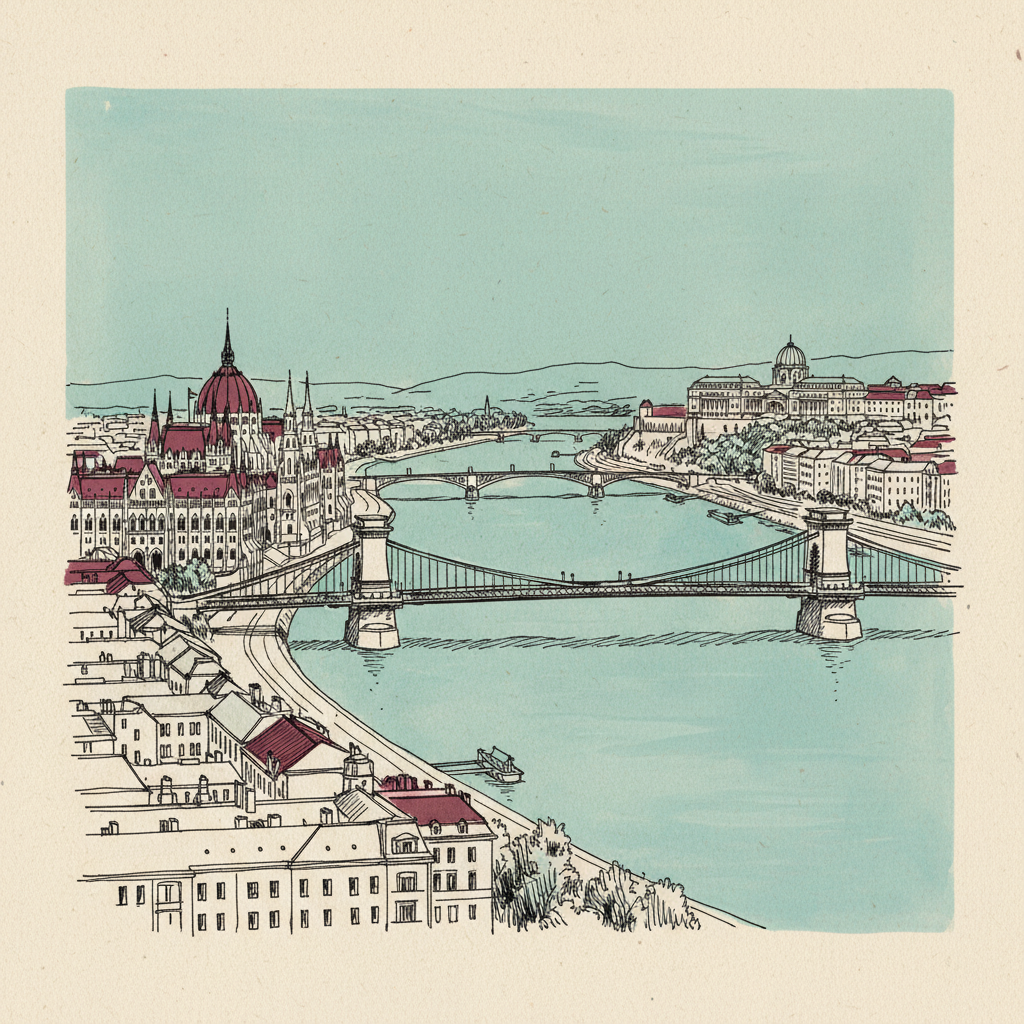
Budapest
Hungarian capital; seat of the new Magyar government following Fidesz's April 2026 defeat.
On 12 April, Budapest became the seat of Péter Magyar's new government after Tisza won 137 of Hungary's 199 parliamentary seats, ending Viktor Orbán's 16-year rule.
Last refreshed: 22 September 2026 · Appears in 2 active topics
Will Budapest's new cabinet unlock the €9.1bn tranche before the mid-June deadline?
Timeline for Budapest
Mentioned in: Hungary adds €25m to Poland-led bid
European Tech SovereigntyMentioned in: Budapest blocks two of Ukraine's clusters
Russia-Ukraine War 2026Mentioned in: US holds Iran's 24-hour visa leash
2026 FIFA World CupMentioned in: Hungary's challenge is now a one-player game
European Energy MarketsMentioned in: Ban spares the contracts that matter
European Energy MarketsBackground
Budapest is Hungary's capital and the seat of its national government. It is where the government formed after Tisza's 12 April 2026 election victory directs Hungary's domestic and European policy.
The city has long been Hungary's political centre. Decisions taken by its Cabinet shape the country's positions in EU institutions, including policy on Ukraine, energy and enlargement.
Budapest's significance lies in that institutional role rather than in any single vote or diplomatic dispute. A change of government in the capital can alter Hungary's stance, while the city remains the permanent seat through which those positions are made and represented.
Budapest hosts Hungary’s political reset
Budapest became the operational centre of Hungary's change of government on 12 April, when Péter Magyar's Tisza Party won 137 of 199 parliamentary seats. The result gave the incoming administration a two-thirds majority and ended Viktor Orbán's 16 years in power.
The new Cabinet was sworn in in Budapest on 12 May. Its foreign minister promised to end Hungary's practice of blocking EU decisions on Ukraine, changing how the capital's government is heard in Brussels.
Budapest shifts EU energy policy
Budapest's policy direction changed on 15 June, when Prime Minister Péter Magyar dropped Hungary's court fight against the EU ban on Russian gas. His government called dependence on Russian gas a security risk, leaving Slovakia to pursue the challenge alone.
The decision matters because Hungary's long-term TurkStream supply contracts remain separate from the ban and can run into 2027. Budapest therefore remains exposed to the route, but its government no longer contests the EU measure that ended shorter contracts.
Reference
Is Budapest on the TurkStream gas pipeline route?
Has Hungary approved the EU loan to Ukraine?
What does the Hungary election result mean for EU funding to Ukraine?
Why did Putin announce a ceasefire on Hungary's election day?
Who won the Budapest election in April 2026?


Written with AI from Lowdown's published reporting. Not individually reviewed by an editor. Updated 22 September 2026. Editorial standards.