Brexit
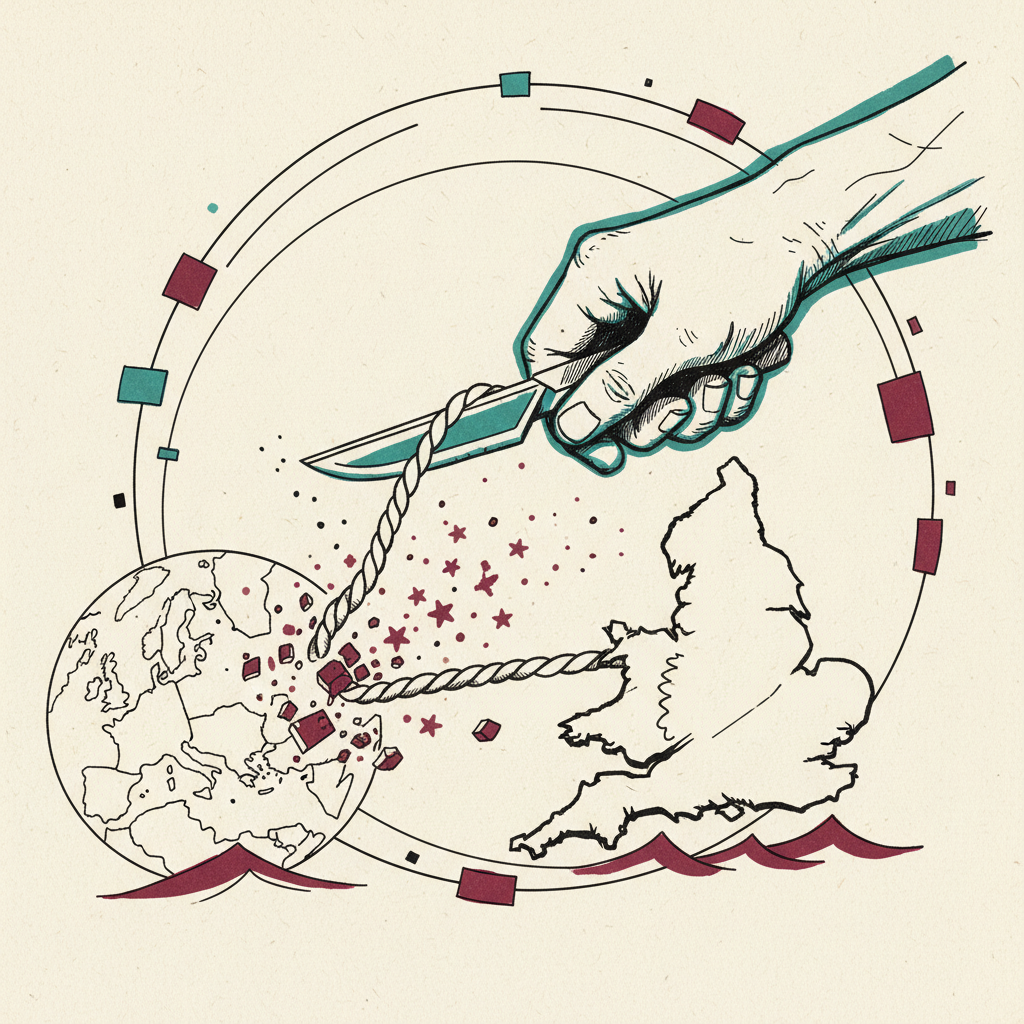
UK's 2020 departure from the European Union after the 2016 referendum.
Brexit's own DExEU precedent, a department created for one task and wound down cleanly in 2020, became the live comparison when Britain abolished DSIT on 20 July 2026, splitting its functions three ways.
Last refreshed: 26 July 2026
How does Brexit explain the political lineage of Reform UK in 2026?
Timeline for Brexit
Mentioned in: Lib Dems take Almondbury off Reform
UK Local Elections 2026Mentioned in: Britain abolishes DSIT, splits its remit three ways
European Tech SovereigntyMentioned in: UK Horizon Europe share rebounds to 9.3%
UK Startups and InnovationMentioned in: UK and France sign science pact
UK Startups and InnovationReform loses 22 councillors in 14 days
UK Local Elections 2026Background
Brexit refers to the United Kingdom's departure from the European Union, formally completed on 31 January 2020 following the 2016 referendum in which 51.9 per cent voted to leave. The referendum was the culmination of decades of Eurosceptic pressure within and outside the Conservative Party, most visibly channelled by UKIP under Nigel Farage, which secured 12.6 per cent of the vote in the 2015 general election and pressured David Cameron into calling the referendum. The UK completed the transition period on 31 December 2020, leaving the single market and customs union.
Brexit's political legacy is central to understanding Reform UK's rise. The Brexit Party, founded in 2019, was the direct successor to UKIP, and Reform UK emerged in 2021 as its successor in turn; the through-line is the organisational and donor network Farage built over 30 years, now consolidated into a conventional party with professional campaign infrastructure.
The 2016 referendum also exposed divergent national identities that continue to shape 2026 politics: Scotland voted 62 per cent Remain, Wales voted Leave, and post-industrial Leave towns that voted Labour until 2019 are now Reform strongholds.
Its DExEU precedent returns to Whitehall
Hours after Andy Burnham entered Downing Street on 20 July 2026, the government abolished the Department for Science, Innovation and Technology, splitting its work across the Cabinet Office and two new departments . Whitehall commentary reached straight for Brexit's own institutional template: the Department for Exiting the European Union, created in 2016 for a single defined task and wound down cleanly once Brexit was delivered in 2020.
The comparison cuts against DSIT: DExEU is the model of a department retired on schedule, while DSIT's mid-mandate abolition raises a different question, whether a standing technology ministry, rather than a mission with an end date, was ever the right shape for AI policy.
Its Leave towns swing toward insurgents
Brexit's post-industrial Leave geography kept reshaping British politics through spring 2026: Reform swept Sunderland and Wakefield outright on 7 May, taking councils in towns that voted Labour until 2019 , and its elected base tripled to 2,126 councillors within a day.
The surge proved volatile rather than settled: Reform lost 22 of those councillors within 14 days by 21 May . The pattern confirms the Leave/Remain map drawn in 2016 is still the best predictor of where Britain's party system is realigning, but it does not guarantee the realignment holds.
Its old donor network sets records
The 30-year donor and activist network Nigel Farage built across UKIP, the Brexit Party and Reform UK produced a record UK political gift on 11 May 2026, when Christopher Harborne gave Reform £9m, the largest single donation in British political history. Harborne's combined footprint across the three organisations and a separate personal gift to Farage runs to roughly £37m.
That same gift chain drew a formal Standards Commissioner inquiry into an undeclared £5m Farage received personally in 2024 . The Commissioner's inquiry, opened in 2026, now scrutinises Farage's own finances rather than only the party accounts his donor network has always funded.