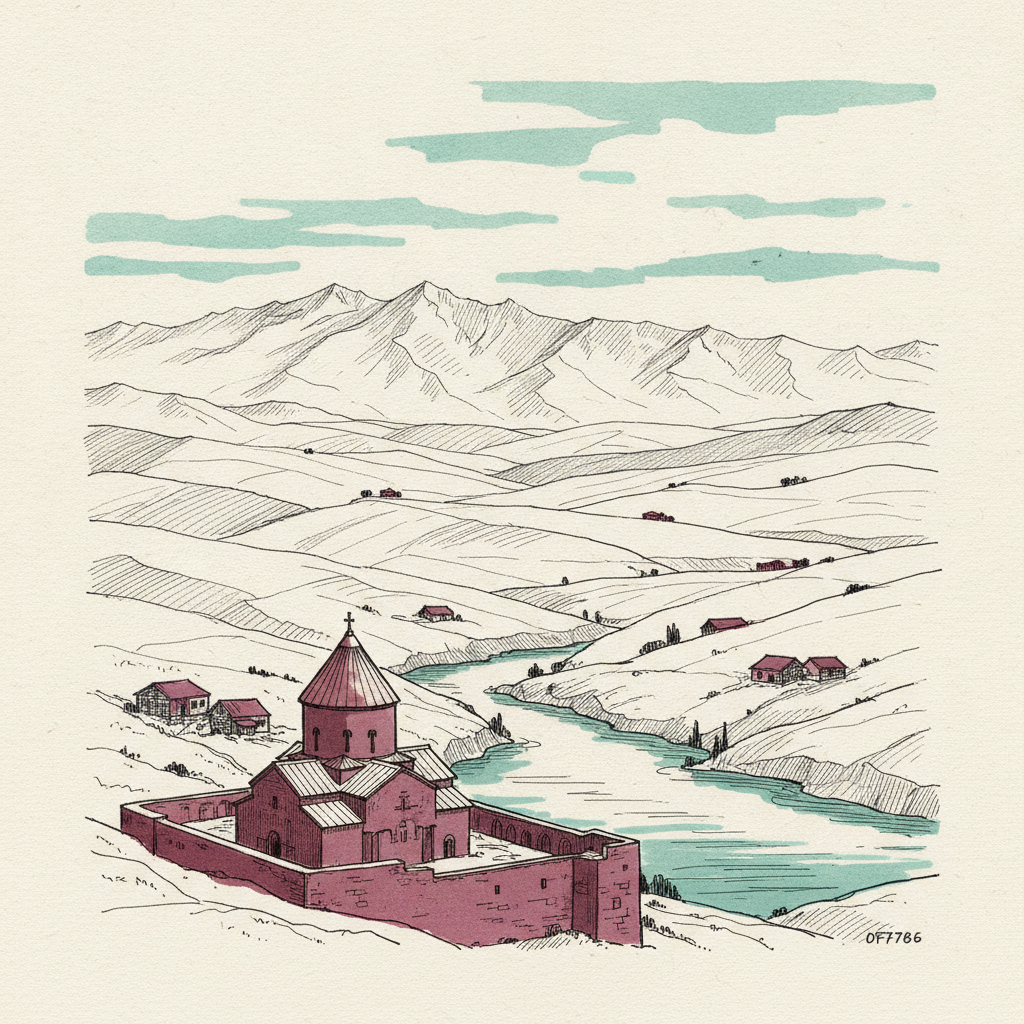
Armenia
Landlocked South Caucasus republic between Turkey, Azerbaijan and Iran; lost Nagorno-Karabakh to Azerbaijan in 2023.
Armenia hosted Iran's President Masoud Pezeshkian in Yerevan on 16 October 2026 for COP17, where Prime Minister Nikol Pashinyan pressed for wider trade and energy ties with Iran four months after signing a US transit-route framework.
Last refreshed: 18 October 2026 · Appears in 1 active topic
Can Armenia keep Iran close while building a US-backed transit route?
Timeline for Armenia
Sent its prime minister to meet Pezeshkian
Iran Conflict 2026: Pezeshkian goes to COP17 in YerevanMentioned in: Helsing HX-2 confirmed in Ukraine combat
Drones: Industry & DefenceMentioned in: Rosatom evacuation done; 24 volunteers remain
Iran Conflict 2026Mentioned in: CSIS: Russia's AI drones run mostly on US chips
Drones: Industry & DefenceMentioned in: Fourth Bushehr Strike Kills Guard; Rosatom Evacuates
Iran Conflict 2026Background
Armenia is a landlocked South Caucasus republic of roughly 3 million people, bordered by Turkey, Azerbaijan, Iran and Georgia, with its capital at Yerevan. It lost Nagorno-Karabakh to Azerbaijan in September 2023, which pushed it away from Reliance on Russia's security guarantee.
It now balances two partners. Iran gives Armenia its only open trade route that avoids hostile neighbours, through the Meghri-Norduz crossing. In June 2026 Yerevan and Washington signed a framework agreement on the Trump Route for International Peace and Prosperity (TRIPP), a US-backed transit route through southern Armenia that threatens Iran's northern border trade. Marco Rubio signed on 1 June and Armenia's foreign minister on 4 June.
Yerevan has stayed neutral in the Iran war. It watched IRGC drones strike the airport of neighbouring Nakhchivan, Azerbaijan's exclave, on 5 March 2026. When Pezeshkian came to Yerevan for COP17 in October, Pashinyan told him Armenia wants wider trade and energy ties with Iran.
Where is Armenia?
What happened to Nagorno-Karabakh?
How does the Iran war affect Armenia?
What is the Zangezur corridor?
Is Armenia in NATO or CSTO?
What is the TRIPP agreement between Armenia and the US?
Did Iran's president visit Armenia in 2026?



Written with AI from Lowdown's published reporting. Not individually reviewed by an editor. Updated 18 October 2026. Editorial standards.