2025-26 Iranian Protests
Largest domestic protests since 1979 across 100+ Iranian cities, triggered by economic collapse and currency devaluation, indicating regime had already lost popular support before military strikes.
Last refreshed: 30 March 2026 · Appears in 1 active topic
Can a government at war demand loyalty from streets it was already losing?
- What are the 2025-26 Iranian protests?
- The 2025-26 Iranian protests were Iran's largest domestic uprising since the 1979 revolution, spreading across more than 100 cities. They were triggered primarily by currency devaluation and economic collapse that made basic goods unaffordable, and represented the fourth major protest cycle since 2009.
- What caused the 2025-26 Iranian protests?
- The immediate trigger was accelerating currency devaluation that made food and basic goods inaccessible for working-class families. Underlying causes included accumulated grievances from decades of economic mismanagement, sanctions pressure, and IRGC dominance of the economy, building on three prior protest cycles since 2009.
- How do the 2025-26 protests compare to Mahsa Amini protests?
- The Mahsa Amini protests of 2022-23 were primarily triggered by the death of a Young woman in morality police custody and were strongly gendered in character. The 2025-26 protests were driven more directly by economic collapse and were geographically broader, spanning 100+ cities with a working-class economic base.
- Did the Iranian protests affect the 2026 conflict?
- The protests pre-dated the 2026 military strikes and fundamentally shaped the domestic context: when war began, the Iranian government was asking a population it had been suppressing to rally around the flag. The protests demonstrated the regime's legitimacy was already severely weakened before external military pressure was applied.
- How many people were killed in the 2025-26 Iranian protests?
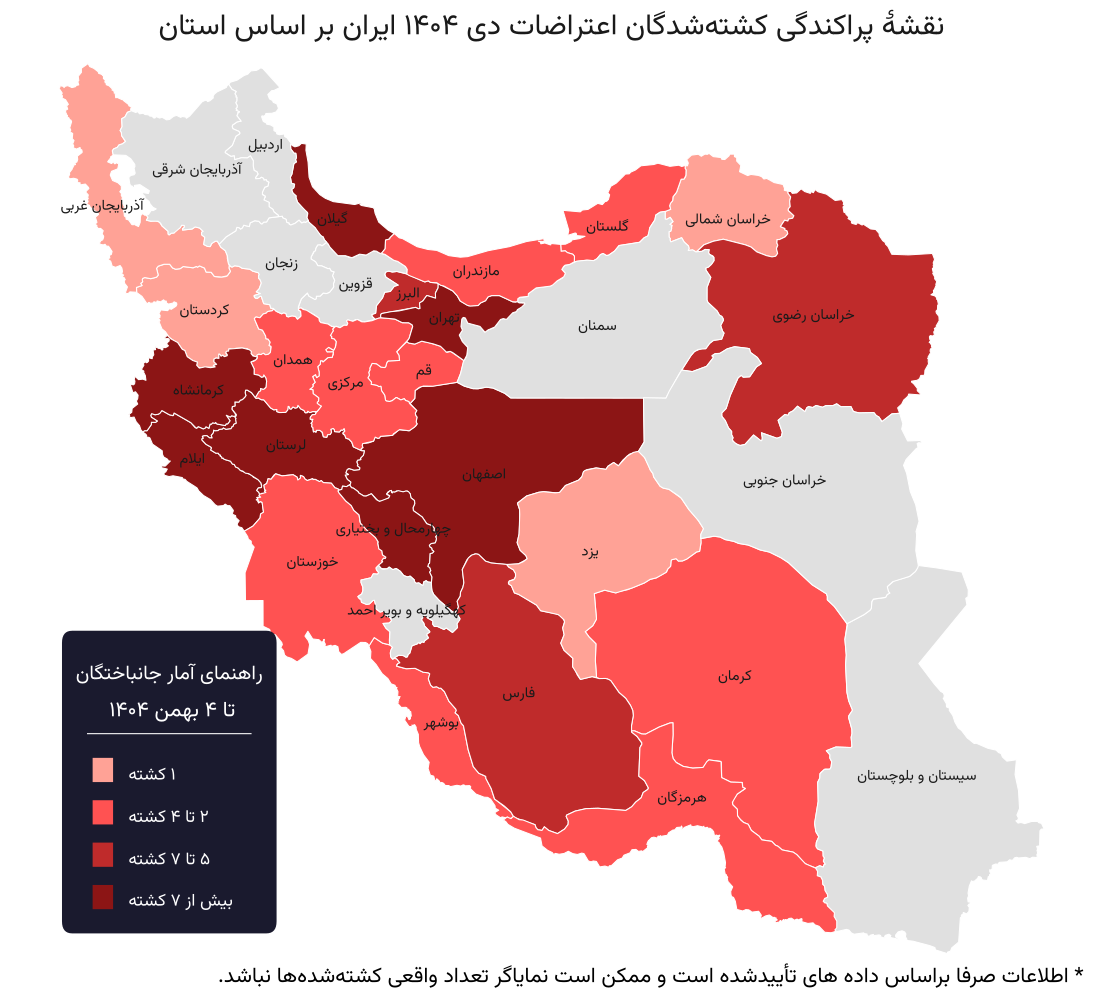
- Casualty figures for the 2025-26 protests are not fully confirmed, but the preceding 2019 fuel-price protests saw an estimated 1,500 people killed by security forces according to Amnesty International, setting a benchmark for the scale of potential state violence. The IRGC and its Basij paramilitary were the primary instruments of suppression.Source: Amnesty International estimate for 2019 protests
Background
The 2025-26 protests were Iran's largest domestic uprising since the Iranian Revolution of 1979, spreading across more than 100 cities as accelerating currency devaluation made basic goods inaccessible for millions of working-class families. They were the fourth major protest cycle since 2009, following the Green Movement, the 2019 fuel-price demonstrations, and the 2022-23 Mahsa Amini protests triggered by a Young woman's death in morality police custody.
By the time military strikes began in 2026, the protests had already demonstrated that coercive capacity alone could not restore the government's popular legitimacy. That pre-existing rupture between state and society shaped how Iranians inside the country received both the strikes and Tehran's wartime narrative: a government asking a population it had been suppressing to rally around the flag.
The protests embody an unresolved question about the Islamic Republic's long-term viability: whether a regime that must choose between economic reform and ideological rigidity can survive sustained popular dissent without the safety valve of prosperity. The Islamic Revolutionary Guard Corps (IRGC) remained the dominant instrument of internal suppression across all four cycles, creating a direct continuity between protest repression and the wartime security apparatus.