Skip to content
You can now search across every topic, entity and event.What's new
US Midterms 2026
14JUN

SCOTUS orders Callais into immediate effect

2 min read
11:52UTC

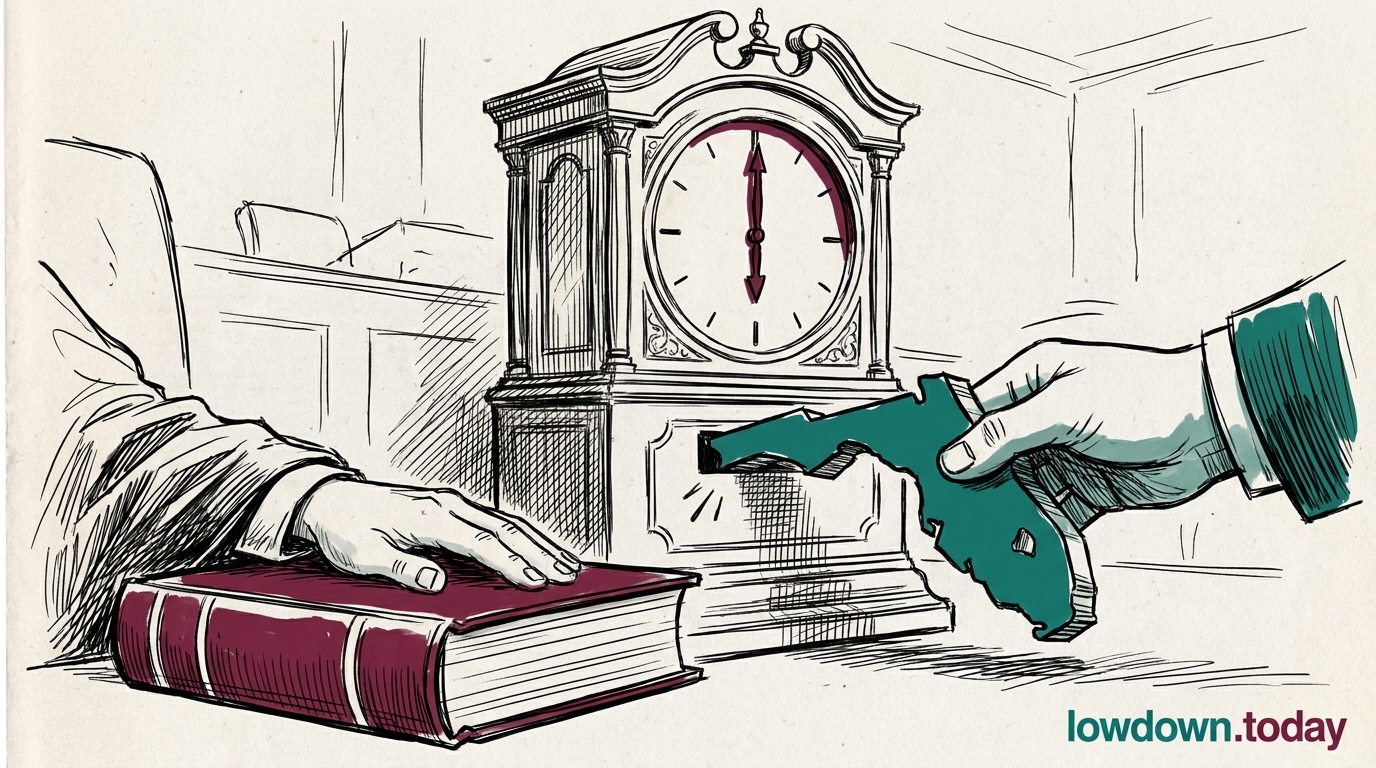
The Supreme Court issued judgment forthwith on Tuesday 5 May, ordering Louisiana v. Callais into immediate effect and skipping the standard 32-day remand wait.

PoliticsDeveloping
Key takeaway

An immediate-effect order on 5 May converted the Callais doctrine into an operational tool inside one election cycle.

The Supreme Court issued a judgment forthwith on Tuesday 5 May, ordering immediate effect for Louisiana v. Callais and bypassing the standard 32-day remand wait. 1 Louisiana must now redraw its congressional map at once; every other state is freed in the same instant from the Voting Rights Act (VRA) Section 2 mandate to draw majority-minority districts (constituencies engineered for a minority-voter majority).

Samuel Alito's 6-3 opinion six days earlier set the law; the Tuesday order operationalised it before May's Southern filing calendars began to bind. Ron DeSantis had already submitted Florida's 24R-4D draft on 27 April waiting on this exact signal , and his session timing had been calibrated weeks earlier . The procedural shortcut left no gap between doctrine and execution.

Read against the Court's own slip opinion, the immediate-effect order is treated as routine remand management. Read against the calendar, it is the gate that turned a doctrinal change into a 2026 line-drawing instrument. Five states moved within forty-eight hours.

Deep Analysis

In plain English

When the Supreme Court rules on a case, there is usually a wait of about 32 days before the ruling actually takes effect, to give lower courts time to process it. A judgment forthwith skips that wait entirely and makes the ruling effective immediately. On 5 May, the Court used this mechanism for the Callais ruling it had issued a week earlier. That ruling said states no longer have to draw special electoral districts designed to give minority communities a majority of voters. By making it immediate, the Court ensured that states like Louisiana had to act at once, while also instantly freeing every other state from the old requirement. The practical consequence was that governors and state legislatures across the South began calling special sessions the same week, because the legal all-clear had arrived with no delay.

Deep Analysis
Root Causes

Two structural pressures produced the forthwith order. First, state candidate filing deadlines in Louisiana, Florida, and Tennessee were weeks away; a 32-day remand wait would have rendered the Callais doctrine unreachable for the 2026 cycle before maps could be drawn and candidates could file against them.

Second, the same six-justice majority that decided Callais on 29 April controlled the 5 May order. There was no institutional friction between the doctrinal outcome and its operationalisation: the ruling and the implementation instrument came from the same aligned bloc, with no dissenting procedural objection recorded.

What could happen next?
  • Consequence

    Louisiana must redraw its congressional map immediately, likely shifting its delegation from 4-2 Republican to 5-1 or 6-0 Republican ahead of 2026 primaries.

    Immediate · 0.85
  • Precedent

    The judgment-forthwith mechanism has now been used to accelerate a major redistricting ruling; future election-law litigants on both sides will invoke this precedent to seek immediate effect.

    Medium term · 0.75
  • Risk

    Black voter plaintiffs who challenged the fast-track order were rejected around 6-7 May; further emergency applications to block redistricting under the new baseline face a Court that has already declined to stay its own order.

    Short term · 0.8
First Reported In

Update #5 · Callais lands; maps move

SCOTUSblog· 7 May 2026
Read original
Causes and effects
This Event
SCOTUS orders Callais into immediate effect
The procedural shortcut converted a 29 April doctrinal ruling into an operational instrument before state filing calendars began to bind.
Different Perspectives
EU Commission trade directorate
EU trade officials note Iowa Senate moving on Iran-war fertiliser prices confirms the cross-topic energy transmission they flagged after Gulf shocks in May. A Democratic Senate from January 2027 would restore Ways and Means leverage on tariff schedules, reducing the probability of a locked Republican trade posture through 2028.
Chatham House democracy analysts
Chatham House analysts assess the Florida qualifying deadline as the point at which redistricting litigation migrated from a live 2026 variable to a post-cycle accountability mechanism; the shadow docket's 7-day Alabama reversal on 2 June and the 13 June Florida lock together confirm that judicial review now operates retrospectively rather than preventively in redistricting disputes.
V-Dem Institute
V-Dem Institute
V-Dem's electoral integrity index identifies the Callais-to-Alabama-stay-to-Florida-qualifying sequence as completing a 13-year Roberts Court rollback: Shelby County (2013) removed preclearance, Brnovich (2021) narrowed vote-denial claims, Callais removed the majority-minority mandate, and the shadow-docket reversal window now forecloses injunctive remedies within any single electoral cycle, meaning judicial review operates retrospectively rather than preventively in redistricting disputes.
Brennan Center for Justice
The Brennan Center characterises Florida's 6-1 ruling as jurisdictional avoidance achieving the same result as a merits ruling, split precisely on appointment lines: all six DeSantis appointees declined to examine his own map. The Equal Ground challenge continues at the First District Court of Appeal with no 2026 remedy available.
National Republican Senatorial Committee
The NRSC brought NRSC v. FEC because the Senate Leadership Fund's parallel-operation model cannot replicate direct candidate coordination, and the December 2025 argument signalled the conservative majority would strike caps ranging from $61,800 to $3.7M per race. A favourable ruling would let the NRSC channel unlimited funds directly through Iowa and four other live Senate campaigns.
EU Commission trade policy directorate
EU trade analysts note the D+6.9 generic ballot is the first reading this cycle making a Democratic House flip structurally plausible; a Ways and Means Committee under Democratic chairmanship after January 2027 would restore congressional leverage on tariff schedules, reducing the probability of locked Republican tariff posture through 2028.