Skip to content
You can now search across every topic, entity and event.What's new
US Midterms 2026
14JUN

Callais draws out a Black incumbent

3 min read
11:52UTC

Louisiana's new post-Callais map erases one of two majority-Black districts and draws out Democrat Cleo Fields, the first sitting member of Congress removed by the ruling, Roll Call reported on Thursday 4 June.

PoliticsDeveloping
Key takeaway

Cleo Fields is the first sitting incumbent erased by the post-Callais redistricting wave.

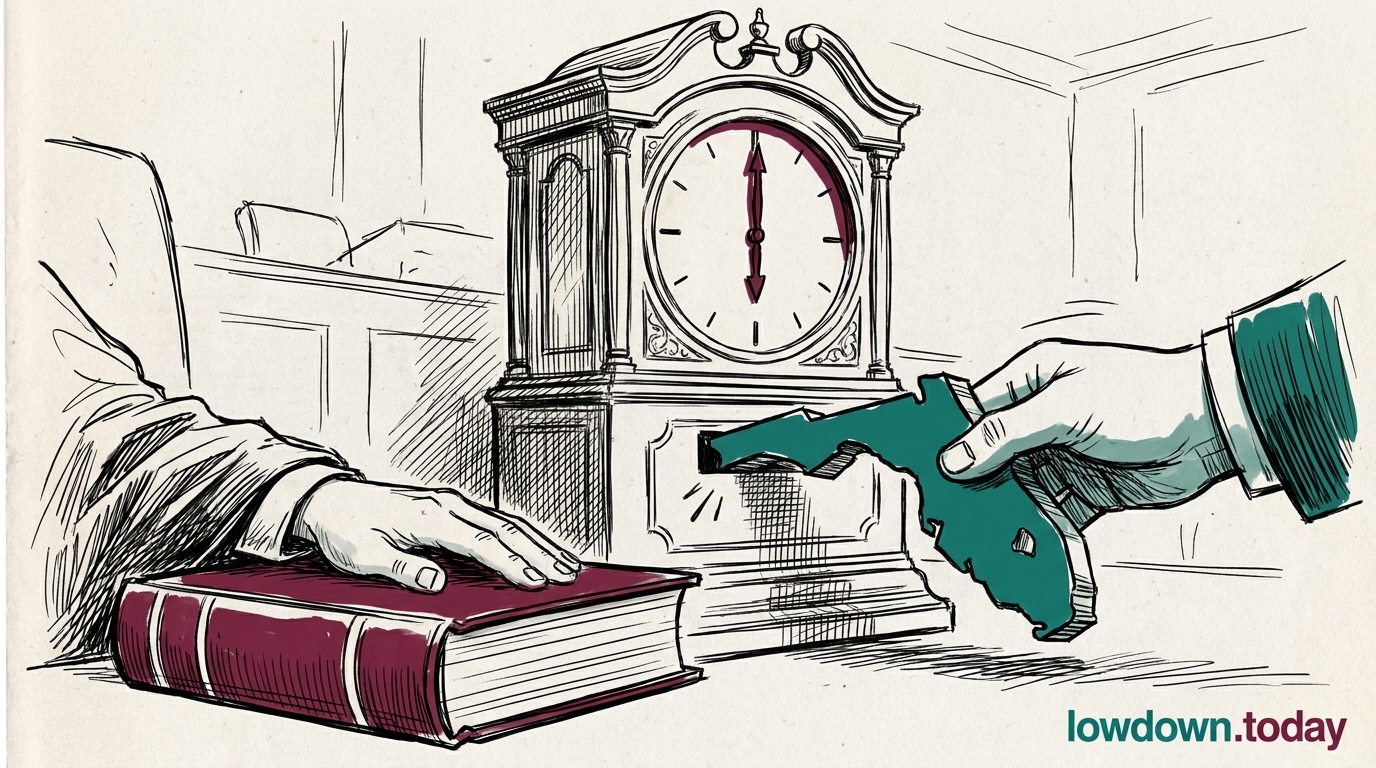
Louisiana's new congressional map eliminates one of the state's two majority-Black districts and draws out Democratic Representative Cleo Fields, Roll Call reported on Thursday 4 June 1. Fields won his seat in 2024 only because The Supreme Court, before its later reversal, had ordered Louisiana to draw a second majority-Black district. The legislature has now used the changed law to erase the very district that order created.

Louisiana v. Callais, decided 6-3 on 29 April, removed the Voting Rights Act Section 2 mandate to draw majority-minority districts . The Court ordered immediate effect on 5 May, skipping the standard remand wait so the change bound state calendars before any merits appeal could conclude . Fields's seat was always contingent on the framework Callais discarded, so its elimination is the lawful consequence of the ruling rather than an extra-legal act. That is precisely what makes it the clean illustration of the ruling's retroactive reach.

Louisiana drops from two majority-Black districts to one and adds a named-incumbent loss to a redistricting harvest that began with the Florida map DeSantis signed on 4 May and Tennessee's lines eliminating Steve Cohen's Memphis seat . Those earlier maps drew Democrats for elimination in the abstract; Fields gives the post-Callais sweep a face. The legal outcome does not change, but the political argument sharpens once a sitting Black member of Congress is the one drawn out of his own seat.

Deep Analysis

In plain English

The US redraws congressional districts every ten years, after each national census, with Republican and Democratic state legislatures typically drawing lines to favour their own party. However, federal law (the Voting Rights Act) used to require that in areas where Black voters form a significant part of the population, some districts had to be drawn so that Black voters formed a majority, giving them a meaningful chance to elect a representative of their choice. In Louisiana, courts had ordered the state to draw a second such district. Cleo Fields won that seat in 2024. But in April 2026, the Supreme Court ruled in Louisiana v. Callais that states no longer have to draw these majority-Black districts. Louisiana immediately redrew its map, eliminating the very district Fields had just won. Fields is therefore being drawn out of office not because of anything he did or did not do, but because the legal basis for his district's creation was dismantled by the same Court that had compelled its existence.

Deep Analysis
Root Causes

Fields's seat existed entirely as a function of court compulsion under the pre-Callais Section 2 doctrine. Louisiana's legislature never voluntarily drew a second majority-Black district; it was ordered to do so by the district court, an order the Supreme Court's Callais immediate-effect ruling replaced with a mandate to stop enforcing Section 2 in that way.

Louisiana has a 33% Black population but historically drew maps concentrating Black voters in a single district. Post-Callais, that configuration now produces a legally unassailable outcome rather than a violation, because the legal framework measuring whether that outcome violates Section 2 no longer exists.

Fields's particular vulnerability reflects a second condition: his 2024 victory was in a special-election context, meaning he had not built the multi-cycle incumbency advantage or fundraising base that makes court-compelled majority-minority incumbents harder to dislodge through redistricting.

What could happen next?
  • Consequence

    Louisiana loses one of its two Black Democratic House incumbents before any November vote, reducing the Congressional Black Caucus's likely post-2026 membership by at least one seat from the Callais-affected states.

    Short term · Assessed
  • Precedent

    The Louisiana redraw establishes that post-Callais legislatures can eliminate court-ordered majority-minority districts created in the immediately preceding cycle without any transitional protection for sitting incumbents.

    Long term · Assessed
  • Risk

    The LDF's equal-protection challenge theory, if filed, will not resolve before November 2026, meaning the election proceeds under the eliminated district regardless of any subsequent ruling.

    Medium term · Reported
First Reported In

Update #8 · Shadow docket shields maps

Roll Call· 6 Jun 2026
Read original
Different Perspectives
EU Commission trade directorate
EU trade officials note Iowa Senate moving on Iran-war fertiliser prices confirms the cross-topic energy transmission they flagged after Gulf shocks in May. A Democratic Senate from January 2027 would restore Ways and Means leverage on tariff schedules, reducing the probability of a locked Republican trade posture through 2028.
Chatham House democracy analysts
Chatham House analysts assess the Florida qualifying deadline as the point at which redistricting litigation migrated from a live 2026 variable to a post-cycle accountability mechanism; the shadow docket's 7-day Alabama reversal on 2 June and the 13 June Florida lock together confirm that judicial review now operates retrospectively rather than preventively in redistricting disputes.
V-Dem Institute
V-Dem Institute
V-Dem's electoral integrity index identifies the Callais-to-Alabama-stay-to-Florida-qualifying sequence as completing a 13-year Roberts Court rollback: Shelby County (2013) removed preclearance, Brnovich (2021) narrowed vote-denial claims, Callais removed the majority-minority mandate, and the shadow-docket reversal window now forecloses injunctive remedies within any single electoral cycle, meaning judicial review operates retrospectively rather than preventively in redistricting disputes.
Brennan Center for Justice
The Brennan Center characterises Florida's 6-1 ruling as jurisdictional avoidance achieving the same result as a merits ruling, split precisely on appointment lines: all six DeSantis appointees declined to examine his own map. The Equal Ground challenge continues at the First District Court of Appeal with no 2026 remedy available.
National Republican Senatorial Committee
The NRSC brought NRSC v. FEC because the Senate Leadership Fund's parallel-operation model cannot replicate direct candidate coordination, and the December 2025 argument signalled the conservative majority would strike caps ranging from $61,800 to $3.7M per race. A favourable ruling would let the NRSC channel unlimited funds directly through Iowa and four other live Senate campaigns.
EU Commission trade policy directorate
EU trade analysts note the D+6.9 generic ballot is the first reading this cycle making a Democratic House flip structurally plausible; a Ways and Means Committee under Democratic chairmanship after January 2027 would restore congressional leverage on tariff schedules, reducing the probability of locked Republican tariff posture through 2028.