Skip to content
Welcome, thoughtbot's Giant Robots listeners!Start here
US Midterms 2026
14JUN

NRSC moves its ad money in-house

3 min read
11:52UTC

The National Republican Senatorial Committee told staff it will close its independent-expenditure unit and move the money into coordinated buys that air three to 13 times cheaper.

PoliticsDeveloping
Key takeaway

By moving to coordinated buys, the NRSC turns its cash edge into a much larger edge in airtime.

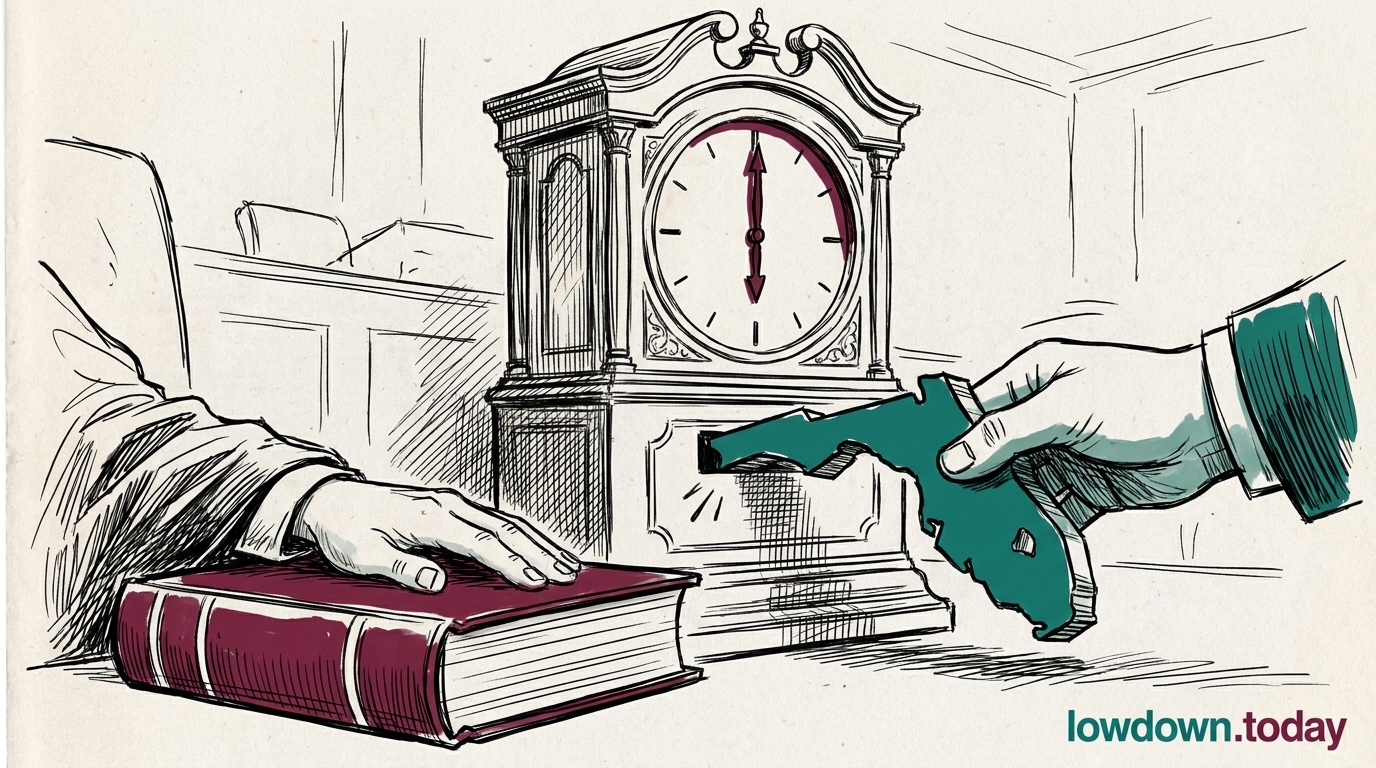
The National Republican Senatorial Committee (NRSC) told staff on Tuesday 30 June that it will close its independent-expenditure unit and route that money into coordinated buys instead, according to an internal memo⁠1. An independent expenditure is ad spending a committee runs on its own, legally barred from any coordination with the candidate. the Supreme Court ruling that same day, which lifted the cap on coordinated party spending, makes the separation pointless.

Coordinated ad time qualifies for the Lowest Unit Charge (LUC), the discounted broadcast rate that stations must offer candidates and parties in the weeks before an election. The NRSC memo puts coordinated buys at three to 13 times cheaper than the rates outside groups pay⁠2. So the ruling does more than raise a ceiling: each committee dollar routed through a coordinated buy now purchases several times the airtime it bought a day earlier.

The shift runs against the direction outside groups have been moving. Aligned super PACs are still pouring money into independent expenditures, with Americans for Prosperity Action filing $6.4m in Senate independent expenditures across five states in a single day in early June. The ruling now pulls that spending logic back toward the party committees themselves, which can coordinate directly and buy cheaper. Democrats can use the identical mechanism; it favours one side only because that side has more cash to run through it.


Deep Analysis

In plain English

Political parties used to run two separate teams: one that worked directly with candidates on ads, limited by a spending cap, and one that spent independently with no contact with the campaign at all, uncapped but at a higher advertising rate. Now that the cap on the first team is gone, the Republican Senate campaign committee is shutting the second team entirely. The NRSC decided there was no reason to keep both running, and closed the independent team within hours of the ruling.

Deep Analysis
Root Causes

FEC rules required the NRSC to keep its independent-expenditure staff walled off from its candidate-facing coordinated team, with no shared consultants and no shared information, to stop the two operations from functionally coordinating in violation of the cap. Maintaining two staffs under one roof for that purpose only made sense while the cap existed.

Once the Supreme Court removed it, the wall lost its function, and the smaller, costlier independent-expenditure unit became overhead the NRSC no longer needed to carry.

What could happen next?
  • Consequence

    NRSC's compliance overhead falls, since a single coordinated desk replaces the legally mandated firewall between its two former spending teams.

First Reported In

Update #11 · Money uncapped, ballot rules untouched

Townhall· 1 Jul 2026
Read original →
Causes and effects
This Event
NRSC moves its ad money in-house
Coordinated ad time qualifies for a discounted broadcast rate, so each committee dollar now buys several times more airtime than before.
Different Perspectives
Missouri voters
Missouri voters
Missouri voters rejected Proposition A by 61.83% to 38.17% at 95% reporting, repealing the 2025 map that split Kansas City. Trump carried the state, yet its 2022 lines now stay for future elections too.
Senate Leadership Fund (SLF)
SLF reported about $43.9m of independent expenditures from 27 October to 1 November, almost all against Democrats, including $12.37m against Sherrod Brown. Seven of its ten targets won; Dan Osborn lost in Nebraska and two are uncalled.
Richard Hudson, chair of the National Republican Congressional Committee
Hudson, who runs House Republicans' campaign arm, conceded North Carolina's 9th District to Richard Ojeda before any AP call. Democrats lead 10 of the state's 14 House districts on the unofficial feed.
Department of Justice (DOJ)
DOJ lost before Judge David O. Carter on 28 October and a 9th Circuit panel on 30 October on its demand to set aside 20,000 California ballots, and says it will appeal the Alaska dismissal. No court has set a ballot aside.
Senator Dan S. Sullivan
Sullivan, who trails Mary Peltola 48.2% to 47.9% on first choices, told CNN he would accept the result. DOJ's suit to stop Alaska certifying anyone but him was dismissed on 1 November.
Scott Colom's campaign
Colom's campaign estimates that about 15,000 affidavit ballots remain to be counted in a race he leads by roughly 65 to 100 votes. Those ballots count only if voters confirm their ID or eligibility by 5pm on 10 November.

Written with AI from Lowdown's published reporting. Not individually reviewed by an editor. Editorial standards.