Skip to content
You can now search across every topic, entity and event.What's new
US Midterms 2026
14JUN

DOJ's own lawyers assert data authority courts reject

2 min read
11:52UTC

The Department of Justice's Office of Legal Counsel released a slip opinion asserting executive authority to obtain and share statewide voter-roll data, even as district courts have repeatedly rejected the legal theory underpinning that authority.

PoliticsDeveloping
Key takeaway

The OLC opinion asserts authority courts have repeatedly rejected; it governs federal agencies but not judges.

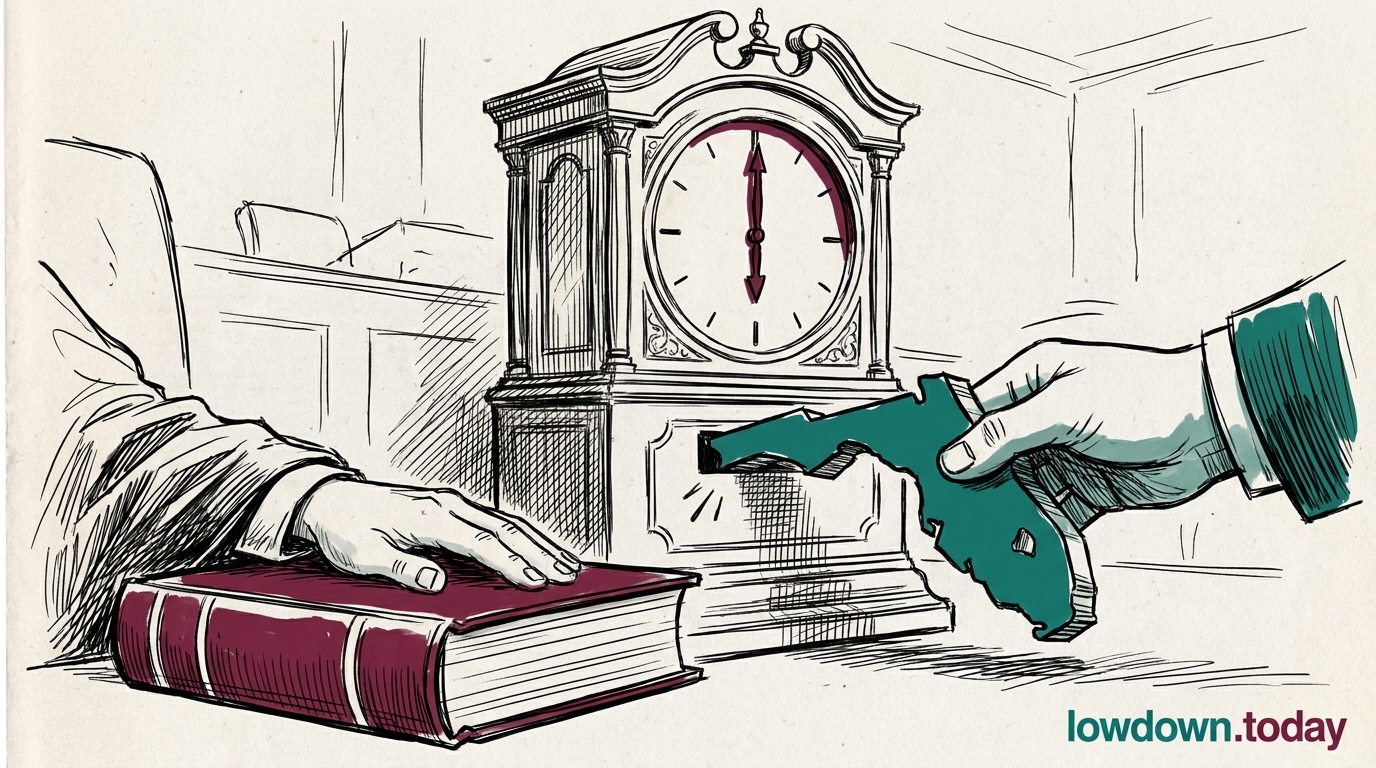
The Department of Justice (DOJ)'s Office of Legal Counsel (OLC), the internal advisory unit whose opinions are binding on executive agencies, released a slip opinion asserting that the executive branch holds authority to obtain and share statewide voter-roll data. An OLC opinion is the department's own legal reasoning formalised in writing; it tells federal agencies what The Administration believes the law permits. Federal district judges who receive the voter-data cases apply independent statutory analysis and are not bound by OLC conclusions.

Multiple district courts have already examined the same underlying legal theory and rejected it in favour of state sovereignty over election administration. The Maine and Wisconsin dismissals on the same Thursday extended a series that began in Massachusetts earlier in the spring; the OLC opinion arrived that same day, asserting authority the courts were simultaneously declining to recognise. White House operational reliance on election-law matters has shifted away from executive orders in this period, as the spring window without new election-related orders demonstrated , toward litigation and internal legal assertions.

Within the executive branch, the OLC opinion gives agencies legal cover to act; outside it, every district court that has heard the arguments has found the same authority insufficient to state a claim. If The Administration uses the opinion to justify data-sharing actions beyond the dismissed lawsuits, those actions would face the same judicial record already assembled. The opinion documents what The Administration wishes the law permitted; courts have not agreed.

Deep Analysis

In plain English

The Office of Legal Counsel, known as the OLC, is the legal adviser to the executive branch of the federal government. When the president's administration wants to know whether it can legally do something, OLC gives a formal legal opinion. Those opinions are binding on all executive agencies, meaning they tell the government 'yes, you may do this' or 'no, you may not'. However, OLC opinions do not bind courts. If a federal judge has already ruled that something is illegal, an OLC opinion saying it is legal does not cancel that ruling. The DOJ issued an OLC opinion saying it has authority to collect and share voter-roll data across all 47 states where it sent demands. Five courts have already dismissed the lawsuits the DOJ filed to enforce those demands. The opinion does not undo those dismissals; it gives the executive branch a legal basis to continue treating its data demands as valid while the litigation continues through appeals.

Deep Analysis
Root Causes

The OLC opinion reflects a deliberate sequencing strategy in constitutional hardball: issue an authoritative executive statement of the legal position before the appellate courts resolve it, so that the executive branch's operational posture is set by the OLC opinion rather than held in suspension pending litigation.

The DOJ's losing streak in district courts created a political problem distinct from the legal problem: five dismissals published in public dockets signal programme failure to Congress and to the media. The OLC opinion does not cure the dismissals but restates the executive's legal confidence in language that executive agencies, oversight committees, and complying states can cite when the litigation record runs the other way.

The mechanism parallels the use of OLC opinions under the Bush administration to authorise enhanced interrogation techniques during litigation over their legality: the opinion did not override courts, but it allowed the executive programme to continue operating under a claimed legal basis while courts worked through the question over years.

First Reported In

Update #7 · Paxton wins; maps lock

Sabato's Crystal Ball· 29 May 2026
Read original
Causes and effects
This Event
DOJ's own lawyers assert data authority courts reject
An OLC opinion binds executive agencies but not federal courts; the growing gap between what the administration asserts it may do and what courts permit defines the operational limits of the voter-data programme.
Different Perspectives
Senate Republican leadership
Floor time is finite at 51-47 with a bipartisan funding negotiation running, and a contested procedural fight over grant conditions is not the best use of it this month. Nothing has been abandoned; the resolution keeps its place on the calendar.
South Carolina election administrators
The Commission applied section 7-11-55 as written and certified the field inside the window the statute allowed. Complaints about the compression belong to the legislature, which alone can change the formula.
Rival Republican campaigns
A nine-candidate field and a majority requirement mean nobody wins on 11 August. The endorsement guarantees a place in the runoff, not the seat, and a fortnight of consolidation afterwards is where the nomination is actually settled.
Trump-endorsed campaign operation
The President's endorsement of the interim senator settles the contest, and a former governor rejected by these voters in 2018 does not merit a second hearing. Outside spending against her is money wasted on a nomination already decided.
Senate Budget Committee under Ron Johnson
Johnson, reported to succeed the late Lindsey Graham as Budget chair on 22 July, has a record of opposing reconciliation packages on deficit grounds, a different proposition than his predecessor for carrying the $10bn voter-ID grant through the Senate on 51 votes after the House passed its version 216-214.
NRCC and Republican committee strategists
The NRCC's $92.7m cash on hand outweighs the DCCC's $79.0m by $13.7m even after Democrats out-raised them $37.4m to $35.4m in the second quarter, official FEC filings from 20 July confirmed. Strategists are banking on the reserve gap, not this quarter's receipts, to carry House races.