Skip to content
You can now search across every topic, entity and event.What's new
US Midterms 2026
14JUN

Cook shifts four Senate races to Dems

3 min read
11:52UTC

Cook Political Report moved Georgia, North Carolina, Ohio and Nebraska toward Democrats on 13 April, widening the Senate battlefield to three of the four pickups Democrats need for a majority.

PoliticsDeveloping
Key takeaway

Three of the four Senate pickups Democrats need are now in or near the toss-up band.

Cook Political Report shifted four Senate race ratings on 13 April 2026: Georgia and North Carolina moved from Toss-up to Lean Democrat, Ohio moved from Lean Republican to Toss-up, and Nebraska slipped from Safe Republican to Likely Republican. Cook is the nonpartisan forecaster whose Solid/Likely/Lean/Toss-up scale is the industry reference for race competitiveness; the shift is the first Senate-wide move since the tariff-approval collapse of late March .

Democrats need four net pickups to take the Senate. Three of the four are now at or within the toss-up band. Jessica Taylor, Cook's Senate analyst, wrote that "with an increasingly sour national environment for Republicans, the Senate battlefield is shifting in Democrats' favor" 1. The North Carolina move is the most substantive of the four. Former two-term Democratic governor Roy Cooper is running against former Republican National Committee chair Michael Whatley for the seat Thom Tillis is vacating. Cooper is the high-quality challenger class that moves ratings on candidate strength alone; Whatley carries the committee infrastructure that tends to lose to him.

Cook still calls Republicans "narrowing favourites" to hold the Upper Chamber and projects one to three Democratic pickups as the likeliest range, one short of the four needed. The point is not that the Senate has flipped. The competitive field is wider than it was eight days ago, and the widening tracks economic data rather than a polling squall: the same 13 April window carries the first Q1 GDP contraction the economy has recorded since Trump returned to office, and the special election swings on 7 April ran well ahead of the generic ballot model. Forecasters, results, and macro data are aligning against the incumbent party.

Deep Analysis

In plain English

Cook Political Report is a nonpartisan US service that rates congressional races on a scale from Safe to Toss-up. When it moves a race toward one party, it is saying the structural conditions have shifted enough to change who is expected to win. It does not endorse candidates; it reads the terrain. The US Senate has 100 seats. Democrats currently need to gain a net four seats to take the majority. Cook's 13 April update moved two southern states (Georgia and North Carolina) into territory where Democrats are now the slight favourites, moved Ohio into genuine toss-up territory, and moved Nebraska from a safe Republican hold to a merely likely one. Three of the four seats Democrats need for a majority are now in or near contested range. The trigger is economic: the current administration's tariff policy has raised the cost of imported goods, and voters are responding by shifting toward the opposition party.

Deep Analysis
Root Causes

Cook's ratings respond to three structural inputs: presidential approval, generic-ballot movement, and candidate recruitment quality. All three are currently moving against Republicans. Trump's economic approval collapse to 31-35% is the primary driver; the Tax Foundation's figure of a $600 average household tariff burden converts abstract policy pain into a concrete household cost.

The Georgia-14 and Wisconsin results gave Cook empirical proof that the approval collapse is translating into actual vote shifts rather than remaining a polling artefact. Rating agencies do not move races on polling alone; confirmed electoral results accelerate the adjustment.

What could happen next?
  • Consequence

    If Georgia and North Carolina hold as Lean Democrat, Republicans face a structural path to only 51-52 seats, below the 60 needed for cloture on any contested legislation.

    Medium term · 0.72
  • Risk

    Rating shifts in April tend to attract donor dollars to newly competitive races, creating a self-reinforcing fundraising cycle that can lock in the trajectory Cook identified.

    Short term · 0.78
  • Precedent

    Cook's April 2006 shift preceded a six-seat Democratic pickup; a comparable shift now suggests the November environment may already be set.

    Long term · 0.65
First Reported In

Update #3 · Tariff shock reads in GDP. Senate map moves.

Cook Political Report· 16 Apr 2026
Read original
Causes and effects
This Event
Cook shifts four Senate races to Dems
The first independent forecaster to move the Senate map since the tariff polling collapse, confirming the competitive field has widened on structural grounds rather than a single polling squall.
Different Perspectives
EU Commission trade directorate
EU trade officials note Iowa Senate moving on Iran-war fertiliser prices confirms the cross-topic energy transmission they flagged after Gulf shocks in May. A Democratic Senate from January 2027 would restore Ways and Means leverage on tariff schedules, reducing the probability of a locked Republican trade posture through 2028.
Chatham House democracy analysts
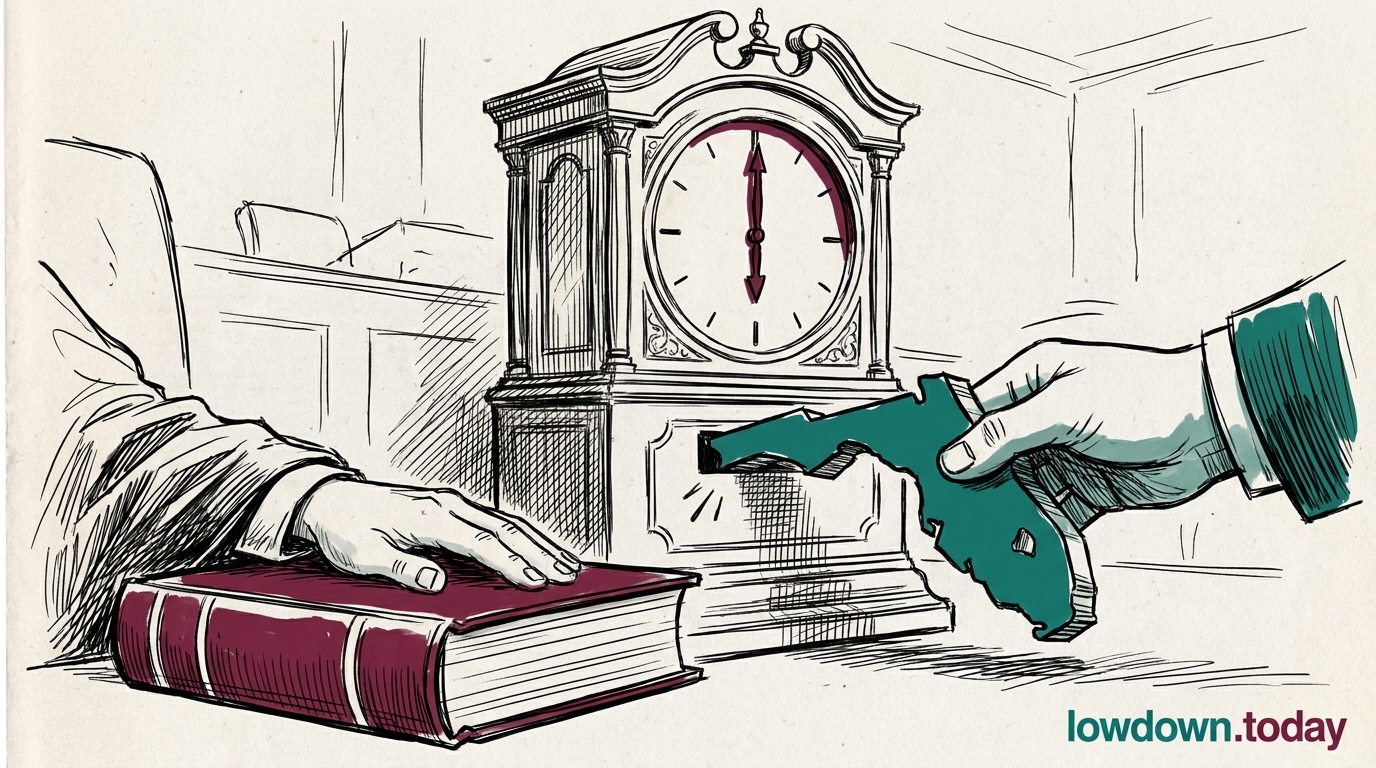
Chatham House analysts assess the Florida qualifying deadline as the point at which redistricting litigation migrated from a live 2026 variable to a post-cycle accountability mechanism; the shadow docket's 7-day Alabama reversal on 2 June and the 13 June Florida lock together confirm that judicial review now operates retrospectively rather than preventively in redistricting disputes.
V-Dem Institute
V-Dem Institute
V-Dem's electoral integrity index identifies the Callais-to-Alabama-stay-to-Florida-qualifying sequence as completing a 13-year Roberts Court rollback: Shelby County (2013) removed preclearance, Brnovich (2021) narrowed vote-denial claims, Callais removed the majority-minority mandate, and the shadow-docket reversal window now forecloses injunctive remedies within any single electoral cycle, meaning judicial review operates retrospectively rather than preventively in redistricting disputes.
Brennan Center for Justice
The Brennan Center characterises Florida's 6-1 ruling as jurisdictional avoidance achieving the same result as a merits ruling, split precisely on appointment lines: all six DeSantis appointees declined to examine his own map. The Equal Ground challenge continues at the First District Court of Appeal with no 2026 remedy available.
National Republican Senatorial Committee
The NRSC brought NRSC v. FEC because the Senate Leadership Fund's parallel-operation model cannot replicate direct candidate coordination, and the December 2025 argument signalled the conservative majority would strike caps ranging from $61,800 to $3.7M per race. A favourable ruling would let the NRSC channel unlimited funds directly through Iowa and four other live Senate campaigns.
EU Commission trade policy directorate
EU trade analysts note the D+6.9 generic ballot is the first reading this cycle making a Democratic House flip structurally plausible; a Ways and Means Committee under Democratic chairmanship after January 2027 would restore congressional leverage on tariff schedules, reducing the probability of locked Republican tariff posture through 2028.