Skip to content
You can now search across every topic, entity and event.What's new
US Midterms 2026
6JUN

Moore and Wess win Alabama runoffs

2 min read
12:16UTC

Barry Moore won Alabama's Republican congressional primary runoff on 16 June, defeating Navy SEAL Jared Hudson; attorney Everett Wess took the Democratic runoff with 72%. The contests close one chapter of the post-Callais map fight.

PoliticsDeveloping
Key takeaway

Alabama's redistricting fight has moved from courtrooms to candidates as the runoffs name the autumn field.

Barry Moore won Alabama's Republican congressional primary runoff on 16 June, defeating Navy SEAL Jared Hudson. In the Democratic runoff, attorney Everett Wess took 72% over Dakarai Larriett 1. The 16 June results named a Republican and a Democratic nominee where, a month earlier, Alabama had only litigation.

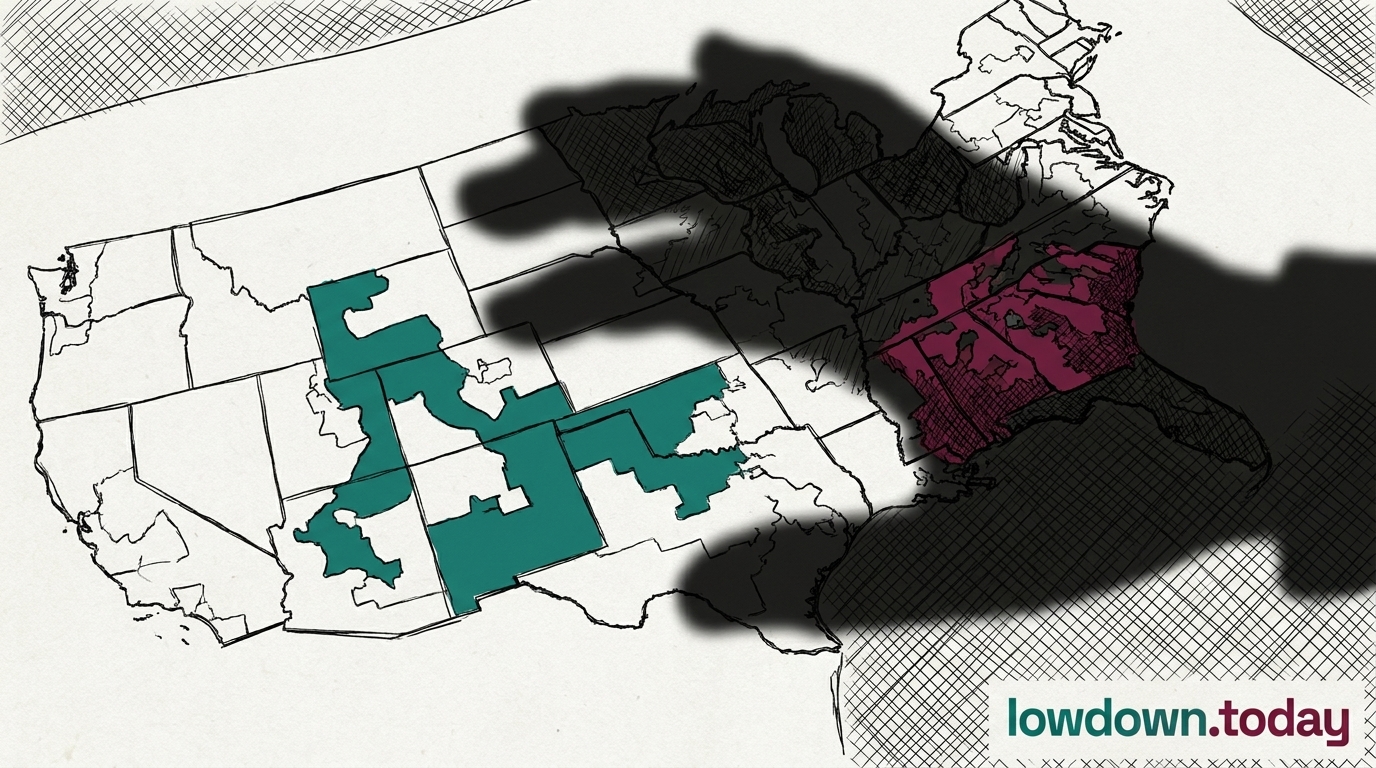
The contests sit inside the churn that followed Louisiana v. Callais, the Supreme Court ruling that ended the Voting Rights Act requirement to draw majority-minority districts, those drawn so a racial or ethnic minority can elect its preferred candidate. After Callais took effect, the Court vacated the order protecting Alabama's majority-Black district and the state voided four primaries held on 19 May . the Supreme Court then stayed the lower-court injunction a week after it issued , confirming the legal framework under which these June runoffs proceeded.

Callais produced a calendar, the calendar produced these 16 June runoffs, and the runoffs produced nominees. The redrawn districts hold their re-do on 11 August, so the Alabama contest now shifts from which lines are lawful to which candidates the new lines elect.

Deep Analysis

In plain English

In May 2026, the Supreme Court ruled in Louisiana v. Callais that states no longer have to draw congressional districts specifically designed to give Black voters a majority. Alabama had been under court orders to draw such a district. When that legal requirement was removed, Alabama's governor declared that the May 2026 congressional primaries, which were already completed, were legally void because they were held under the old map. So Alabama has been holding replacement elections. On 16 June, Republican Barry Moore won a runoff for one seat, and Democrat Everett Wess won 72% in the Democratic runoff for the same area. But the story does not end there: new primaries are scheduled for 11 August under the redrawn district lines that no longer include the court-ordered majority-Black district. The same candidates may face a different electorate in August.

Deep Analysis
Root Causes

The 16 June Alabama runoffs produced by a two-stage redistricting disruption. Louisiana v. Callais on 29 April 2026 removed the VRA Section 2 mandate for majority-minority districts nationally. Alabama responded specifically: the state Supreme Court vacated the lower-court majority-Black district order on 12 May, clearing the post-Callais map, and Governor Ivey declared the 19 May primaries void under those lines.

Barry Moore's 16 June Republican runoff win is therefore not a normal primary result. Moore won a seat in a district whose boundaries were being redrawn during the campaign; he will need to compete again in an 11 August special primary under the revised lines. The 16 June runoff selected the nominee under the pre-Callais contested map; the 11 August primary will determine who runs under the operative post-Callais map.

Everett Wess's 72% Democratic runoff win reflects the self-selecting nature of Alabama Democratic primaries in a Deep South state: the Democratic base in a minority-heavy district concentrated strongly behind the attorney with the cleaner primary exit.

What could happen next?
  • Consequence

    Barry Moore must compete in a second primary on 11 August under redrawn lines; the double-primary sequence could drain resources and create voter confusion about which result governs the general election nominee.

  • Precedent

    The Alabama void-and-re-run sequence is the first application of post-Callais primary mechanics; how courts and the state elections board treat conflicting results from the June and August primaries will establish the procedural precedent for other Callais-affected states.

First Reported In

Update #10 · Wave or grind: the measure splits

Ballotpedia· 21 Jun 2026
Read original
Different Perspectives
Non-US foreign-policy commentary (Jerusalem Post)
Jerusalem Post coverage frames Graham's death chiefly as a foreign-policy loss, citing his role as the Senate's most vocal advocate for Ukraine and Russia sanctions and Israel-related security votes, distinct from Washington's floor-arithmetic framing. That reporting adds that South Carolina has not elected a Democrat to the Senate since 1998, so control of the seat itself was never genuinely contested.
Election-law and voting-rights critics
Election-law critics point to South Carolina's own arithmetic: the federal 45-day overseas-ballot deadline for the 11 August primary fell on 27 June, a fortnight before Graham died, and Section 7-11-55 contains no voter-eligibility language despite grounding the June-primary voter bar. They read both as design gaps a state can exploit through inaction, not through any single deliberate violation.
South Carolina State Election Commission
Commission director Conway Belangia declared the eligibility review "completed" on 16 July, barring anyone who voted in June's Democratic primary from the 11 August Republican primary, citing only "the requirements of South Carolina election law". The commission is standing behind that ruling and its filing-to-runoff calendar without naming the statute either rests on.
Senate Democratic opposition
Senate Democrats have not cast a floor vote against the House Budget Committee's 20-14 resolution yet, but their standing objection, that documentary-proof-of-citizenship rules burden voters who lack ready access to those documents, applies directly to the $10bn grant structure it just advanced. They are counting on the Byrd Rule to do what floor votes could not.
Senate Republican leadership
Majority Leader John Thune moved within two days of Graham's death to install Ron Johnson as Budget chair, whose office says he is "prepared to serve", though no conference vote has confirmed it. Leadership pushed the FY2027 resolution through committee 20-14 on 16 July, treating the vacancy as a gap to close, not a reason to pause the SAVE Act.
Labour-market economists
Economists note June payrolls rose just 57,000, about half the forecast 115,000, with April and May revised down further. They call it the only development this week bearing directly on how incumbents can run on the economy in November.
