Skip to content
You can now search across every topic, entity and event.What's new
US Midterms 2026
29MAY

MAHA topples two Republican governor hopefuls

2 min read
08:48UTC

Make America Healthy Again challengers beat establishment Republicans in the Iowa and South Dakota governor primaries around Tuesday 2 June, downing three-term congressman Randy Feenstra and Dusty Johnson.

PoliticsDeveloping
Key takeaway

MAHA challengers beat two establishment Republicans in governor primaries, widening the party's factional split.

Make America Healthy Again (MAHA), the populist health-focused movement associated with Robert F. Kennedy Jr, defeated establishment Republicans in two gubernatorial primaries around Tuesday 2 June 1. In Iowa, Zach Lahn beat Randy Feenstra, a three-term congressman connected to the NRCC, the House Republicans' campaign committee. In South Dakota, congressman Dusty Johnson lost his bid for governor.

Both losers were mainstream conservatives with congressional records and party infrastructure behind them, the profile that usually wins a primary on name recognition and money. Their defeat by insurgent challengers shows MAHA can turn out a primary electorate against the establishment in governor's races, extending its reach beyond the Senate contests where the faction first drew notice.

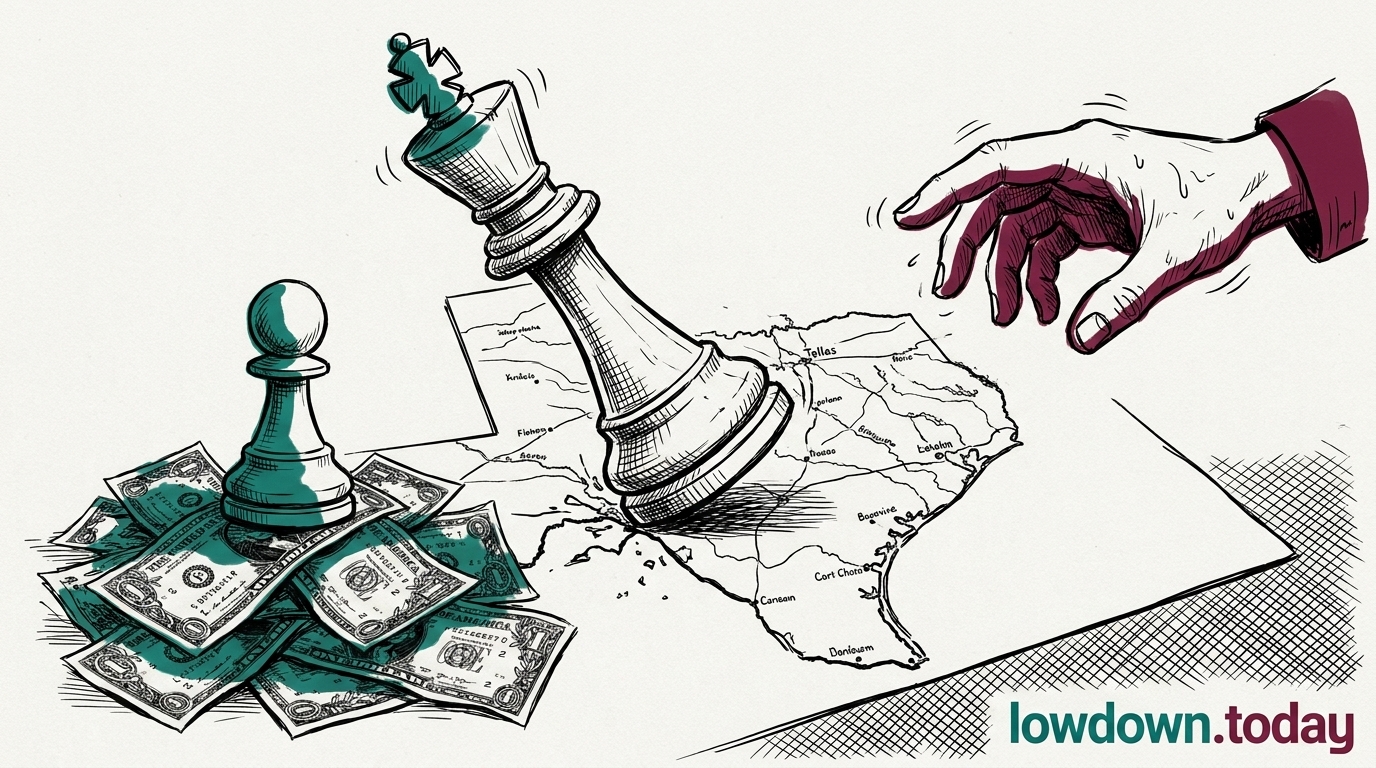
The pattern extends a factional fracture already visible in the Texas Senate runoff, where Ken Paxton ousted NRSC-preferred John Cornyn by 28 points despite a nine-to-one spending disadvantage . Texas was a Senate seat; Iowa and South Dakota are governorships, which broadens the fracture from one chamber to executive primaries. Establishment Republicans are now losing on multiple fronts to challengers their own committees cannot reliably stop.

Deep Analysis

In plain English

Make America Healthy Again (MAHA) is a political movement associated with Robert F. Kennedy Jr, who served in Donald Trump's administration and focused on issues like food safety, pharmaceutical regulation, and opposition to what MAHA supporters call corporate influence over public health policy. In 2026, MAHA has been backing challengers in Republican primary elections against more traditional Republican candidates. On around 2 June 2026, two MAHA-aligned or movement-adjacent challengers won Republican governor primaries. In Iowa, Zach Lahn defeated Randy Feenstra, a congressman who had served three terms in Washington and was connected to the Republican Party's congressional committee. In South Dakota, Dusty Johnson, another congressman, lost his primary. Both Feenstra and Johnson lost partly because their Washington connections were used against them: MAHA voters in these states are suspicious of candidates associated with the traditional Republican Party establishment. The wins follow a similar pattern to Ken Paxton's defeat of John Cornyn in Texas, showing that this faction can win in multiple types of races.

Deep Analysis
Root Causes

MAHA's primary success in Iowa and South Dakota reflects two structural conditions specific to Republican gubernatorial primaries in 2026. First, incumbent congressmen running for governor face a built-in credibility problem: they are running from a Washington context at a moment when Republican primary voters rate Congress's performance lower than at any point since 2011.

Feenstra's three-term record in Washington became a liability in a primary dominated by voters whose MAHA alignment is partly an anti-Washington cultural statement.

Second, Republican governor primaries in safe-Republican states draw a disproportionate share of the most ideologically activated primary electorate, which in 2026 includes a significant MAHA-aligned cohort energised by Robert F.

Kennedy Jr's Health and Human Services influence in the Trump administration. Where that cohort is large enough relative to total primary turnout, a well-resourced challenger running on food and pharmaceutical reform messaging can reach the winning threshold without converting persuadable centrists.

What could happen next?
  • Consequence

    Two MAHA-aligned governors in Iowa and South Dakota give the movement executive branch platforms to test food-additive and pharmaceutical-regulation policies without federal legislative approval, creating state-level policy laboratories.

  • Risk

    NRCC-connected incumbents in safe-Republican House districts now face a primary threat from MAHA challengers emboldened by the Iowa and South Dakota governor results, particularly those who publicly opposed Kennedy Jr's HHS agenda.

First Reported In

Update #8 · Shadow docket shields maps

Roll Call· 6 Jun 2026
Read original
Causes and effects
This Event
MAHA topples two Republican governor hopefuls
The MAHA faction can mobilise primary electorates against mainstream Republicans beyond Senate races.
Different Perspectives
Labour-market economists
Economists note June payrolls rose just 57,000, about half the forecast 115,000, with April and May revised down further. They call it the only development this week bearing directly on how incumbents can run on the economy in November.
Alaska political observers
The state Supreme Court's reinstatement of Dan J. Sullivan of Petersburg to the 18 August primary ballot means two men named Dan Sullivan, one the sitting senator, may both appear. Observers moved the race to Toss-up on the ballot mechanics alone, not any shift in the campaign.
OpenSecrets campaign-finance analysts
Analysts flag that all four national committees, the NRSC included, can now form joint fundraising committees combining donor money with full coordination. They expect the DSCC, NRCC and DCCC to match the move before the effect shows up in filings.
NRSC strategists
NRSC strategists
The NRSC told campaigns on 30 June to fold independent spending into fully coordinated vehicles now that the Supreme Court has struck the caps. Strategists see it as converting the RNC's roughly $110m cash edge into leverage precisely where challengers are outspending Republican incumbents.
Democracy Docket / voting-rights litigators
Litigators note DOJ is now 0-for-6 on trial losses yet still climbing the appellate ladder through the Sixth Circuit en banc bid. They read the persistence itself as the point: keep the underlying dispute alive past November regardless of the win rate.
Fulton County election officials
Fulton County had argued in court that the subpoena was meant to "target, harass and punish" perceived opponents, and the 7 July ruling ended that specific demand. Officials treat the outcome as proof the criminal track was pressure, not a genuine prosecution.
