Skip to content
You can now search across every topic, entity and event.What's new
US Midterms 2026
7MAY

Four states queue maps after Callais ruling

3 min read
15:03UTC

Tennessee Governor Bill Lee called an extraordinary session within twenty-four hours of Callais; South Carolina, Mississippi and Alabama followed within five days.

PoliticsDeveloping
Key takeaway

Five states joined the redistricting queue inside a week of Callais; the Democratic answer is structurally slower.

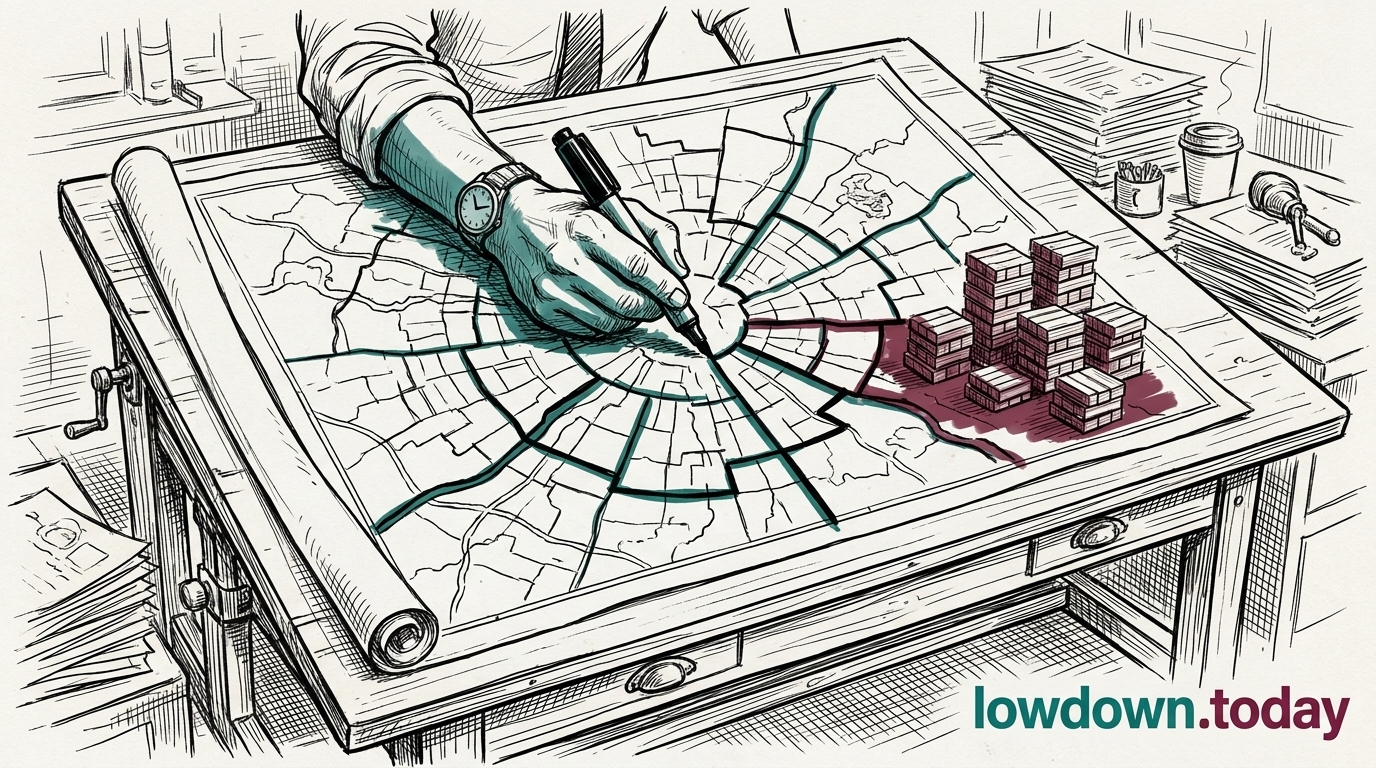
Tennessee Governor Bill Lee called an extraordinary legislative session within twenty-four hours of Louisiana v. Callais coming down on 29 April. 1 The target is TN-9, the Memphis seat held by Steve Cohen, the state's lone Democratic congressman. South Carolina legislative leaders confirmed on Tuesday 5 May that staff were drawing new maps. Mississippi Governor Tate Reeves issued a similar call the same day. Alabama has been flagged by the Council on Foreign Relations and the Brennan Center for Justice as the next likely state to act.

President Donald Trump phoned Lee after Callais to encourage the move; the operational tempo runs through state executives, not The White House. The net redistricting tally now sits at twelve to fifteen potential Republican gains across Texas, Florida, Louisiana, Tennessee, South Carolina, Alabama and Mississippi, before any compensating Democratic action.

Red-state legislatures move on executive timetables, sometimes within twenty-four hours of a court ruling. The Democratic equivalents face referendum hurdles, redistricting commissions, or supermajority blocks: Maryland's mid-decade bill died on 14 April when Bill Ferguson declined to bring it to a vote . The five-state Republican response and the one-state Democratic non-response landed inside the same fortnight, on the same trigger.


Deep Analysis

In plain English

When the Supreme Court removed the federal requirement to draw majority-minority districts, it acted as a green light for every Republican-controlled state to redraw its congressional map. Tennessee, South Carolina, Mississippi, and Alabama all have at least one or two congressional districts that were protected by the old rule: seats where Black or Hispanic voters form a majority and have been electing Democratic representatives. With that protection gone, Republican governors called emergency legislative sessions to redraw those districts within days of the ruling. The speed matters because congressional candidates in most states face filing deadlines in May or June. A map drawn before those deadlines forces Democratic incumbents to decide quickly whether to run in a redrawn district, retire, or mount a legal challenge.

Deep Analysis
Root Causes

Three structural factors enabled the cascade. First, Tennessee, South Carolina, Mississippi, and Alabama all have unified Republican state governments: governor, House, and Senate all Republican-controlled. Special sessions require only the governor's signature to call and a simple majority to pass legislation.

Second, each state has at least one Democratic congressional district that survives primarily because of a majority-minority district structure that Callais has now removed as a legal constraint. TN-9 (Cohen) and two Mississippi districts fit this pattern.

Third, Trump personally phoned Bill Lee after Callais to encourage the Tennessee session, providing political air cover that governors in more competitive states would not have.

What could happen next?
  • Consequence

    TN-9, currently held by Steve Cohen, is the primary target; a redrawn Memphis district could shift it from Safe Democrat to competitive or Safe Republican depending on how lines are drawn.

    Immediate · 0.8
  • Risk

    Legal challenges from the NAACP and other voting rights organisations are expected in all four states; the Brennan Center has flagged Alabama as particularly vulnerable to a Section 2 claim on vote-dilution grounds even after Callais.

    Short term · 0.7
  • Consequence

    If all four states enact new maps before filing deadlines, the combined Republican gain from redistricting reaches 12-15 House seats, enough to offset the generic ballot disadvantage if Democrats hold a D+5 to D+6 environment.

    Medium term · 0.65
First Reported In

Update #5 · Callais lands; maps move

Council on Foreign Relations· 7 May 2026
Read original
Causes and effects
Different Perspectives
Labour-market economists
Economists note June payrolls rose just 57,000, about half the forecast 115,000, with April and May revised down further. They call it the only development this week bearing directly on how incumbents can run on the economy in November.
Alaska political observers
The state Supreme Court's reinstatement of Dan J. Sullivan of Petersburg to the 18 August primary ballot means two men named Dan Sullivan, one the sitting senator, may both appear. Observers moved the race to Toss-up on the ballot mechanics alone, not any shift in the campaign.
OpenSecrets campaign-finance analysts
Analysts flag that all four national committees, the NRSC included, can now form joint fundraising committees combining donor money with full coordination. They expect the DSCC, NRCC and DCCC to match the move before the effect shows up in filings.
NRSC strategists
NRSC strategists
The NRSC told campaigns on 30 June to fold independent spending into fully coordinated vehicles now that the Supreme Court has struck the caps. Strategists see it as converting the RNC's roughly $110m cash edge into leverage precisely where challengers are outspending Republican incumbents.
Democracy Docket / voting-rights litigators
Litigators note DOJ is now 0-for-6 on trial losses yet still climbing the appellate ladder through the Sixth Circuit en banc bid. They read the persistence itself as the point: keep the underlying dispute alive past November regardless of the win rate.
Fulton County election officials
Fulton County had argued in court that the subpoena was meant to "target, harass and punish" perceived opponents, and the 7 July ruling ended that specific demand. Officials treat the outcome as proof the criminal track was pressure, not a genuine prosecution.