Skip to content
Welcome, thoughtbot's Giant Robots listeners!Start here
US Midterms 2026
11NOV

Generic ballot hits D+6.9, above 2018 wave mark

3 min read
18:10UTC

Silver Bulletin recorded a D+6.9 congressional generic ballot average on Thursday, the highest Democratic reading of the cycle and the first to exceed the D+6.5 margin that delivered Democrats a 40-seat House gain in 2018.

PoliticsDeveloping
Key takeaway

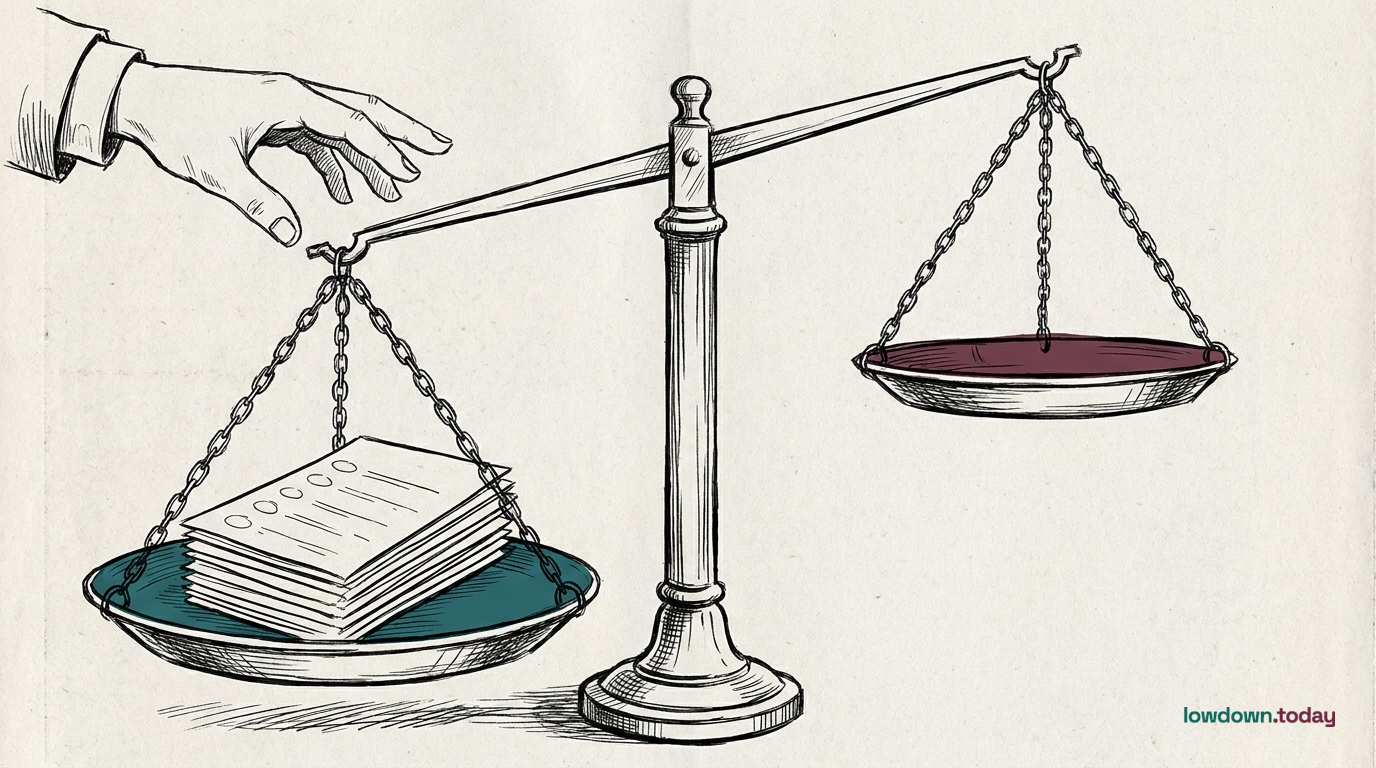
D+6.9 clears the 2018 wave benchmark, but Democrats still face a structural Republican map advantage built to absorb that margin.

Silver Bulletin, the forecasting publication founded by Nate Silver, recorded a D+6.9 congressional generic ballot average on Thursday, up from D+5.9 in the prior reading and the furthest Democratic advantage of the cycle⁠1. The generic ballot measures which party voters prefer for Congress rather than testing any individual candidate; the aggregate tracks national political mood across dozens of polls, weighted by historical accuracy. Republican support fell to 41.6% in May, the lowest of the cycle, marking the third consecutive monthly decline. The prior D+5.8 reading from late April has moved a full point in four weeks.

The D+6.5 threshold is the comparable reading from the 2018 wave cycle that preceded a 40-seat Democratic House gain⁠2. The current D+6.9 reading sits above it. The counter-argument holds structural weight: the 2018 wave hit maps drawn before the redistricting harvest that has now banked a double-digit Republican structural floor without any Democratic offset. A uniform D+6.9 national swing hitting a map engineered to absorb that environment may produce gains in the low twenties rather than the 40-plus of 2018. The efficiency gap, how many Democratic votes pile up in already-blue districts versus reach the marginal seats the maps now insulate, is the decisive variable the topline does not capture.

Three consecutive months of Republican decline is not a single-week spike reversible through a single news event. The Q1 GDP contraction of 0.3% anchored the tariff-driven approval collapse that Cook first registered in April; the generic ballot's direction tracks that macro sequence rather than any single political event. Whether D+6.9 holds, widens, or softens over the next 158 days is the question neither party controls.

Deep Analysis

In plain English

The 'congressional generic ballot' is a standard polling question asking voters which party they would support in a generic House election, without naming any specific candidates. Political forecasters use it as a summary measure of the national political environment. A reading of D+6.9 means roughly 6.9 percentage points more voters say they would support a Democrat than a Republican in a generic congressional race. In 2018, a D+6.5 reading preceded a 40-seat Democratic gain and a House majority. However, the 2018 comparison has a catch. Republicans redrew congressional maps across multiple states in 2026 after a Supreme Court ruling removed a requirement to draw minority-majority districts. That redistricting added a structural advantage worth 12-15 seats in Republicans' favour. So Democrats would need to win more votes than they did in 2018 to gain the same number of seats.

Deep Analysis
Root Causes

Three structural drivers produced the third consecutive monthly Republican decline to 41.6% support.

The Q1 2026 GDP contraction of 0.3% anchored a tariff-driven approval collapse that began in January 2025 when the generic ballot stood at R+3.3 and has produced a 10.2-point cumulative swing. Consumer sentiment surveys from the University of Michigan show the largest four-month confidence drop since the 2008 financial crisis.

Special election results in Georgia's 14th District (25-point Democratic swing) and New Jersey's 11th District (20-point Democratic swing) have demonstrated that the generic ballot is not a lagging indicator in 2026: both results ran ahead of contemporaneous ballot readings, suggesting the aggregate understates Democratic intensity.

The third driver is compounding: each monthly Republican decline makes the 2026 environment resemble 2008 and 2010 more closely, pulling late-deciding campaign donors toward the party showing upward momentum.

First Reported In

Update #7 · Paxton wins; maps lock

Silver Bulletin· 29 May 2026
Read original →
Different Perspectives
University of Florida Election Lab
The lab, run by Michael McDonald, estimates about 124.3 million ballots, a raw midterm record, and turnout of about 49.4% of eligible voters, second to 2018's 50.05%. The raw record reflects population growth more than a record rate, so the late count is working through a near-2018 electorate.
Thune's critics on the right, including Senator Ron Johnson
Ron Johnson backed the failed 31-15 motion to delay Thune's re-election, after activists such as Mike Cernovich blamed the leader for the defeat. Their complaint is that Republicans could have passed the SAVE Act; in January it meets a Democratic Senate instead.
Senator John Thune
Senator John Thune
Thune was re-elected Senate Republican leader by acclamation on 10 November after a motion to delay failed 31-15. He kept the filibuster that stopped the SAVE Act, the choice his critics on the right blame for the defeat.
House Republicans under Jim Jordan
House Republicans elected Jordan minority leader by 106 votes to 73 over Steve Scalise on 10 November, after Speaker Mike Johnson declined to run. They replaced the leadership that lost the majority, while Senate Republicans kept theirs.
Donald Trump
Donald Trump
Trump asked on Truth Social on 9 November whether anybody believed the election "was honest" and blamed the machines, having told The New York Times on polling night he would accept the results. No Republican campaign had sued over a 2026 result by 10 November, so the claim has no case behind it.
Judge David O. Carter
Carter closed the Justice Department's suit over about 20,000 California mail ballots on 10 November after the department withdrew it, writing that the suit "attempted to disrupt an ongoing election". The closure leaves the department with no court order touching a 2026 California ballot.

Written with AI from Lowdown's published reporting. Not individually reviewed by an editor. Editorial standards.
