Skip to content
Welcome, thoughtbot's Giant Robots listeners!Start here
US Midterms 2026
24SEP

Trump Family Ethics Clause Stalls Crypto Bill

2 min read
11:45UTC

Democratic senators inserted provisions barring government officials from profiting from cryptocurrency, targeting Trump family holdings and delaying the CLARITY Act past a May deadline that could push crypto legislation beyond the midterms.

PoliticsDeveloping
Key takeaway

Trump family crypto holdings have made the industry's own legislative target politically impossible to pass cleanly.

Democratic senators inserted ethics provisions into the CLARITY Act (Digital Asset Market Structure bill) barring government officials and their families from profiting from cryptocurrency while in office⁠1. The language targets Trump family crypto holdings through World Liberty Financial and associated ventures. Senate Banking Committee markup is now delayed to late April, with a May floor deadline. Missing May likely pushes crypto legislation past the midterms entirely.

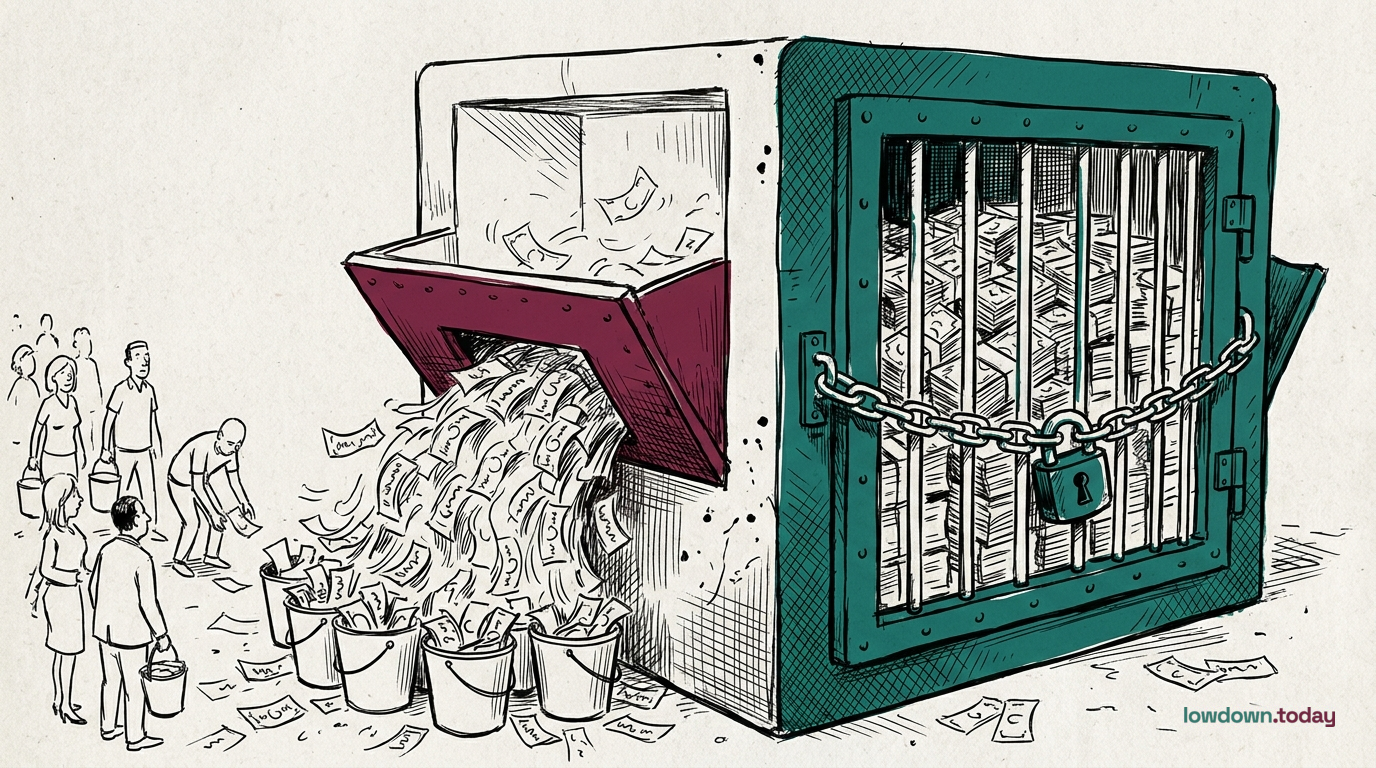
The crypto industry committed $272 million to the 2026 midterms to purchase a regulatory framework. That investment assumed alignment between industry spending and legislative outcomes. The Trump family's financial interests in the sector have introduced a conflict that the industry's money cannot resolve: the very presence of presidential crypto holdings makes the bill politically toxic for Democrats to pass without an ethics bar, and the ethics bar makes it unacceptable to The Administration.

The timing pressure is real. Ripple and Andreessen Horowitz timed their Fairshake contributions before CLARITY Act committee markups. Those contributions purchased access to a legislative calendar that is now slipping. If the bill fails to reach the floor before the midterms, the industry enters a new Congress with no guarantee that the current committee composition, which its money helped select, will be replicated.

Deep Analysis

In plain English

The CLARITY Act is the main legislation the cryptocurrency industry has spent hundreds of millions of dollars lobbying for. It would create a formal legal framework for how digital assets (Bitcoin, Ethereum, and thousands of other cryptocurrencies) are regulated in the United States. Democratic senators inserted a new requirement into the bill: government officials and their family members should not be allowed to profit from cryptocurrency while in office. This provision is aimed at the Trump family's involvement in World Liberty Financial, a crypto venture that has raised hundreds of millions of dollars partly by trading on the president's name and position. The Trump administration cannot easily accept this provision , it would require the president's family to divest their crypto holdings. But without accepting it, the bill cannot advance through the Senate Banking Committee, pushing the legislation's deadline past May and likely past the November 2026 midterm elections entirely.

What could happen next?
  • Consequence

    Missing the May Senate floor deadline likely pushes crypto legislation past the 2026 midterms, meaning the sector faces continued regulatory uncertainty through at least 2027 regardless of which party controls the House.

  • Risk

    The Fairshake PAC's $171M has now been committed to electing a Congress whose first legislative priority for the sector , the CLARITY Act , has been blocked by the administration's own family financial interests, creating a principal-agent failure between the PAC's stated mission and the conditions the administration created.

First Reported In

Update #2 · First votes exceed every forecast

Elliptic· 12 Apr 2026
Read original →
Causes and effects
This Event
Trump Family Ethics Clause Stalls Crypto Bill
The CLARITY Act delay exposes a structural conflict: the crypto industry's campaign spending may have created the political conditions that prevent the legislation it was designed to purchase.
Different Perspectives
University of Florida Election Lab
The lab, run by Michael McDonald, estimates about 124.3 million ballots, a raw midterm record, and turnout of about 49.4% of eligible voters, second to 2018's 50.05%. The raw record reflects population growth more than a record rate, so the late count is working through a near-2018 electorate.
Thune's critics on the right, including Senator Ron Johnson
Ron Johnson backed the failed 31-15 motion to delay Thune's re-election, after activists such as Mike Cernovich blamed the leader for the defeat. Their complaint is that Republicans could have passed the SAVE Act; in January it meets a Democratic Senate instead.
Senator John Thune
Senator John Thune
Thune was re-elected Senate Republican leader by acclamation on 10 November after a motion to delay failed 31-15. He kept the filibuster that stopped the SAVE Act, the choice his critics on the right blame for the defeat.
House Republicans under Jim Jordan
House Republicans elected Jordan minority leader by 106 votes to 73 over Steve Scalise on 10 November, after Speaker Mike Johnson declined to run. They replaced the leadership that lost the majority, while Senate Republicans kept theirs.
Donald Trump
Donald Trump
Trump asked on Truth Social on 9 November whether anybody believed the election "was honest" and blamed the machines, having told The New York Times on polling night he would accept the results. No Republican campaign had sued over a 2026 result by 10 November, so the claim has no case behind it.
Judge David O. Carter
Carter closed the Justice Department's suit over about 20,000 California mail ballots on 10 November after the department withdrew it, writing that the suit "attempted to disrupt an ongoing election". The closure leaves the department with no court order touching a 2026 California ballot.

Written with AI from Lowdown's published reporting. Not individually reviewed by an editor. Editorial standards.
