Skip to content
Welcome, thoughtbot's Giant Robots listeners!Start here
US Midterms 2026
24SEP

NRSC moves its ad money in-house

3 min read
11:45UTC

The National Republican Senatorial Committee told staff it will close its independent-expenditure unit and move the money into coordinated buys that air three to 13 times cheaper.

PoliticsDeveloping
Key takeaway

By moving to coordinated buys, the NRSC turns its cash edge into a much larger edge in airtime.

The National Republican Senatorial Committee (NRSC) told staff on Tuesday 30 June that it will close its independent-expenditure unit and route that money into coordinated buys instead, according to an internal memo⁠1. An independent expenditure is ad spending a committee runs on its own, legally barred from any coordination with the candidate. the Supreme Court ruling that same day, which lifted the cap on coordinated party spending, makes the separation pointless.

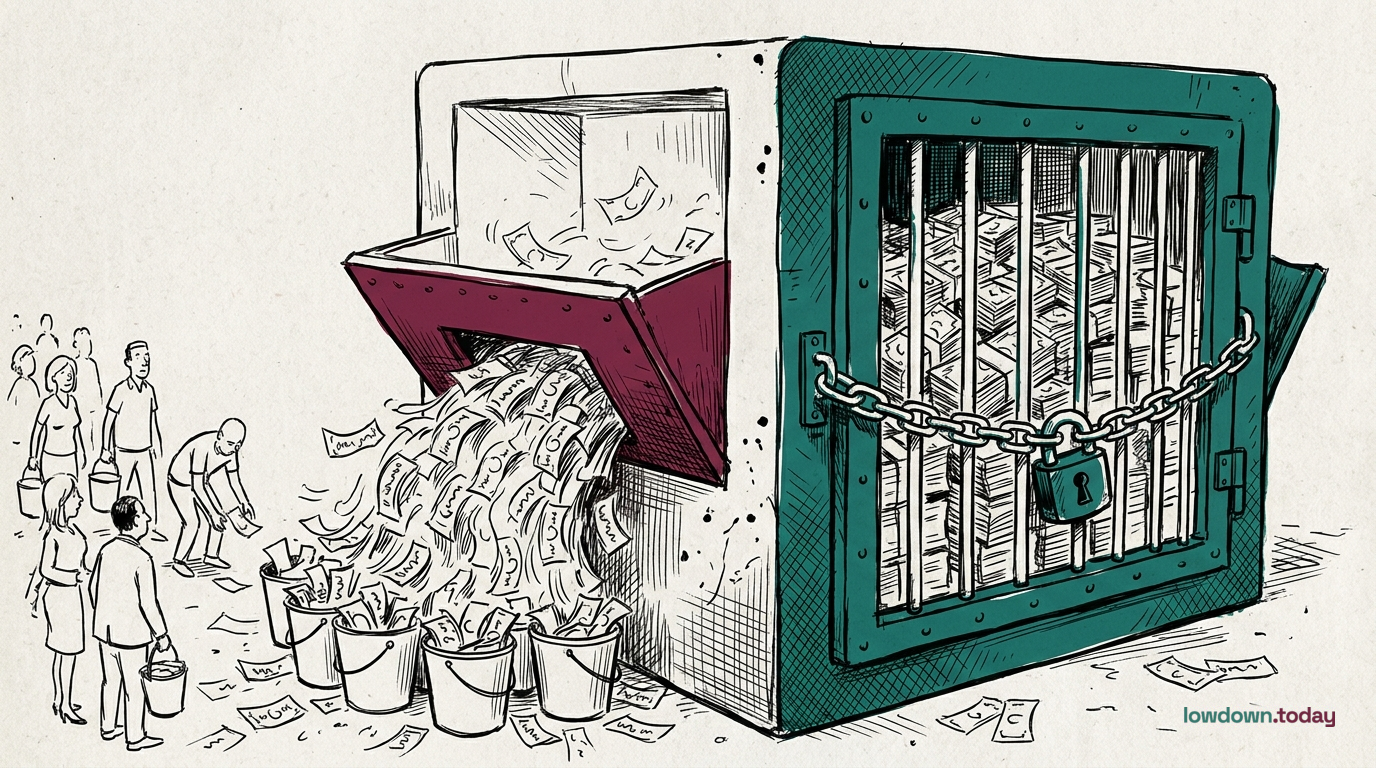
Coordinated ad time qualifies for the Lowest Unit Charge (LUC), the discounted broadcast rate that stations must offer candidates and parties in the weeks before an election. The NRSC memo puts coordinated buys at three to 13 times cheaper than the rates outside groups pay⁠2. So the ruling does more than raise a ceiling: each committee dollar routed through a coordinated buy now purchases several times the airtime it bought a day earlier.

The shift runs against the direction outside groups have been moving. Aligned super PACs are still pouring money into independent expenditures, with Americans for Prosperity Action filing $6.4m in Senate independent expenditures across five states in a single day in early June. The ruling now pulls that spending logic back toward the party committees themselves, which can coordinate directly and buy cheaper. Democrats can use the identical mechanism; it favours one side only because that side has more cash to run through it.

Deep Analysis

In plain English

Political parties used to run two separate teams: one that worked directly with candidates on ads, limited by a spending cap, and one that spent independently with no contact with the campaign at all, uncapped but at a higher advertising rate. Now that the cap on the first team is gone, the Republican Senate campaign committee is shutting the second team entirely. The NRSC decided there was no reason to keep both running, and closed the independent team within hours of the ruling.

Deep Analysis
Root Causes

FEC rules required the NRSC to keep its independent-expenditure staff walled off from its candidate-facing coordinated team, with no shared consultants and no shared information, to stop the two operations from functionally coordinating in violation of the cap. Maintaining two staffs under one roof for that purpose only made sense while the cap existed.

Once the Supreme Court removed it, the wall lost its function, and the smaller, costlier independent-expenditure unit became overhead the NRSC no longer needed to carry.

What could happen next?
  • Consequence

    NRSC's compliance overhead falls, since a single coordinated desk replaces the legally mandated firewall between its two former spending teams.

First Reported In

Update #11 · Money uncapped, ballot rules untouched

Townhall· 1 Jul 2026
Read original →
Causes and effects
This Event
NRSC moves its ad money in-house
Coordinated ad time qualifies for a discounted broadcast rate, so each committee dollar now buys several times more airtime than before.
Different Perspectives
Missouri and Secretary of State Denny Hoskins
Missouri and Hoskins, held in contempt by the state's own supreme court on 10 September for prematurely reverting to HB 1, filed against a pause of the 8th Circuit's order restoring the same 2025 map.
Richard von Glahn and People Not Politicians
Von Glahn and People Not Politicians filed emergency application 26A388 on 22 September asking Justice Kavanaugh to pause the 8th Circuit's order restoring the 2025 map, days after Missouri mailed overseas ballots under the 2022 lines. A refusal to pause it would leave those ballots carrying the wrong districts.
Harmeet Dhillon, Justice Department
Dhillon said the department will send about 1,000 election monitors to Nevada, Pennsylvania and Rhode Island in November, calling it "the biggest DOJ election observer effort in history" and citing "67 election-related indictments and convictions" against 13 under the Biden administration.
National Association for the Advancement of Colored People and co-plaintiffs
The NAACP and eight other groups sued DHS in Washington on 18 September to keep ICE away from polling places, citing federal statutes barring armed officers and troops at elections. The suit follows a released 2025 DHS email listing non-English-language voting jurisdictions beside a Justice Department prosecution checklist.
Cook Political Report
Cook wrote that "the amount of money national Republicans have dedicated to this race is a flashing red light for Democrats" when it moved New Hampshire from Lean Democrat to Toss Up on 15 September, citing the NRSC's $5.18m for Sununu. It is the one state where Republican spending and the rating move the same direction.
Democratic Senate strategists
Strategists note the DSCC held a $37.6m cash lead over the NRSC's $18.7m at the end of August, after coordinating just $1.00m of spending itself. One reading holds the committee is banking that cash for the campaign's final weeks rather than matching Republican spending dollar-for-dollar in August.