Skip to content
You can now search across every topic, entity and event.What's new
US Midterms 2026
15SEP

DOJ Sues 29 States for Voter Data

3 min read
14:21UTC

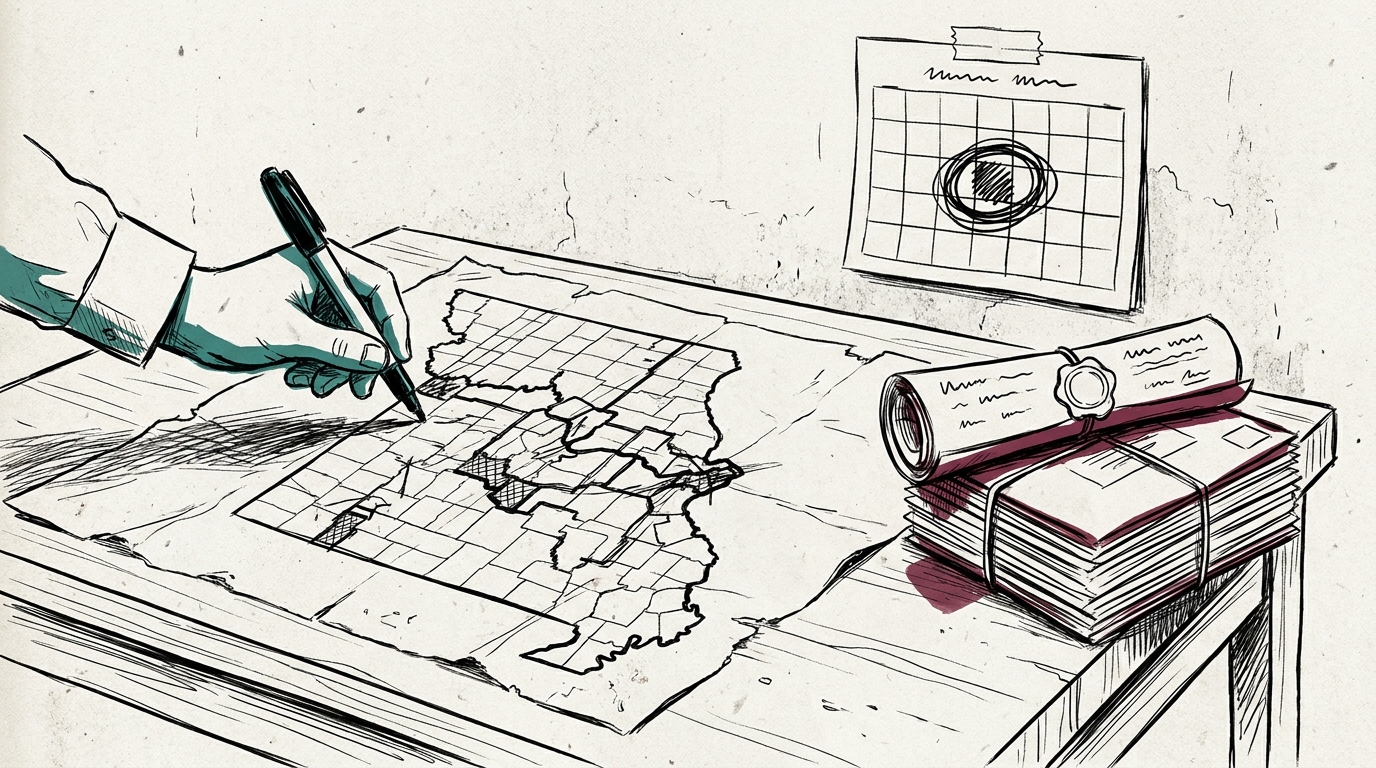
The Department of Justice has asked 48 states for complete voter registration lists and sued the 29 that refused, building the database infrastructure beneath the blocked executive order.

PoliticsDeveloping
Key takeaway

The DOJ is building a federal voter database through litigation even as courts block the EO it supports.

The Department of Justice has now asked 48 states and Washington DC for complete voter registration lists 1. Twenty-nine states and DC refused and were subsequently sued. In court, a DOJ official admitted the department plans to share the data with the Department of Homeland Security to run through the SAVE (Systematic Alien Verification for Entitlements) system to screen for non-citizens 2.

Three courts (California, Michigan, Oregon) have explicitly rejected DOJ's claims to unredacted voter files. Seventeen mostly Republican-led states complied. The DOJ invokes the Civil Rights Act of 1960 to assert authority over election records, a legal theory that, if upheld, would grant broad federal access to state election infrastructure. The statute was designed to protect minority voting rights; the DOJ is repurposing it to demand voter data that civil rights organisations argue would be used to suppress minority registration.

This is the infrastructure beneath the headline executive order. The EO directs DHS and SSA to compile citizenship lists for gating USPS ballot delivery. The DOJ voter data campaign builds the database that infrastructure requires. Though courts have blocked seven EO provisions, the DOJ's affirmative litigation to obtain voter data continues on a separate legal track, constructing the very database the blocked provisions were designed to populate.

Deep Analysis

In plain English

Presidential economic approval measures how voters rate the president's handling of the economy , not whether they like the president personally, but specifically whether they trust his economic management. When this number falls below 35%, historical data suggests the president's party is almost always punished at the next midterm election. The tariff finding is particularly striking: 56% of Republican voters say they believe tariffs are raising prices. This is notable because Republicans are the president's own political base. When a majority of the governing party's voters believe the president's signature economic policy is making things more expensive, it creates pressure from within the coalition as well as from the opposition. Lower-income voters , those most exposed to price increases in food, fuel, and everyday goods , have shifted 7 percentage points toward Democrats since January 2025. This is the demographic most directly affected by tariff-driven price increases at the grocery store and the petrol station.

Deep Analysis
Root Causes

Trump's economic approval collapse has two structural drivers operating simultaneously.

First, tariff pass-through speed: agricultural and fuel tariffs translate to consumer prices faster than industrial tariffs because supply chains are shorter. A farm household buying diesel and fertiliser sees the cost increase within weeks of a tariff taking effect; a factory worker buying imported machinery parts sees the effect over months. The 7-point lower-income voter shift reflects the demographic most exposed to fast-moving commodity price transmission.

Second, intra-coalition information saturation: the 56% of Republican voters who believe tariffs raise prices is not partisan signal but a measurement of how pervasively the tariff-price connection has penetrated conservative media. When Fox News and Newsmax audiences reach majority-level belief that the president's signature economic policy is inflationary, the approval floor becomes structurally lower than in previous trade disputes, where the information environment was more segmented.

What could happen next?
  • Consequence

    If economic approval remains at 31-35% through autumn 2026, Gallup's historical base rate implies Republican House losses in the 15-35 seat range , consistent with the Brookings 12-20 projection but with the upper tail extending further.

  • Risk

    The tariff price transmission lag means economic approval could deteriorate further by August 2026 as the Liberation Day round hits consumer prices, potentially moving the figure below 30% before the campaign's final stretch.

First Reported In

Update #2 · First votes exceed every forecast

Votebeat· 12 Apr 2026
Read original
Different Perspectives
Cook Political Report
Cook Political Report published a dated House ratings snapshot on 11 September and changed no seat's rating, holding at 206 Democratic to 208 Republican with 21 tossups since its 3 September batch. Publishing without a change is a dated decision, not an oversight, leaving Republicans ahead on seats while Democrats lead the national vote by 6.6 points.
Department of Justice
A Justice Department official told the Las Vegas Review-Journal that preservation letters like the one sent to Aguilar go to states the department is in active litigation against over incomplete voter registration lists. The department would not answer the paper's specific questions about the personal investigation notice riding inside the same letter.
Francisco Aguilar
Francisco Aguilar
Nevada Secretary of State Francisco Aguilar publicly rejected Justice Department pressure on 12 September, days after a 4 September letter combined a records-preservation demand with a personal notice that he is under investigation. He said he will not fold until a judge orders him to, making his office's compliance a political stand rather than a routine filing.
Brett Kavanaugh
Brett Kavanaugh
Justice Brett Kavanaugh denied Missouri's state-track stay application alone on 8 September without referring it, then sent the separate federal-track application in Onder v. State of Missouri to the full Court, which stayed it on 10 September. His choice of which application to keep and which to share decided how much of the fight one justice controlled.
Robert Onder and the federal plaintiffs
Robert Onder and three other Republican plaintiffs won a temporary restraining order from Chief Judge Stephen R. Clark on 8 September ordering Missouri to use HB 1, then lost it when the Supreme Court stayed it on 10 September. Their federal route ran parallel to Hoskins's own reversal and ended the same way, with the 2022 map governing 3 November.
Richard Von Glahn and People Not Politicians
Richard Von Glahn and People Not Politicians won Von Glahn v. Hoskins on 3 September, persuading the Missouri Supreme Court that their referendum petition stripped HB 1 of effect and sent it to voters as Proposition A. The contempt finding against Hoskins this week confirms their win held even after the state's chief election officer tried to reverse it.