Skip to content
You can now search across every topic, entity and event.What's new
US Midterms 2026
7SEP

Generic ballot climbs back toward D+7

1 min read
13:32UTC

Nate Silver wrote on 13 July that the generic congressional ballot average was "approaching D+7", erasing the late-June easing with no economic or structural trigger in the window.

PoliticsDeveloping
Key takeaway

The generic ballot's June easing reversed within two weeks with no event to explain either move.

Silver Bulletin's weighted generic congressional ballot average stood at D+6.3 in mid-July, and Nate Silver wrote on Monday 13 July that it was "approaching D+7" 1. The generic ballot asks which party's candidate a respondent would back in their own district, and it is the crudest available read on the national environment. The average had eased to D+6.1 on 30 June from a D+6.9 peak in late May , a dip attributed partly to June payrolls landing at 57,000 against a 115,000 consensus .

Nothing structural or economic arrived between 9 and 17 July to explain the climb back. Absent a trigger, the June easing looks like sampling noise that has now washed out, rather than a movement that reversed.

Silver notes that most of the panel's inputs are registered-voter polls, and that a likely-voter screen could put the true figure at D+8 or D+9 2. That cuts against the historical pattern, in which registered-voter samples overstate Democratic performance in midterms because turnout skews older and more Republican. The claim worth contesting sits there, in the inversion, not in the topline.

The panel also disagrees with itself more than the average admits. NBC News, Cygnal and TIPP show roughly D+5; YouGov and Morning Consult roughly D+3; Focaldata, J.L. Partners, Quinnipiac and Emerson range from D+7 to D+11 3. Eight points separate the ends of that spread, and a single number drawn across it carries a great deal of weight.

Deep Analysis

In plain English

The 'generic ballot' asks voters a simple question: would you rather elect a Republican or a Democrat to Congress, without naming anyone specific, and pollsters use the answer to gauge the national mood ahead of November. Democrats had built roughly a six-point lead in polling analyst Nate Silver's average, that edge briefly narrowed in late June after a weak jobs report, then widened again by mid-July back toward a seven-point lead. No new event explains the rebound, which suggests the late-June dip was a blip rather than a real turning point.

Deep Analysis
Root Causes

Nate Silver's own Silver Bulletin tracking links the late-June easing partly to the weak 57,000-job June payrolls report: the average slid from a 28 May peak of D+6.9 to D+6.1 by 30 June, then resumed climbing to D+6.3, described by Silver as 'approaching D+7', by 13 July.

No comparable economic or structural trigger landed in the intervening fortnight to explain the renewed climb, which points to the late-June dip reflecting noise around a single weak jobs report rather than a durable shift in the underlying political environment.

First Reported In

Update #13 · Graham's death strands the SAVE Act route

Silver Bulletin· 17 Jul 2026
Read original
Different Perspectives
New Hampshire student voters
Students who hold no accepted photo ID under HB 323 cannot vote in the 8 September primary after Judge Laplante declined to block the law on timing grounds. Whether the same rule applies on 3 November is still open.
Alaska Democratic Party
The Alaska Democratic Party moved $884,835 in coordinated spending to Mary Peltola between 17 and 30 July, more than the DCCC spent nationally in the same fortnight.
National Republican Senatorial Committee
The NRSC, which sued to remove coordinated-spending caps in NRSC v. FEC, put $2,230,472 behind candidates in the first complete month after winning that case, more than double the total for the prior six months combined.
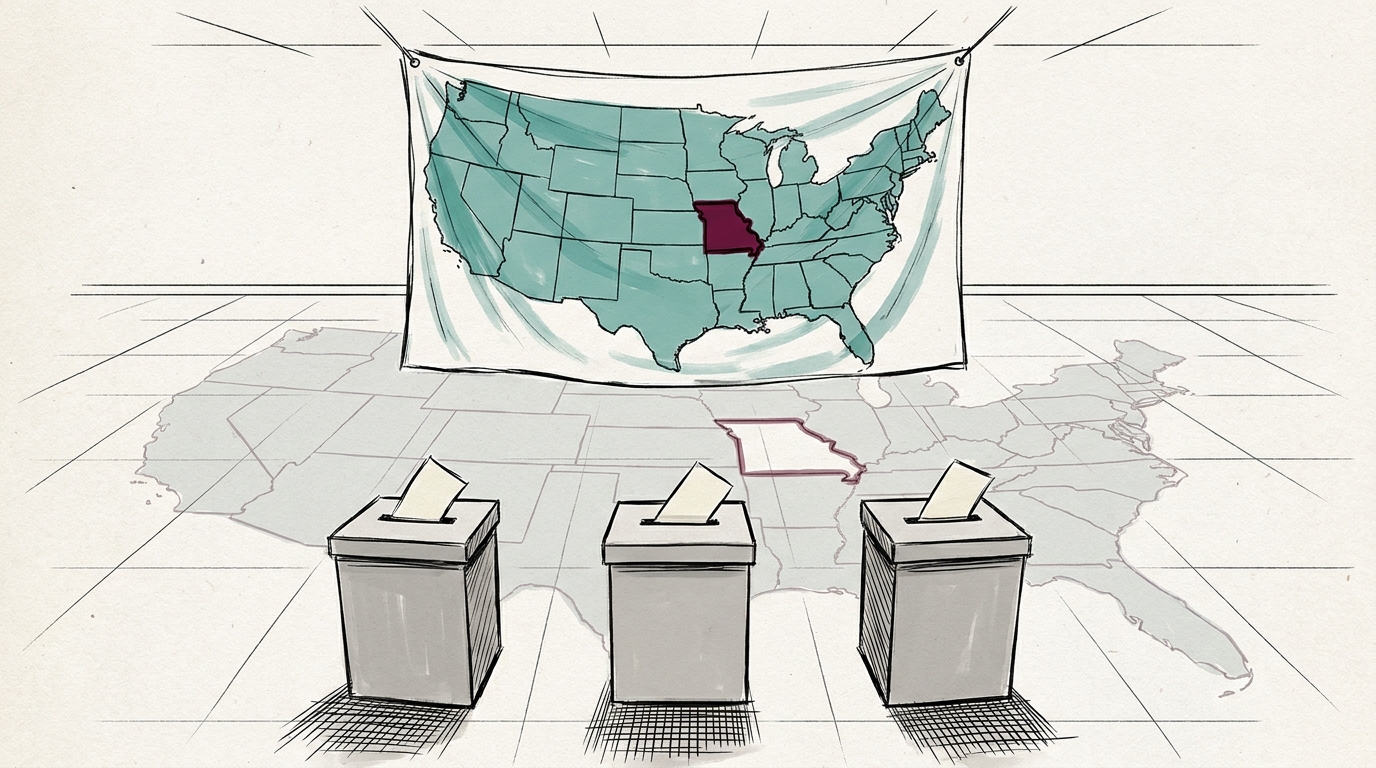
Supreme Court of Missouri
The unanimous court held that Article III, section 49 carries no redistricting exception, so a referendum petition against a congressional map is as valid as against any other law. It ordered the 2022 map to govern unless voters approve HB 1 on 3 November.
Denny Hoskins, Missouri Secretary of State
Hoskins told the Supreme Court that changing the congressional map after 1.2 million primary votes and ahead of the 19 September overseas-ballot deadline violates Purcell and the Elections Clause. He wants HB 1 reinstated before ballots print for November.
Senate Republican leadership
Floor time is finite at 51-47 with a bipartisan funding negotiation running, and a contested procedural fight over grant conditions is not the best use of it this month. Nothing has been abandoned; the resolution keeps its place on the calendar.
