Skip to content
Welcome, thoughtbot's Giant Robots listeners!Start here
US Midterms 2026
4AUG

Generic ballot climbs back toward D+7

1 min read
08:56UTC

Nate Silver wrote on 13 July that the generic congressional ballot average was "approaching D+7", erasing the late-June easing with no economic or structural trigger in the window.

PoliticsDeveloping
Key takeaway

The generic ballot's June easing reversed within two weeks with no event to explain either move.

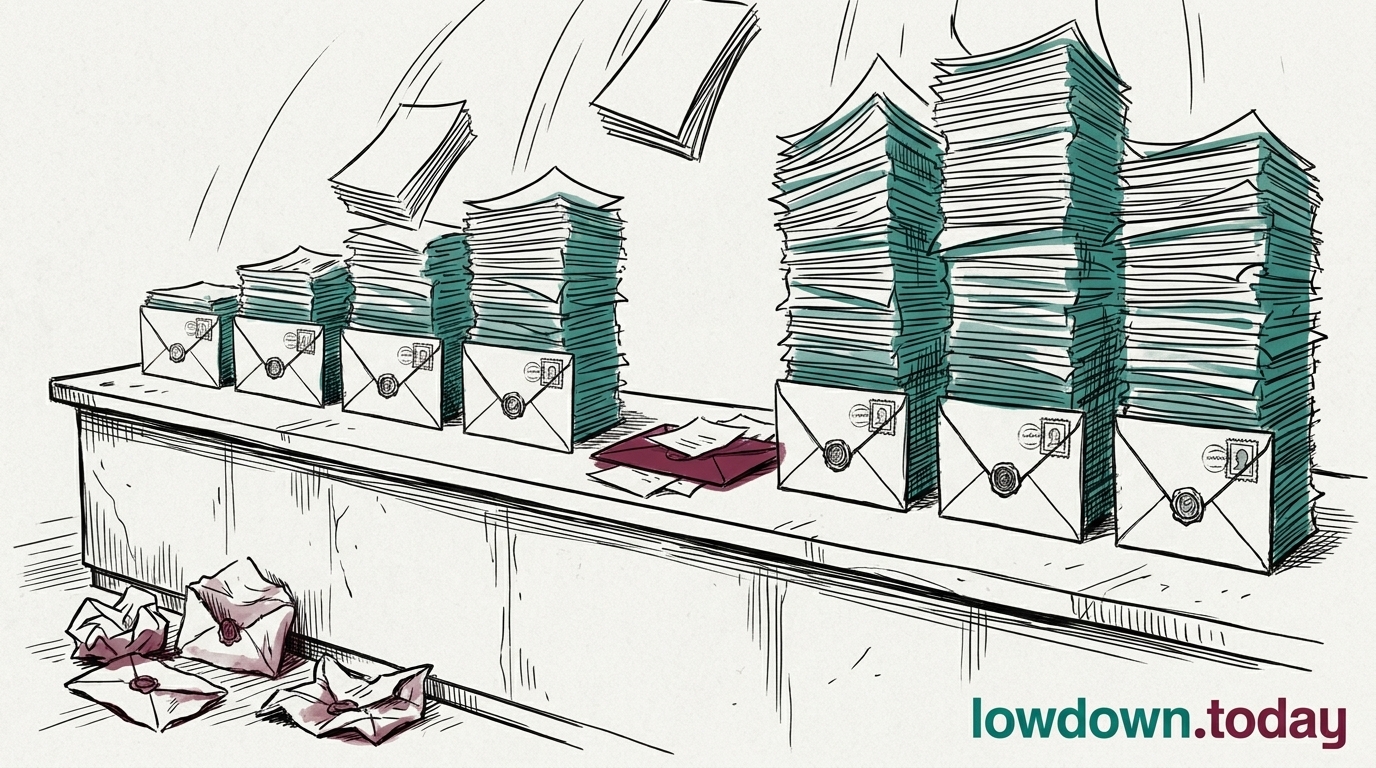
Silver Bulletin's weighted generic congressional ballot average stood at D+6.3 in mid-July, and Nate Silver wrote on Monday 13 July that it was "approaching D+7"⁠1. The generic ballot asks which party's candidate a respondent would back in their own district, and it is the crudest available read on the national environment. The average had eased to D+6.1 on 30 June from a D+6.9 peak in late May, a dip attributed partly to June payrolls landing at 57,000 against a 115,000 consensus.

Nothing structural or economic arrived between 9 and 17 July to explain the climb back. Absent a trigger, the June easing looks like sampling noise that has now washed out, rather than a movement that reversed.

Silver notes that most of the panel's inputs are registered-voter polls, and that a likely-voter screen could put the true figure at D+8 or D+9⁠2. That cuts against the historical pattern, in which registered-voter samples overstate Democratic performance in midterms because turnout skews older and more Republican. The claim worth contesting sits there, in the inversion, not in the topline.

The panel also disagrees with itself more than the average admits. NBC News, Cygnal and TIPP show roughly D+5; YouGov and Morning Consult roughly D+3; Focaldata, J.L. Partners, Quinnipiac and Emerson range from D+7 to D+11⁠3. Eight points separate the ends of that spread, and a single number drawn across it carries a great deal of weight.


Deep Analysis

In plain English

The 'generic ballot' asks voters a simple question: would you rather elect a Republican or a Democrat to Congress, without naming anyone specific, and pollsters use the answer to gauge the national mood ahead of November. Democrats had built roughly a six-point lead in polling analyst Nate Silver's average, that edge briefly narrowed in late June after a weak jobs report, then widened again by mid-July back toward a seven-point lead. No new event explains the rebound, which suggests the late-June dip was a blip rather than a real turning point.

Deep Analysis
Root Causes

Nate Silver's own Silver Bulletin tracking links the late-June easing partly to the weak 57,000-job June payrolls report: the average slid from a 28 May peak of D+6.9 to D+6.1 by 30 June, then resumed climbing to D+6.3, described by Silver as 'approaching D+7', by 13 July.

No comparable economic or structural trigger landed in the intervening fortnight to explain the renewed climb, which points to the late-June dip reflecting noise around a single weak jobs report rather than a durable shift in the underlying political environment.

First Reported In

Update #13 · Graham's death strands the SAVE Act route

Silver Bulletin· 17 Jul 2026
Read original →
Different Perspectives
Missouri voters
Missouri voters
Missouri voters rejected Proposition A by 61.83% to 38.17% at 95% reporting, repealing the 2025 map that split Kansas City. Trump carried the state, yet its 2022 lines now stay for future elections too.
Senate Leadership Fund (SLF)
SLF reported about $43.9m of independent expenditures from 27 October to 1 November, almost all against Democrats, including $12.37m against Sherrod Brown. Seven of its ten targets won; Dan Osborn lost in Nebraska and two are uncalled.
Richard Hudson, chair of the National Republican Congressional Committee
Hudson, who runs House Republicans' campaign arm, conceded North Carolina's 9th District to Richard Ojeda before any AP call. Democrats lead 10 of the state's 14 House districts on the unofficial feed.
Department of Justice (DOJ)
DOJ lost before Judge David O. Carter on 28 October and a 9th Circuit panel on 30 October on its demand to set aside 20,000 California ballots, and says it will appeal the Alaska dismissal. No court has set a ballot aside.
Senator Dan S. Sullivan
Sullivan, who trails Mary Peltola 48.2% to 47.9% on first choices, told CNN he would accept the result. DOJ's suit to stop Alaska certifying anyone but him was dismissed on 1 November.
Scott Colom's campaign
Colom's campaign estimates that about 15,000 affidavit ballots remain to be counted in a race he leads by roughly 65 to 100 votes. Those ballots count only if voters confirm their ID or eligibility by 5pm on 10 November.

Written with AI from Lowdown's published reporting. Not individually reviewed by an editor. Editorial standards.