Skip to content
You can now search across every topic, entity and event.What's new
UK Local Elections 2026
6MAY

Welsh Labour collapses to nine seats

4 min read
17:39UTC

Welsh Labour finished with 9 Senedd seats on 7 May 2026, the smallest Welsh Labour group in any devolved chamber since 1910, after First Minister Eluned Morgan lost her Ceredigion Penfro seat on 6,495 votes.

PoliticsDeveloping
Key takeaway

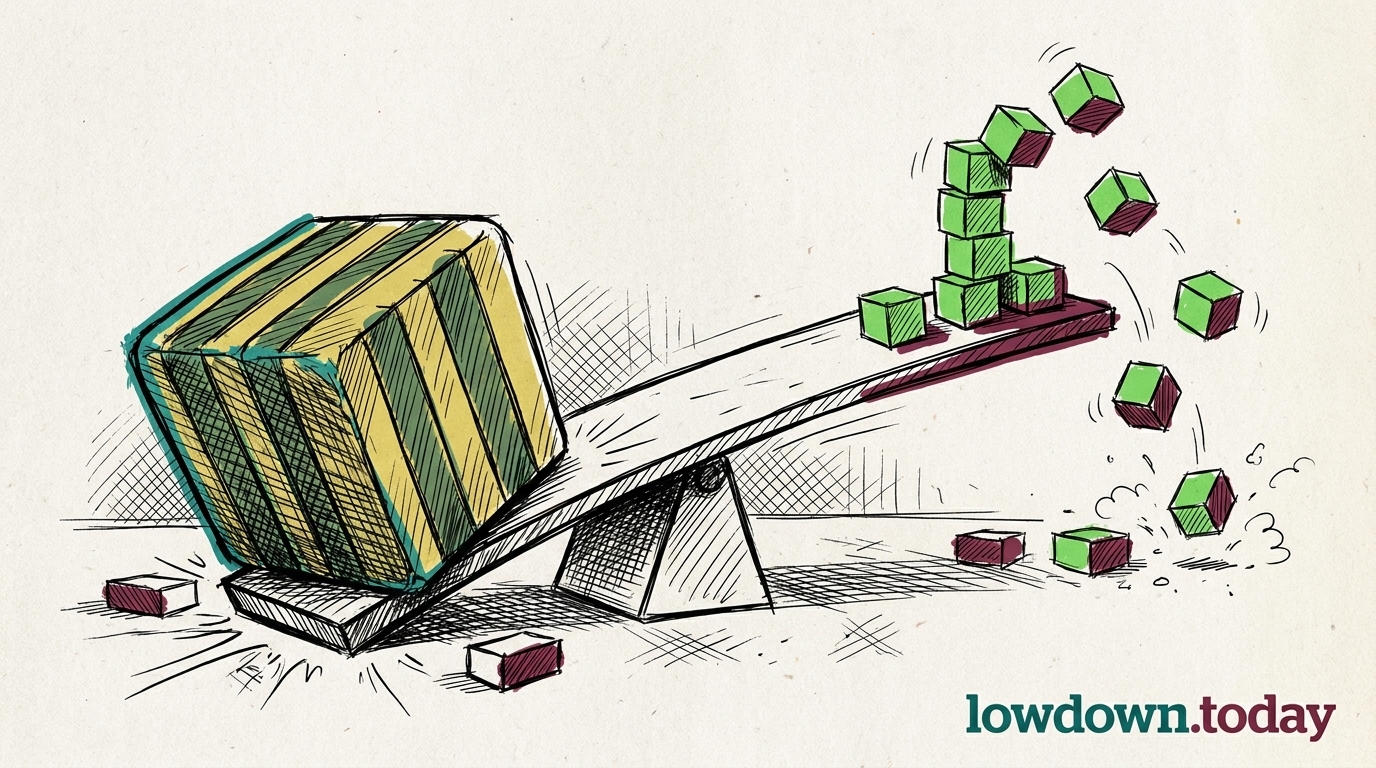
Welsh Labour's 2024 closed-list PR system produced the 9-seat result its 12 percent vote share required.

Welsh Labour finished with 9 of 96 Senedd seats on Thursday 7 May 2026, polling 12 percent vote share. It is the smallest Welsh Labour group in any devolved chamber and the worst Labour result in Wales by any measure since 1910. Eluned Morgan, the First Minister, lost her Ceredigion Penfro constituency on 6,495 votes, becoming the first sitting head of a UK government to lose her own seat in office. The party appointed Ken Skates interim leader within 24 hours.

The 9-seat result sits three seats below the YouGov final Senedd MRP, which projected Welsh Labour on 12 seats and 12 percent vote share . Three seats inside the modelling error band is a strikingly accurate projection by the standard of the same firm's English MRP, which missed Reform UK by 894 seats on the same night (event-00). The Welsh ballot used D'Hondt, the proportional formula that allocates seats by dividing each party's votes by successive divisors, on a closed-list system in which voters pick a party and seats go to candidates in the order the party listed them. PR systems remained projectable; FPTP did not.

D'Hondt at 12 percent vote share produces 9-to-12 seats out of 96, which is what arrived. There is no FPTP cushion to soften vote-share collapse for a previously dominant party under closed-list PR. The Senedd was expanded from 60 to 96 seats and the new closed-list system negotiated by Mark Drakeford's administration in 2024 on capacity and democratic-renewal grounds. Welsh Labour wrote the system, voted for the system, and absorbed the result the system arithmetically produced. The sole instrument that might have lifted the seat tally, an FPTP constituency tier, was deliberately removed in the same Reform.

Senedd turnout was 51.72 percent, the highest ever recorded for a Welsh devolved election. Higher participation under a more proportional ballot did not save Welsh Labour. Voters arrived in larger numbers and distributed their support more thinly across more parties. Morgan's successor as Welsh Labour leader, and the party's posture toward a Plaid Cymru minority government's confidence-and-supply requests (event-02), will define whether the 9-seat result is the floor of the collapse or its first stage.

Deep Analysis

In plain English

Wales has its own parliament, called the Senedd. Until 2026 it used a voting system where you could vote for a local candidate as well as a party. Welsh Labour had been in government there since 1999, 27 years without a break. In 2026, Wales switched to a new voting system where you only vote for a party, not a person. Votes are then converted into seats using a formula called D'Hondt. At 12% of the vote, Labour only gets 9 seats out of 96. First Minister Eluned Morgan wasn't personally rescued by voters in her area because the new system doesn't work that way. She lost her seat along with Labour's majority.

Deep Analysis
Root Causes

Welsh Labour's structural collapse has three independent drivers, each of which would have been damaging alone.

First, the new D'Hondt closed-list system removed the incumbency advantage that had sustained Welsh Labour MSs in their personal votes for 27 years. Under the old mixed-member system, a popular local MS could survive a party collapse by converting personal votes into constituency wins. Under closed-list D'Hondt, the individual is invisible to the voter; only the party label matters.

Second, the Welsh Green Party's 8-seat collapse in the final polling fortnight, Green-to-Plaid tactical migration, concentrated the anti-Labour vote on a single challenger. Plaid at 43 seats needed a fragmented opposition; instead it got a unified one.

Third, Morgan's personal approval ratings were negative from the start of 2026 (The Spectator reported a net rating of minus 18 for Farage in the 28 April debate, but Morgan's own ratings among Welsh voters were also negative). A leader who cannot defend her own seat cannot retain swing voters in marginal constituencies.

What could happen next?
  • Consequence

    Plaid Cymru forms its first-ever government with a thin confidence-and-supply arrangement; every budget vote requires negotiation with Welsh Labour's 9-seat rump or the sole Lib Dem, making sustained governance structurally fragile.

    Immediate · 0.85
  • Risk

    Welsh Labour's 9-seat rump is below the threshold for official opposition status in many procedural senses; the party faces an internal leadership crisis and possible merger discussions with UK Labour over devolved autonomy.

    Short term · 0.65
  • Consequence

    The first sitting First Minister in any UK devolved institution to lose their own seat sets a constitutional precedent for how governments handle the transition period between results and formal change of office.

    Short term · 0.9
First Reported In

Update #7 · Reform's 14 councils, 894 seats short

Wikipedia (citing BBC Wales and ITV Cymru Wales results)· 9 May 2026
Read original
Causes and effects
This Event
Welsh Labour collapses to nine seats
Twenty-seven years of continuous Welsh Labour government ended in a single count, with the sitting head of a UK government becoming the first to lose her own constituency in office. The closed-list D'Hondt arithmetic that produced the result is the system Welsh Labour itself wrote and voted into law in the 2024 Senedd reform package.
Different Perspectives
Local Government Association
New chair Eamonn O'Brien broke the LGA's neutrality on reorganisation for the first time since December 2024, telling the incoming prime minister the 'unprecedented scale' of disaggregation risks statutory services and asking him to adjust the LGR timetable, aligning the sector's institutional voice with the judicial review claims Suffolk, Essex and Norfolk have already filed.
Reform UK
Reform UK
Reform's £12m Harborne windfall from 2025 predates the 25 March retrospective crypto-donation ban, so the new law does not reach it; a live police probe into £500,000 of Cottrell donations continues, while the standards inquiry into Harborne's undeclared £5m gift is frozen since Farage vacated Clacton on 8 July.
Incoming Burnham government
Burnham secured 349 of the backing the NEC's 81-MP threshold required by 13 July, becoming Labour leader on 17 July and prime minister on 20 July without a members' ballot. He now inherits the LGR timetable the LGA wants him to adjust and a finance bill his own backbencher, Liam Byrne, is trying to harden further via amendment NC34.
Rupert Lowe / Restore Britain
Lowe called Farage's Clacton contest a 'Reform-sponsored media circus' and kept Restore Britain out of it, pledging instead to stand in the second by-election he expects the Harborne inquiry to force later this year. The boycott doubles as a signal that Restore Britain, not Reform, will contest the 'real' vote.
Kemi Badenoch / Conservative Party
Badenoch dismissed Farage's Clacton contest as a 'fake by-election' and joined the boycott, but reserved the right to fight a genuine second contest if Greenberg's inquiry forces one. The Conservatives are betting their real fight comes in autumn, not July.
Rhun ap Iorwerth / Plaid Cymru
Ap Iorwerth defended a £145m NHS allocation at First Minister's Questions on 1 July, blaming a graduate-nurse shortfall on 2022 training decisions taken before his Plaid-led government took office in May. Answering for choices his government did not make gives his new administration its first real accountability test.