Skip to content
UK Local Elections 2026
13APR

Labour and Greens draw level at 16%

2 min read
16:52UTC

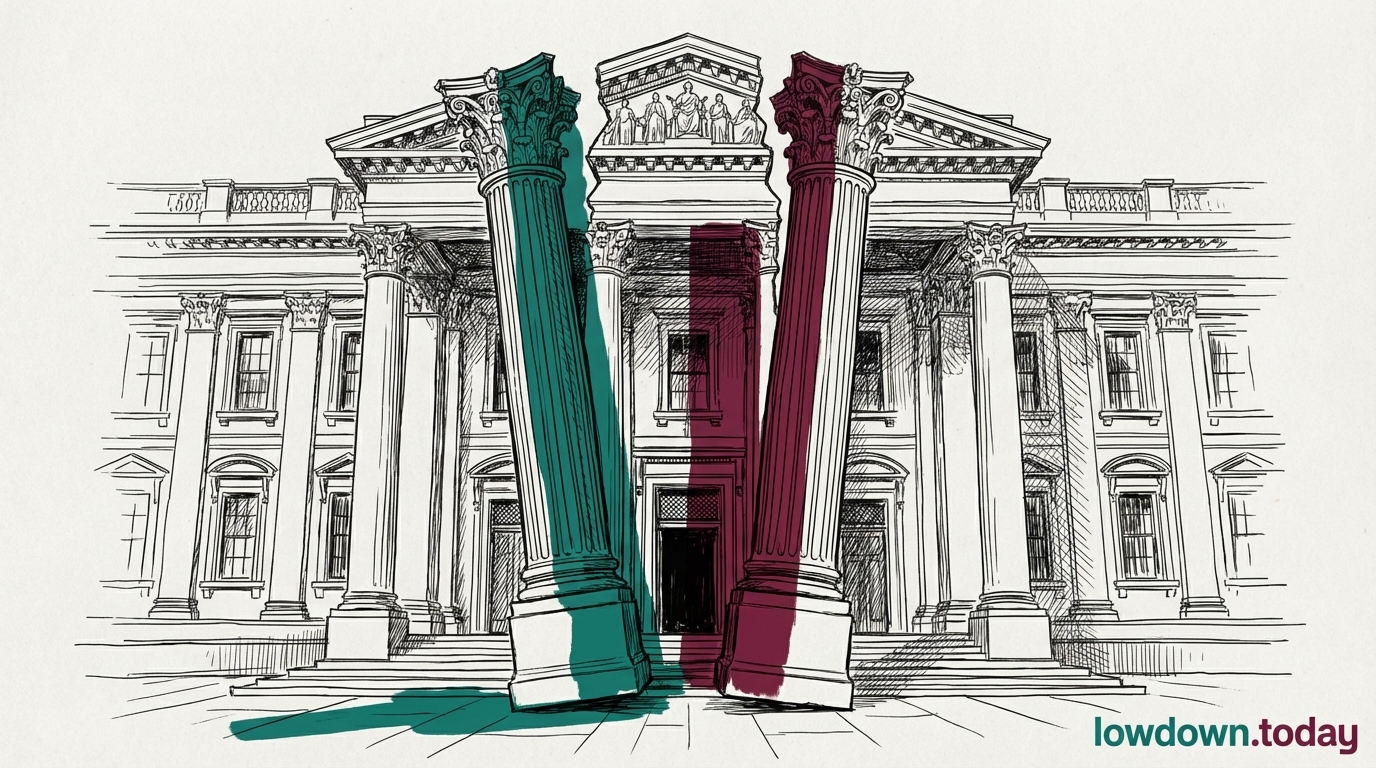
For the first time in modern British polling, Labour and the Green Party share the same national vote share. The left is splitting at the same rate as the right.

PoliticsDeveloping
Key takeaway

Labour and the Greens share 16% nationally, splitting the left as Reform splits the right.

YouGov polling on 6-7 April placed Labour and the Green Party level at 16% each, with Reform UK leading on 24% and the Conservatives on 19% 1. It is the first time in the modern history of British polling that Labour and The Greens have drawn level. A week earlier, YouGov's 29-30 March survey put The Greens one point ahead at 19% to Labour's 18%.

On the right, Reform has absorbed Conservative voters for two years. On the left, the same process is now visible: Green membership has tripled to 220,000 since Zack Polanski won the leadership in September 2025, and the party's Gorton and Denton by-election win on 26 February proved it could take Labour seats in northern England as well as the south. Hannah Spencer won with 40.7% of the vote; Reform came second with 10,578; Labour third with 9,364.

Labour defends council seats won in 2022 on roughly 35% national support. It now polls at 16%, a near-halving. The PollCheck weighted average is marginally kinder: 17.8% for Labour against 16.9% for The Greens 2. Either way, the two parties are competing for the same voters in the same wards. The right-of-centre split between Reform UK and the Conservatives is now mirrored on the left, and the electoral system will punish the dispersed urban Green vote far more harshly than Reform's concentrated outer-suburban base.

Deep Analysis

In plain English

A poll by YouGov in early April 2026 found that Labour and the Green Party were tied at 16% each in Westminster voting intentions. Reform UK was ahead on 24% and the Conservatives on 19%. This is unusual: it is the first time in modern British polling history that Labour and the Greens have drawn level nationally. Labour is currently in government. Historically, governing parties lose support mid-term but rarely to smaller parties on their own side. The Greens are led by Zack Polanski, who became leader in September 2025. Since then, Green membership has tripled to 220,000. The poll does not tell us what will happen on election day: the voting system (First Past the Post for Westminster) penalises parties whose support is spread thinly across many seats rather than concentrated in a few.

Deep Analysis
Root Causes

The Labour-Green parity at 16% has three structural causes.

First, the housing tenure shift: inner-London and university constituencies that anchored Labour's 2024 coalition have a renter majority for whom Labour's housing delivery record since 2024 is directly testable. Renters in Hackney, Islington and Lewisham are not voting on abstract ideology but on whether rents and planning consents moved in their favour.

Second, the Polanski organisational effect: the September 2025 leadership change created a party infrastructure that previous Green leaders lacked. A membership base that tripled to 220,000 means candidate selection, canvassing and fundraising capacity that earlier poll surges did not have behind them.

Third, left-fragmentation as a structural feature: FPTP incentivised Labour voters in safe Labour seats to park a protest vote on the Greens without consequence for the seat outcome. The structural novelty is that this is now happening in seats Labour cannot afford to lose.

What could happen next?
  • Risk

    Labour risks losing council seats in inner London to the Greens on 7 May if the YouGov parity translates to local ballot behaviour, with direct consequences for control of Islington, Lambeth, Hackney and Lewisham.

    Immediate · 0.72
  • Consequence

    A Green-Labour split in the vote arithmetic in English constituencies where Labour has a small majority could deliver seats to Reform UK or the Conservatives under FPTP, even if neither gains a plurality.

    Medium term · 0.65
  • Precedent

    If the Greens take Labour flagship councils in May 2026, it would be the first time a party to Labour's left has displaced Labour from urban strongholds in England since the SDP period.

    Short term · 0.6
First Reported In

Update #3 · Both flanks fracture

YouGov· 13 Apr 2026
Read original
Different Perspectives
Electoral Commission
The Electoral Commission confirmed Christopher Harborne's £9m Q3 2025 donation as the largest from a living individual in UK party finance records, noting compliance with PPERA 2000 permissibility rules; its enforcement function extends to permissibility, not scale. No party has formally challenged the declarations, leaving structural concentration of party finance without a statutory trigger for the current parliament.
Welsh Labour
Welsh Labour
Welsh Labour enters the Senedd election projected to fall from 29 seats to 12 under a closed-list PR system the party introduced, with First Minister Eluned Morgan polling below the constituency entry threshold. The party faces becoming third-largest in the chamber it redesigned, a devolution-era first.
Scottish National Party
The SNP is projected on 67 Holyrood seats, two above the majority threshold, on the first election under redrawn boundaries; John Swinney has stated a majority constitutes a mandate for a second independence referendum. A confirmed majority would reopen the constitutional question dormant since 2014 with no current Westminster route to a Section 30 order.
Ministry of Housing, Communities and Local Government
MHCLG reversed the postponement of 30 elections under Divisional Court pressure, committed £63m to affected LGR areas, paid approximately £100,000 in Reform UK's legal costs, and has not published the legal advice justifying either decision. Robert Jenrick's Hansard account that prior advice already judged postponement unlawful has not been addressed or refuted by the department.
HM Government / UK-wide parties
The government frames the Representation of the People Bill as a proportionate foreign-influence response implemented at unusual speed. Reform UK holds its polling position while staying silent on crypto donation quantum. The Liberal Democrats frame the English local elections as a binary contest against Reform.
Scottish parties (SNP, Conservatives, Labour)
The SNP enters the regulated campaign as projected majority government through opposition fragmentation, not a vote surge. The Scottish Conservatives defend a manifesto the IFS dismisses and face zero constituency seats. Labour is the only party projected to retain any constituency presence beyond the SNP.