Skip to content
Welcome, thoughtbot's Giant Robots listeners!Start here
UK Local Elections 2026
20NOV

RPA Bill misses the wash-up window

3 min read
09:22UTC

The Hansard Society's bulletin for the week of 27 April lists four bills the government is fast-tracking through wash-up. The Representation of the People Bill, which carries the retrospective crypto donation ban, is not among them.

PoliticsDeveloping
Key takeaway

Reform UK enters 7 May with the funding rulebook the bill was written to replace.

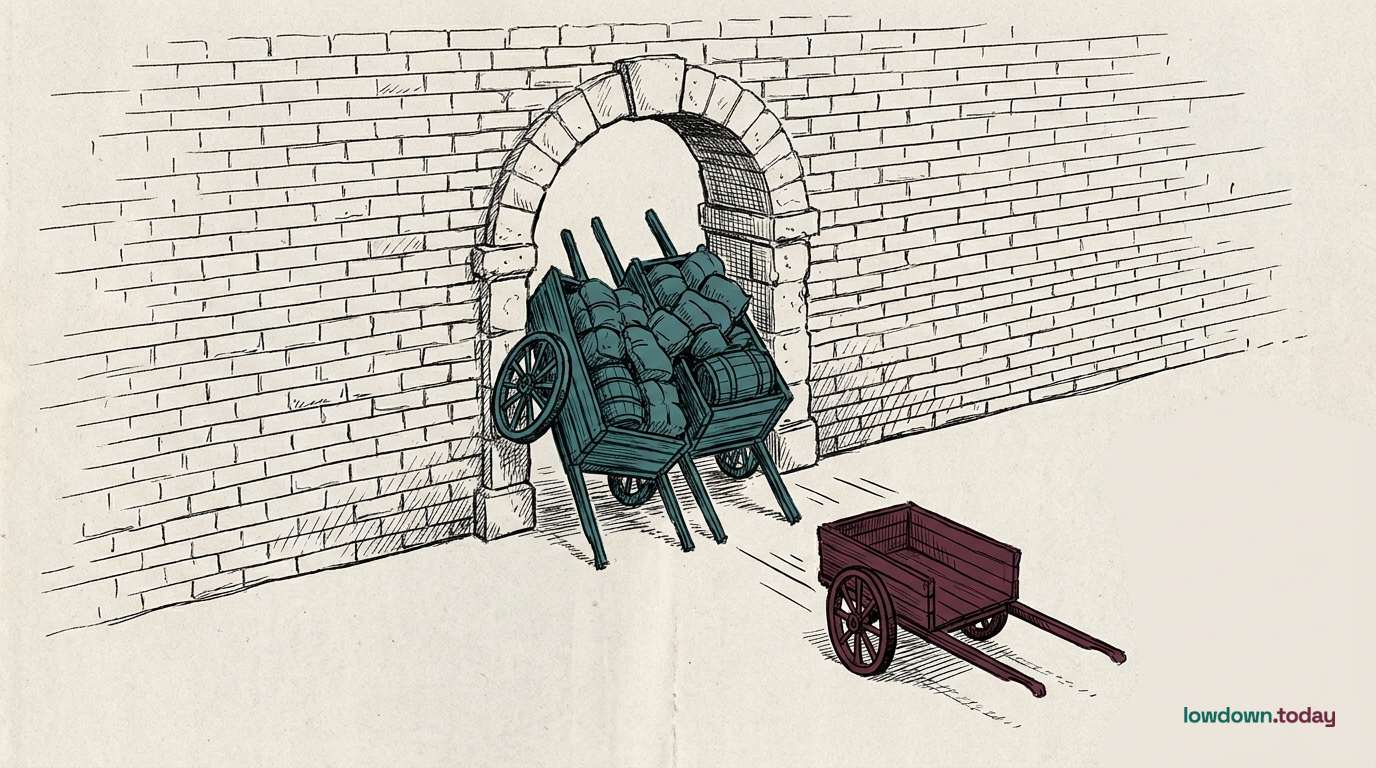
The Representation of the People Bill sits at its 9th Commons committee sitting on 16 April with no future stage scheduled, according to the Parallel Parliament tracker⁠1. The Hansard Society confirms Parliament is expected to prorogue no earlier than 29 April and no later than 6 May, with the Leader of the House signalling the earlier date⁠2. The four wash-up bills the government is pushing through are the English Devolution and Community Empowerment Bill, the Pensions Schemes Bill, the Crime and Policing Bill, and the Children's Wellbeing and Schools Bill. Those four together exclude the Representation of the People Bill from the polling-day statute book.

The wash-up convention is bilateral: government picks the bills it judges essential, and the official opposition agrees not to oppose them in exchange for amendments. A bill the opposition wants but the government has deprioritised falls because the government holds the order paper. After committee, the bill still needs Commons report stage, third reading, four Lords stages and any ping-pong before Royal Assent. None of that is scheduled.

Royal Assent before polling day was already arithmetically impossible. The bill does not fall at prorogation: MPs agreed a carry-over motion on 2 March, so it resumes in the new session. Under its terms, parties would have 30 days from Royal Assent to return unlawful crypto receipts, alongside a £100,000 cap on overseas elector donations and the shell-company restrictions identified by the Rycroft Review. None of those provisions takes effect for 7 May.

Which means Reform UK enters polling day having received roughly £12m from Christopher Harborne in two quarters, having processed crypto donations through the Poland-based processor Radom Pay, and having no statutory obligation to return any of it. The Electoral Commission still cannot verify those donations because Reform has not provided wallet addresses. Spotlight on Corruption's 1 April report named three further enforcement gaps that survive the bill's passage or failure: crypto-to-fiat conversion before donation, direct personal contributions to MPs, and political memecoins. Those gaps now extend into the next Parliament.

Deep Analysis

In plain English

The UK Parliament 'prorogues' , formally closes its session , before a general or local election. In the final days before prorogation, the government and opposition agree a small number of unfinished bills to push through quickly; this is called 'wash-up'. The Representation of the People Bill would have made it illegal for political parties to keep cryptocurrency donations they could not fully verify, and would have imposed a £100,000 limit on donations from British citizens living abroad. It was designed partly in response to Reform UK receiving £12 million from Christopher Harborne, a cryptocurrency investor living in Thailand. Parliament closed on 29 April without including the bill in wash-up. It never became law. So on polling day, 7 May, none of those restrictions apply. The Electoral Commission , the official body that oversees election spending , cannot force Reform to return any donations, because no law requires it.

Deep Analysis
Root Causes

UK parliamentary procedure has no statutory fast-track mechanism for legislation that becomes electorally urgent inside the dissolution window. Wash-up depends on informal bilateral consent between government and official opposition , a single-veto model in which any party that calculates the bill harms it can block progress without needing to state publicly that it is doing so.

The gap between the bill reaching committee stage on 18 March and the prorogation window on 29 April , 42 days , was insufficient for all-party agreement on the most contested clause. The Electoral Commission, which identified the problem in its January 2026 submission, has no power to compel parliamentary scheduling.

Spotlight on Corruption's April report had already documented three enforcement gaps that persist even if the bill had passed, meaning the legislation would have been a partial fix regardless.

What could happen next?
  • Consequence

    Reform UK enters polling day with no legal obligation to return Christopher Harborne's £12 million, leaving the Electoral Commission without a statutory enforcement route.

    Immediate · 0.95
  • Precedent

    The wash-up omission establishes that a contested single-veto on bilaterally agreed legislation can block retrospective financial regulation through an election cycle, potentially encouraging novel donation structures before the next Westminster election.

    Medium term · 0.7
  • Risk

    If Reform wins substantial council representation on 7 May, the political cost of legislating retrospective crypto rules post-election rises significantly, potentially delaying the reform until after the next Westminster cycle.

    Short term · 0.65
First Reported In

Update #5 · 11 Days to Go: Six-of-six, RPA misses wash-up, Welsh lead flips

Parallel Parliament· 26 Apr 2026
Read original →
Causes and effects
Different Perspectives
Lancashire County Council
Lancashire filed in the Administrative Court before the 16 October limit, and its full council called for a legally binding referendum before any reorganisation. Ministers withdrew the Lancashire decision on 29 October, so the Reform-run county council keeps its current structure for now.
Kent County Council
Kent County Council
Kent announced judicial review proceedings before the 16 October limit against splitting Kent and Medway into four unitary councils. Ministers withdrew the Kent and Medway decision on 29 October, so the Reform-run county council keeps its current structure for now.
Conservative Party / Donald Walmsley
Walmsley, an East Sussex county councillor, left Reform UK in November and joined the Conservatives, citing ITV's undercover footage of Reform councillors and the leadership's response. His move came as the Conservatives gained four council seats from 22 October to 12 November and lost none.
UK Government / Jim McMahon (MHCLG) and Lord Wilson of Sedgefield
MHCLG said on 29 October it is "minded to" create unitary councils in five English areas from 2029, and McMahon argues no area will want two tiers back once they exist. In the Lords on 2 November, Lord Wilson refused to put a deadline for automatic registration into the Representation of the People Bill.
Huw Irranca-Davies, Llywydd of the Senedd
Irranca-Davies ruled on 10 November that Joe Martin's request for a statement on the "demographic replacement of white British people" was discriminatory and offensive. Martin will not be called to speak until he apologises to the chamber, and Reform's free-speech motion of 18 November cannot overturn the ruling.
Reform UK / Nigel Farage and Helen Jenner
Reform's 33 Members of the Senedd left their benches empty at Plenary on 17 November over the Llywydd's ruling on Joe Martin, which Farage called "ridiculous and outrageous". Welsh leader Helen Jenner says meaningful debate and scrutiny cannot happen until the Presiding Officer reverses his decision.

Written with AI from Lowdown's published reporting. Not individually reviewed by an editor. Editorial standards.