Skip to content
You can now search across every topic, entity and event.What's new
UK Local Elections 2026
12AUG

Restore Britain enters tracker at 4% nationally

4 min read
14:07UTC

Restore Britain, Rupert Lowe's breakaway from Reform UK, entered the YouGov Westminster voting intention tracker at 4% on 4 to 5 May, the first appearance of any Farage-right party in mainstream national polling at that level.

PoliticsDeveloping
Key takeaway

Restore Britain registered 4% in YouGov's Westminster tracker for fieldwork 4 to 5 May 2026.

Restore Britain, Rupert Lowe's breakaway party from Reform UK, registered at 4% in YouGov's Westminster voting intention tracker for fieldwork 4 to 5 May 2026 1. The reading is the first appearance of any party to Reform's right in mainstream national polling at that level. The full Westminster panel for the same fieldwork shows Reform UK at 25%, Labour at 18%, the Conservatives at 17%, the Greens at 15% and the Liberal Democrats at 14%.

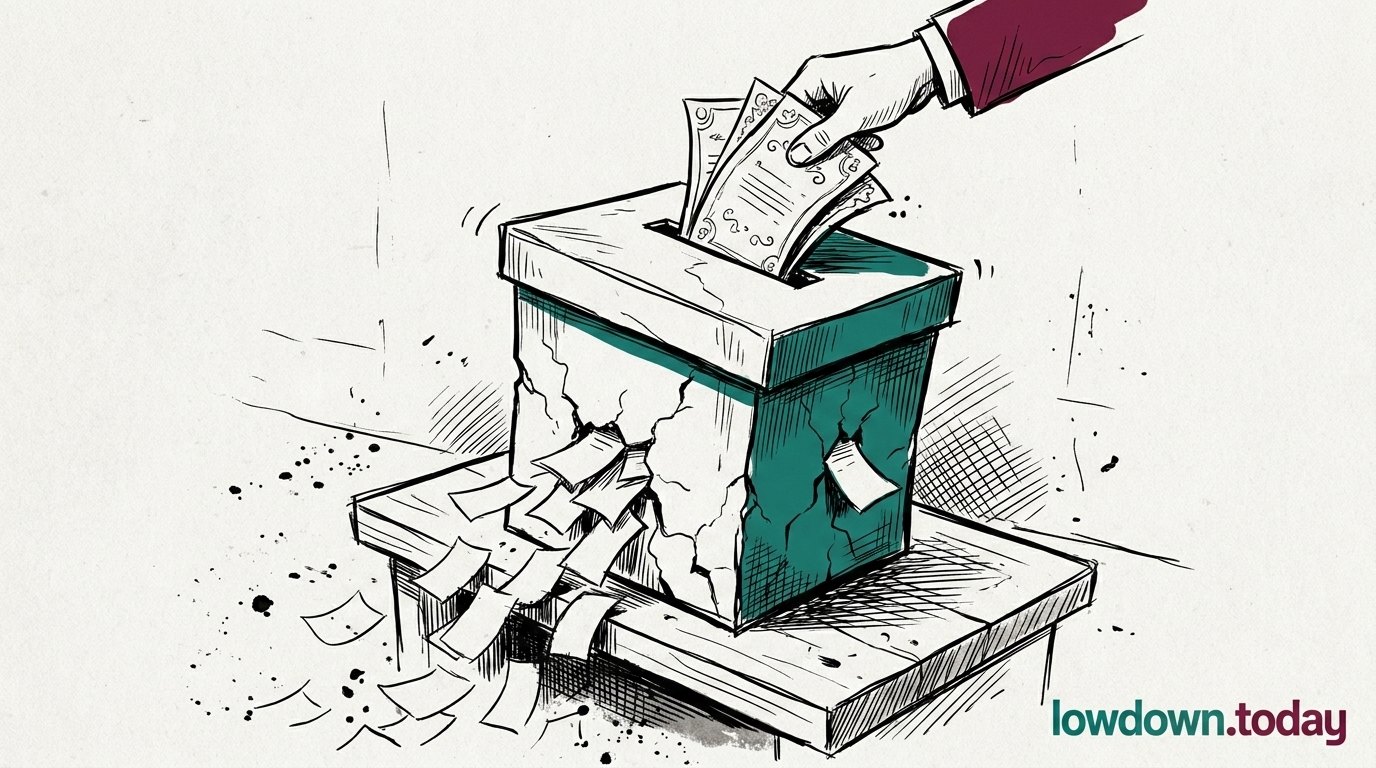
Byline Times reported on 17 April that Restore Britain has fielded 13 activists as 'Independents' in one Norfolk County Council area, with public Facebook posts pledging to switch to the Restore Britain whip if elected 2. The mechanism is the trojan horse: an Independent label on the ballot paper, a public party loyalty after the count, no breach of nomination rules. The structural cousin is Kent County Council, where Reform's group has shed roughly one councillor every five weeks since May 2025 ; Restore Britain is now Kent's third-largest group through Reform defections.

Reform's English local landslide is being shadowed by a parallel routing: a national vote share funnelling into local seats through whatever vehicles the closing-day legal architecture allows. Election law treats the Independent label as binding only at the point of nomination; what a councillor does with their whip after the count is not a regulated act. Voters in the Norfolk wards in question will not see 'Restore Britain' on the paper they mark on 7 May; they will see 'Independent'.

The Restore Britain entry into mainstream polling at 4% is one reading. Whether the figure holds, falls back into Reform, or grows in the post-poll period is a 7-day-window question. The cross-link to the Prior expulsion is structural: each fourth-name disclosure widens the political space to Reform's right that Restore Britain is trying to occupy.

Deep Analysis

In plain English

Restore Britain is a new political party set up by Rupert Lowe, a former Reform UK MP who was expelled from Reform in early 2026 following an internal dispute. Lowe's supporters describe Restore Britain as standing for similar policies to Reform but without Nigel Farage's leadership. The party has just appeared in mainstream national polling for the first time, at 4% in a YouGov tracker published on 4 to 5 May 2026. For context: Reform UK sits at 25% in the same poll, Labour at 18%, Conservatives at 17%, Greens at 15%, and Lib Dems at 14%. What makes Thursday's local elections interesting for Restore Britain is that 13 of its supporters are standing as 'Independents' in Norfolk without the Restore Britain label on the ballot, with public promises to switch to the Restore Britain group if elected. This is legal but arguably misleading for voters.

Deep Analysis
Root Causes

1. **Lowe-Farage breakdown over property allegations.** Rupert Lowe was expelled from Reform UK in February 2026 following internal allegations documented in Reform's own party communications. Lowe publicly disputed the basis of his expulsion and founded Restore Britain as a direct response. The personal rupture created a vehicle for Reform-adjacent voters dissatisfied with Farage's party management.

2. **Reform candidate-attrition pipeline.** Kent County Council's Reform group fell from 57 to 47 councillors between May 2025 and April 2026, with several departing to Restore Britain or sitting as Independents. This attrition created a ready supply of local candidates with existing council experience and voter recognition available to Restore Britain.

3. **The Independent candidate mechanism.** UK election law allows candidates to stand as Independents and subsequently declare a party affiliation. Restore Britain's Norfolk tactic, where 13 candidates stood as Independents with public Facebook commitments to switch to the Restore Britain whip, exploits this gap. The tactic is legal, invisible on the ballot paper, and allows the party to contest seats in areas where its brand recognition is insufficient to attract votes.

What could happen next?
  • Risk

    If Restore Britain candidates win seats as Independents and switch whip publicly, the tactic will be documented and potentially replicated by other parties in future local elections, where the Independent label already covers a substantial share of the slate.

    Short term · 0.65
  • Risk

    Restore Britain's 4% national polling entry, combined with Reform's BNP-list expulsions (event 4), creates a dual narrative about Reform's political right that could suppress some Reform votes on Thursday, particularly from voters who consider the BNP association disqualifying.

    Immediate · 0.6
  • Consequence

    Kent's 17% annual Reform councillor attrition rate, if replicated nationally after Reform's projected 2,342-seat gain, would see the party lose roughly 400 councillors per year through defection and resignation over the next term.

    Medium term · 0.55
First Reported In

Update #6 · 1 Days to Go: D'Hondt squeezes Welsh Greens

Byline Times· 6 May 2026
Read original
Different Perspectives
Sinn Féin
Sinn Féin
Sinn Féin's John O'Dowd ruled out a Stormont walkout on 11 August despite calling the DUP increasingly difficult to work with, closing a question Conor Murphy had left open a fortnight earlier. Only Sinn Féin or the DUP can collapse the joint First Minister office, so the denial gives up the party's own leverage in budget talks.
Scottish Labour
Scottish Labour
Michael Marra, Joe Fagan and Monica Lennon declared for the Scottish Labour leadership, but each needs nine endorsements from MSPs, MPs and unions before members vote, with nominations closing 17 August. Lennon, the only woman standing, says the threshold favours a male-run process and could produce an all-male ballot.
Plaid Cymru
Plaid Cymru
Plaid Cymru held both Welsh wards Reform challenged in the same set of by-elections, Bro'r Llynnoedd on Anglesey by 48.5% to 39.3% and Hengoed on Caerphilly by 49.9% to 36.4%. The party that leads the Welsh government kept Reform in second in both.
Conservative Party
Conservative Party
The Conservatives lost three of ten council by-elections fought on 30 July and 6 August, two wards to Reform in Norfolk and one to the Greens in Surrey, continuing a run of losses since the May sweep. Every seat gone had been Conservative-held going into the contest.
Reform UK
Reform UK
Reform's 56 lost councillors since May came from defection, suspension and resignation, not lost votes, while the party gained three of ten council by-elections and finished second in four more over the same fortnight. That record undercuts reading the churn as electoral retreat.
Democratic Unionist Party
Gavin Robinson rejects Sinn Féin's characterisation of the institutions as precarious, says the DUP is "committed to" delivering for the public, and will not be "goaded" into a dispute he attributes to Treasury funding rather than unionist bad faith.