Skip to content
You can now search across every topic, entity and event.What's new
UK Local Elections 2026
12AUG

Greens flip Kent seat from Reform UK

3 min read
14:07UTC

Lowdown

PoliticsDeveloping
Key takeaway

A 26.7-point swing on one ward confirms Reform seats are losable where vetting fails and opponents co-ordinate.

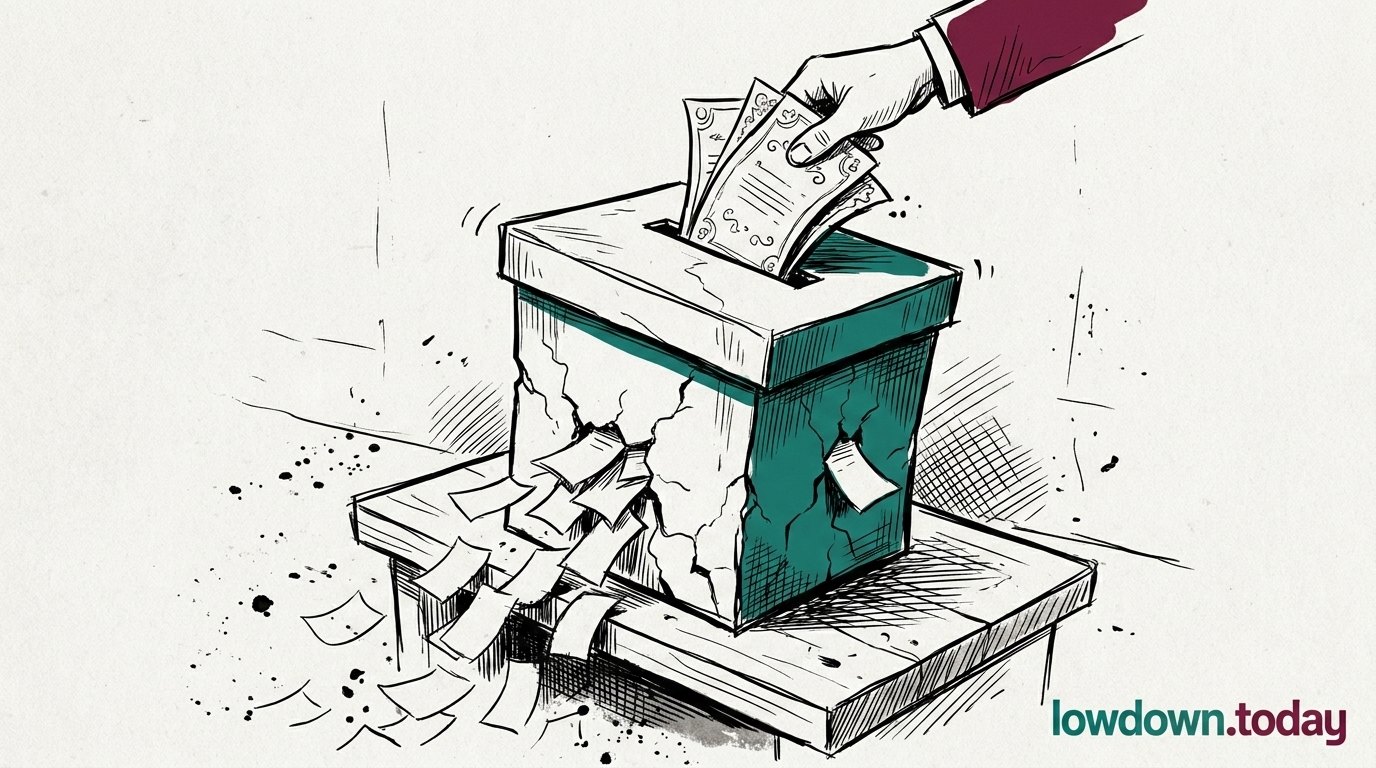
Rob Yates, a Green Party candidate, won the Cliftonville division of Kent County Council on 9 April 2026 with 2,068 votes against Reform UK's Marc Rattigan on 1,767, a 26.7-point swing on 37.69% turnout. 1 The seat had been vacated after Reform councillor Daniel Taylor, elected on a comfortable margin in May 2025, was jailed in March for controlling and coercive behaviour towards his wife.

Cliftonville is a single ward of roughly 5,300 ballots, and the magnitude needs that caveat. The direction does not. This is the first ballot-box confirmation that YouGov's Labour-Green polling parity at 16% each translates into seats held by opponents, not a headline figure. It is also the first concrete instance of the 70-councillor Reform attrition pattern , which until this week read as an administrative abstraction. A vetting failure, a criminal conviction, a vacancy, and a loss: the sequence is now fully visible.

Two national figures contested a ward of five thousand voters. Green leader Zack Polanski campaigned in Thanet with former co-leader Caroline Lucas; Reform finance chief Robert Jenrick canvassed the opposite corner. That is what a local by-election with national reading attached looks like, three weeks before 7 May.

Deep Analysis

In plain English

The Cliftonville ward is a small area in Margate, on the Kent coast. Last year, it elected a councillor from Reform UK, the right-wing populist party led by Nigel Farage. That councillor was later jailed for abusing his wife. His removal triggered a fresh vote. On 9 April, the Green Party won that vote decisively. Their candidate got 2,068 votes; Reform's replacement got 1,767. The swing (the shift in support between the two parties) was 26.7 percentage points. This matters because it is the first actual vote to test whether the Green surge measured in national polls is real. Polls are surveys. By-elections are votes. This result suggests that at least in this one place, the polling is translating into ballots cast.

Deep Analysis
Root Causes

Three structural drivers converge in this result, none of which the body text addresses.

First, Reform UK's candidate pipeline in Kent collapsed after the vetting failure that produced Daniel Taylor's selection in 2025. HOPE not hate's assessment that Reform's vetting is effectively 'nil' meant the party fielded a replacement candidate with no local recognition or established canvassing operation.

Second, Cliftonville is located in the Thanet coastal strip, an area whose demographics (younger renters, arts/tourism economy, recent in-migrants from London) overlap more closely with the Green Party's strongest polling cohort than with Reform's typical Leave-voting, owner-occupier base. The ward is not representative of the five counties Reform is projected to control.

Third, the Green Party mobilised two national figures (Zack Polanski and Caroline Lucas) for a ward of roughly 5,000 voters, an investment that reflects the party's understanding of by-elections as signal events rather than seat-by-seat arithmetic.

What could happen next?
  • Precedent

    First confirmed ballot-box evidence that YouGov's Labour-Green polling parity translates to seats held by other parties, going beyond vote-share movement.

    Immediate · 0.82
  • Risk

    Reform UK's attrition rate on Kent CC (17% of seats lost without a single new election) signals governance instability if Reform wins county councils on 7 May.

    Short term · 0.75
  • Consequence

    Green Party leadership will use the result to justify diverting campaign resources to seats currently held by Reform, rather than seats held by Labour or the Conservatives.

    Immediate · 0.78
First Reported In

Update #4 · 22 Days to Go: Greens Take a Reform Seat in Kent

ITV News Meridian· 15 Apr 2026
Read original
Different Perspectives
Sinn Féin
Sinn Féin
Sinn Féin's John O'Dowd ruled out a Stormont walkout on 11 August despite calling the DUP increasingly difficult to work with, closing a question Conor Murphy had left open a fortnight earlier. Only Sinn Féin or the DUP can collapse the joint First Minister office, so the denial gives up the party's own leverage in budget talks.
Scottish Labour
Scottish Labour
Michael Marra, Joe Fagan and Monica Lennon declared for the Scottish Labour leadership, but each needs nine endorsements from MSPs, MPs and unions before members vote, with nominations closing 17 August. Lennon, the only woman standing, says the threshold favours a male-run process and could produce an all-male ballot.
Plaid Cymru
Plaid Cymru
Plaid Cymru held both Welsh wards Reform challenged in the same set of by-elections, Bro'r Llynnoedd on Anglesey by 48.5% to 39.3% and Hengoed on Caerphilly by 49.9% to 36.4%. The party that leads the Welsh government kept Reform in second in both.
Conservative Party
Conservative Party
The Conservatives lost three of ten council by-elections fought on 30 July and 6 August, two wards to Reform in Norfolk and one to the Greens in Surrey, continuing a run of losses since the May sweep. Every seat gone had been Conservative-held going into the contest.
Reform UK
Reform UK
Reform's 56 lost councillors since May came from defection, suspension and resignation, not lost votes, while the party gained three of ten council by-elections and finished second in four more over the same fortnight. That record undercuts reading the churn as electoral retreat.
Democratic Unionist Party
Gavin Robinson rejects Sinn Féin's characterisation of the institutions as precarious, says the DUP is "committed to" delivering for the public, and will not be "goaded" into a dispute he attributes to Treasury funding rather than unionist bad faith.