Skip to content
You can now search across every topic, entity and event.What's new
Russia-Ukraine War 2026
3AUG

FDD: oil licence has no enforcement

3 min read
10:16UTC

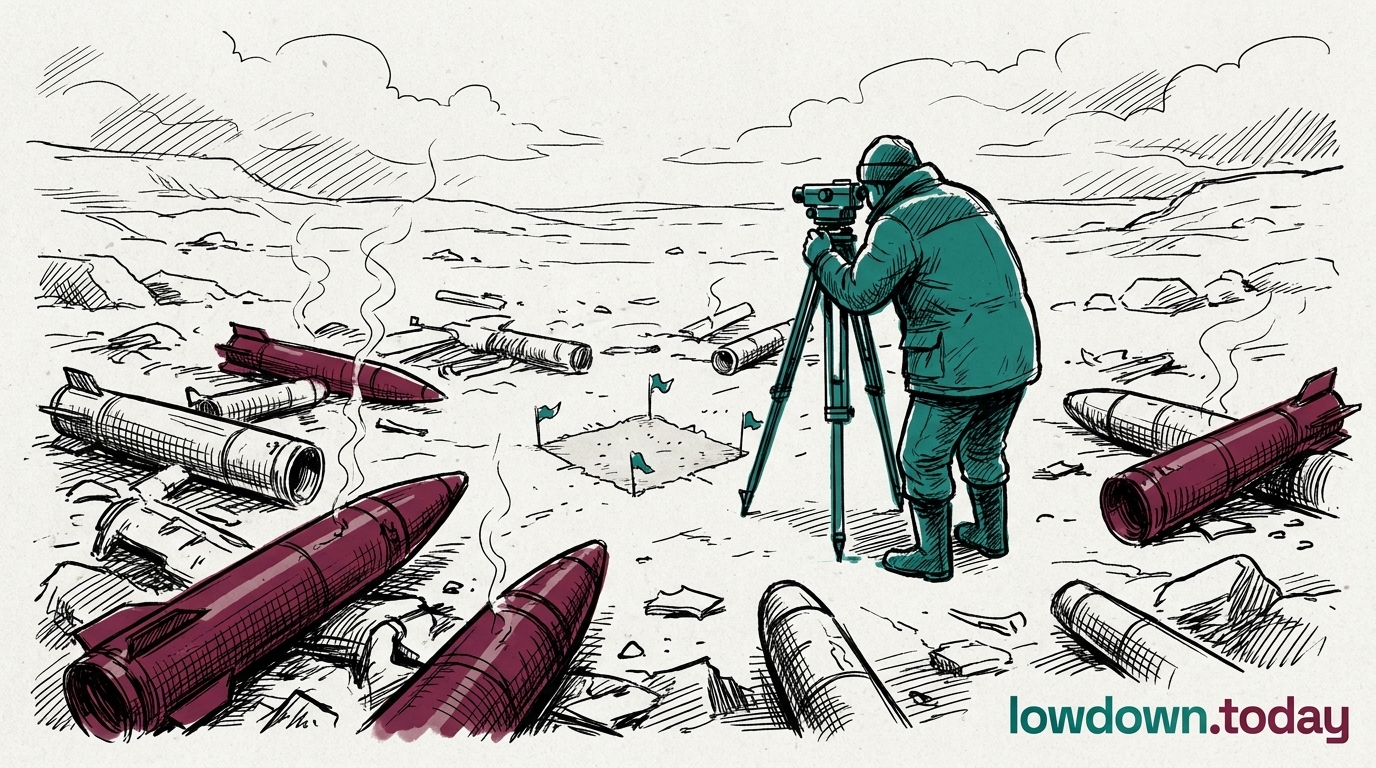
The Foundation for Defense of Democracies found that General License X carries no escrow, no value cap, no buyer list and no reporting, functioning as a 60-day safe harbour for Chinese refiners.

ConflictDeveloping
Key takeaway

General License X has no escrow, cap or reporting, mostly legalising the Chinese purchases already under way.

The Foundation for Defense of Democracies (FDD), a Washington think tank focused on Iran sanctions, found that General License X carries no escrow mechanism, no value cap, no approved-buyer list and no transaction reporting requirement 1. The licence is the OFAC instrument Treasury Secretary Bessent signed on 22 June , the first oil-relief paper of the war after 116 days of sanctions.

That absence of architecture changes what the licence does. Rather than relief for Iran, the FDD reads it as a 60-day safe harbour for the Chinese refiners and banks already buying Iranian crude through workarounds: it legalises the trade that was happening anyway, without recording who buys, how much, or at what price.

The revenue at stake makes the gap consequential. The FDD estimated roughly one-third of Iran's annual oil income, about $12.4 billion, flows to the IRGC and the armed forces, the same actors holding the nuclear file shut. No bank or trader had publicly disclosed a transaction under the licence as of 23-24 June. The signed paper exists; the enforcement that would make it accountable does not.


Deep Analysis

In plain English

On 22 June, the US Treasury issued a document called General License X, which allowed Iranian oil to be sold legally on international markets for 60 days. The Foundation for Defense of Democracies; a Washington think tank that monitors Iran sanctions; examined the document and found it had no safeguards: no limit on how much oil could be sold, no list of approved buyers, no requirement to report transactions, and no account held in escrow to ensure the money goes where it should. In practice, this means China; the main buyer of Iranian oil; can continue buying it through the same workaround channels it has used for years, now with a legal cover rather than sanctions risk. Roughly one-third of Iran's oil income, about $12.4 billion per year, goes to the IRGC (the country's powerful ideological military force). The licence does not prevent that from continuing.

Deep Analysis
Root Causes

GL X's lack of enforcement architecture reflects a tension inside the US sanctions regime that has existed since 2019: the secondary-sanctions threat against Chinese crude buyers was never enforced because designating Chinese state-owned refiners would trigger a full economic confrontation the Trump administration chose to avoid.

The FDD finding that roughly one-third of Iran's oil revenues (~$12.4bn) flows to the IRGC and armed forces was known at the time of GL X's drafting. The licence provides a market-price signalling benefit (Brent falling toward $76) without requiring the political cost of secondary sanctions to enforce Iranian compliance.

First Reported In

Update #137 · Iran and Oman claim the strait; US says no

Foundation for Defense of Democracies· 24 Jun 2026
Read original
Different Perspectives
Belarus
Belarus
Minsk announced completion of its own 37th Separate Airborne Assault Brigade near Gomel, under plans dating to August 2025 rather than a response to any single frontline event this window, keeping its hedge of hosting the war without formally joining Russia's mobilisation drive.
European Union / Operation IRINI states
Italy, Greece and Poland boarded the sanctioned tanker Toa Payoh off Pantelleria under a standing EU mandate rather than a national decision, extending enforcement from the Channel and Baltic and the Black Sea and Azov into the Mediterranean. Italian Defence Minister Guido Crosetto praised the crew; the captain's refusal to produce documentation left detention unconfirmed.
Poland and the NATO eastern flank
Warsaw's Coordination Team said explicitly its forces tracked the 30 July missile incursion and were ready to shoot it down, then flew air cover for an EU tanker interdiction three days later. Poland is simultaneously the war's nearest spillover victim and a contributor to enforcing sanctions against the state causing that spillover.
Ukraine (government, defence establishment and civilians)
Kyiv runs its manpower crisis through acting Defence Minister Yevhen Khmara, whose formal appointment waits for parliament's 18 August return, and a fortnight-old Commander-in-Chief, Mykhailo Drapatyi. Reported attacks on enlistment officers rose from 5 cases in 2022 to 341 in 2025, reaching Odesa's Territorial Recruitment Centre staff directly on 2 August.
Kremlin and Russian domestic economic voices
Moscow has not addressed July's advance-rate collapse or Sberbank's OFZ warning; Novak's diary ran to OPEC+ quota diplomacy with no diesel item logged since 15 July. Economist Nikolai Korzhenevsky calls the Central Bank's RUB 2.3tn in bank lending effectively deficit monetisation, a framing Sberbank's Skvortsov, with his own institutional interest, has not disputed.
IAEA (Rafael Grossi)
IAEA inspectors logged Zaporizhzhia's 22nd loss of off-site power, ten of them in the last three months, after a thunderstorm knocked out the plant's sole surviving backup line. Grossi reads the accelerating frequency, not any single outage, as the safety signal now that the plant's redundancy is exhausted.


