Skip to content
You can now search across every topic, entity and event.What's new
Russia-Ukraine War 2026
23JUL

Iran's killing moves to the field

3 min read
20:33UTC

IRGC forces shot dead Kurdish activist brothers Meysam and Mojtaba Veisi near Dalahu on 28 May, and Faezeh Afshari, aged 30, at Semirom the same day, killings that leave no court record.

ConflictDeveloping
Key takeaway

Iran's Revolutionary Guard is now shooting activists dead in the field, leaving no court record to count.

IRGC forces shot dead two Kurdish activist brothers, Meysam and Mojtaba Veisi, near Dalahu in western Iran on 28 May, and Faezeh Afshari, aged 30, was shot during a crackdown at Semirom the same day. 1 The IRGC is Iran's Islamic Revolutionary Guard Corps, the parallel armed force answerable to the Supreme Leader rather than the elected government. These were not hangings. The Norway-based Kurdish monitor Hengaw logged the deaths alongside judicial executions at Sanandaj, Bukan and elsewhere across the 28-30 May window. 2

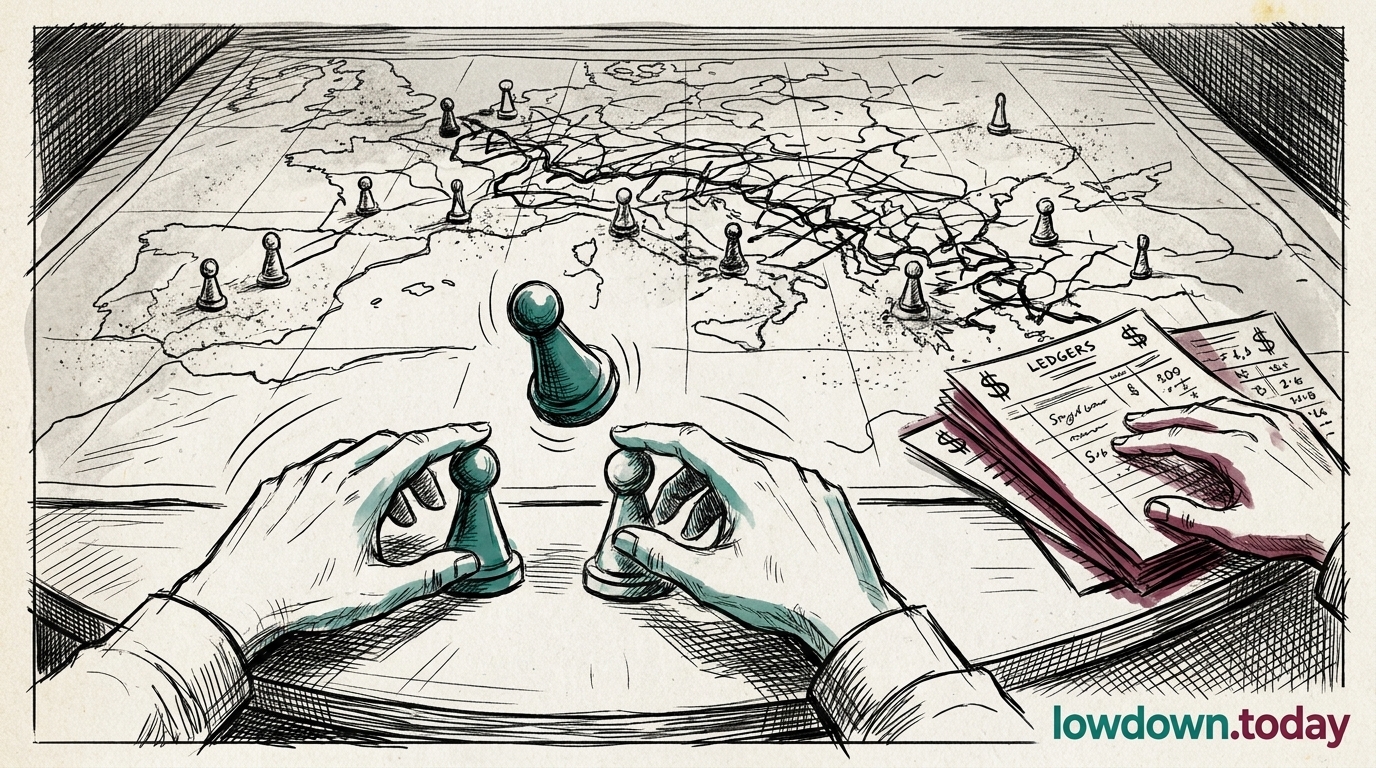
A man shot dead near his home town by Revolutionary Guard forces leaves no sentence, no prison yard and no paper trail. The execution machinery Amnesty has been counting runs through courts, a bureaucracy that human-rights groups can audit. Field killings are faster and deniable, aimed at named Kurdish and political activists, and they sit outside the judicial register entirely.

The two tracks now run together. A protest detainee, Esmaeil Ramezanpour, was sentenced to death at Yazd on 29 May, showing the courts still grinding through the protest cohort even as the field killings begin. 3 The structural consequence is that Hengaw and Amnesty tallies will increasingly understate the real toll, because the deaths that matter most to the IRGC are now the ones it can deny. Tehran offers no acknowledgement of either track, and the count for the period rests on a single monitor.


Deep Analysis

In plain English

Iran's IRGC (the Revolutionary Guards, the state's most powerful military force) shot dead three activists on 28 May: brothers Meysam and Mojtaba Veisi near the western town of Dalahu, and Faezeh Afshari, aged 30, in Semirom in central Iran. These were not legal executions carried out after a court process. They were shootings in the field, with no trial, no sentence, and no public announcement. A human rights monitoring group called Hengaw, based in Norway, documented these killings and has been tracking Iran's repression throughout the conflict. The difference between these field killings and the judicial executions Amnesty International counted (at least 39 since the war began) is that courts leave a record. Field shootings do not.

Deep Analysis
Root Causes

Kurdish border provinces, particularly Kermanshah, Kurdistan, and Ilam, are structurally overrepresented in IRGC field killings because IRGC border battalions in those areas operate under Joint Chiefs authority with minimal Interior Ministry oversight.

Dalahu (Meysam and Mojtaba Veisi's location) sits in Kermanshah province, where IRGC border units have maintained independent kill authority over suspected KDPI and PJAK operatives since the 2018 border-security decree. The killing of Faezeh Afshari at Semirom in Isfahan province on the same day extends the geographic footprint beyond the historic Kurdish border zone.

The wartime blackout, which kept domestic internet at near-zero until Pezeshkian's 25 May order, reduced the photographic and social-media documentation that typically constrains field operations. IRGC units accustomed to operating under information blackout may now face partial documentation risk as the internet partially restores to 40%, but the kill-decision timeline is shorter than the social-media reaction cycle.

What could happen next?
  • Risk

    If field killings become a general counter-dissent tool rather than a border-region Kurdish practice, the human rights documentation pipeline built on judicial records loses coverage of a growing share of deaths.

  • Precedent

    Afshari's killing at Semirom in Isfahan province extends the geographic footprint of field killings beyond the historic Kurdish western-border zone for the first time in the wartime record.

First Reported In

Update #112 · Treasury opens a second Iran sanctions front

Hengaw· 30 May 2026
Read original
Different Perspectives
IAEA (Rafael Grossi)
IAEA inspectors logged Zaporizhzhia's 22nd loss of off-site power, ten of them in the last three months, after a thunderstorm knocked out the plant's sole surviving backup line. Grossi reads the accelerating frequency, not any single outage, as the safety signal now that the plant's redundancy is exhausted.
United States (Treasury/OFAC)
Washington has let general licence 134C, its Russian crude waiver, lapse for 36 days with no successor, the longest gap of the war. Treasury has not said whether the non-renewal reflects deliberate policy or administrative delay, leaving buyers to price in compliance risk rather than wait for clarity.
Slovakia
Slovakia
Slovakia dropped its hold-out on the EU's 21st sanctions package only after winning a 2028 guarantee phasing out Russian gas, the exact pipeline dependency, roughly 80% of its crude supply, that gave it leverage. Bratislava's climbdown clears the package but leaves the same single-veto mechanism intact for the next round.
Russia (Kremlin and general staff)
General staff chief Gerasimov claimed Donetsk captures on 18 July that ISW says it cannot corroborate, extending a pattern ISW clocked at a 5:1 exaggeration ratio earlier this year. Moscow is conditioning its public for a possible autumn mobilisation after September's Duma elections rather than acknowledging the front has stalled.
Ukraine (Zelenskyy government)
Zelenskyy dismissed his commander-in-chief, defence minister and chief of general staff within eight days, replacing Syrskyi with Drapatyi and Hnatov with Skybiuk as protesters demanded Syrskyi go and Fedorov return. Kyiv frames the sweep as a bet on manoeuvre capacity ahead of a feared Russian autumn surge, not the disarray critics read into three changes in a week.
The United Kingdom
The United Kingdom
Starmer pledged £300 million in Kyiv on 16 July toward Ukraine's Gripen E squadron, adding to the PURL expansion Trump and Rutte had announced two days earlier. London is paying into a scheme built around a shortfall NATO's own published $4bn-plus pledge does not close against Zelenskyy's roughly $15bn stated need.



