Skip to content
You can now search across every topic, entity and event.What's new
Russia-Ukraine War 2026
19JUL

Ghalibaf overrules Pezeshkian on strikes

3 min read
13:35UTC

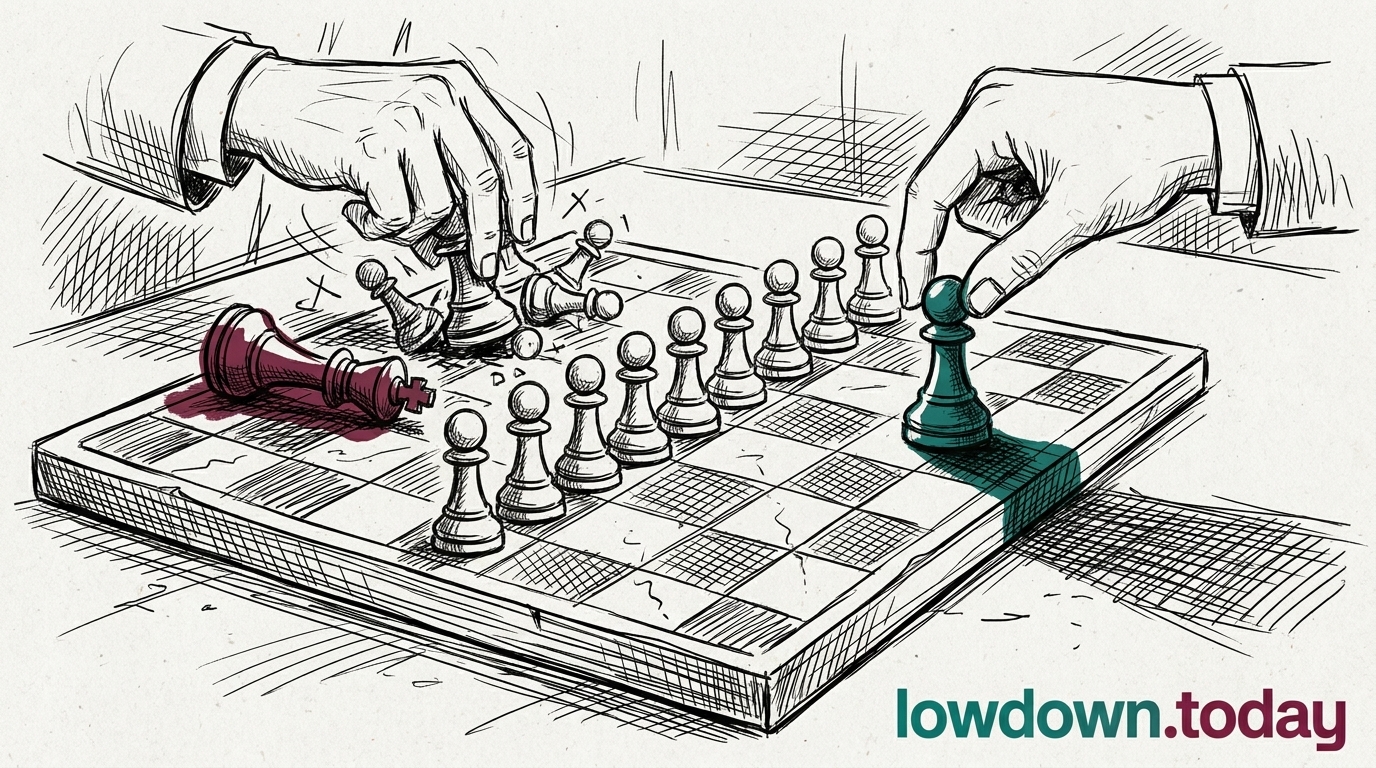
Parliament Speaker Ghalibaf publicly contradicts Pezeshkian's ceasefire order, invoking the late Khamenei's directives — splitting the body meant to exercise supreme authority on whether Iran keeps fighting its neighbours.

ConflictDeveloping
Key takeaway

By attributing the Gulf strikes to Khamenei's pre-death standing directives rather than new decisions, Ghalibaf has constitutionally immunised them from being halted — no Iranian political figure can publicly countermand orders issued by the deceased Supreme Leader.

Mohammad Bagher GhalibafIran's Parliament speaker, third-ranking political figure, and member of the Interim Leadership Council — publicly contradicted President Pezeshkian's halt order on Saturday evening. The Gulf strikes were not "miscommunication within the ranks," the explanation Pezeshkian offered after the IRGC ignored his ceasefire directive within hours . They followed directives from the late Supreme Leader Khamenei himself. As long as Gulf nations host US bases, Ghalibaf wrote, "the countries will not enjoy peace."

Hardliner lawmakers had already denounced Pezeshkian's apology to Gulf neighbours as "humiliating" and "treason" . But Ghalibaf is not a backbencher venting on state media. He sits on the Interim Leadership Council that theoretically inherited The Supreme Leader's military authority after Khamenei's death. Iran has not operated without a functioning Supreme Leader since the Islamic Republic's founding in 1979 — when Khomeini died in June 1989, the Assembly of Experts selected Khamenei within hours. This time, the funeral remains postponed , the Assembly of Experts was struck in the war's early days, and Ghalibaf has invoked the dead leader's standing orders to override the living president. He has reframed the IRGC's defiance not as insubordination but as fidelity to supreme authority — authority that outranks the presidency in Iran's constitutional hierarchy.

The consequence is operational, not theoretical. Egypt, Turkey, and Oman have launched mediation . Iran's foreign minister closed the door on negotiations days ago . The interim council that commands Iran's military is now publicly split on whether to keep fighting. A ceasefire would require agreement from a body that cannot agree, delivered to forces that have already demonstrated they answer to the dead leader's directives rather than the living president's orders. The conflict has shifted from a war between states with identifiable decision-makers to a campaign against a military apparatus whose political command structure has fractured — and no constitutional mechanism exists to repair it before Khamenei is buried.

Deep Analysis

In plain English

Iran's government is in a succession crisis: the Supreme Leader, who had ultimate command authority over the military, has died. A temporary council is supposed to share his powers. The elected President told forces to stop attacking Gulf neighbours; they ignored him. Now the Parliament Speaker — a hardliner on that council — is saying the attacks are legitimate because the old Supreme Leader ordered them before he died. This leaves the President with no political ground to stand on: stopping the strikes means overriding a dead Supreme Leader's wishes, which no Iranian official can politically afford. The military is effectively operating outside civilian control.

Deep Analysis
Synthesis

Ghalibaf's invocation of Khamenei's pre-death directives is not merely a political endorsement — it is a constitutional manoeuvre. If the strikes are execution of existing orders rather than new decisions, they fall outside the council's decision-making scope; they can only be stopped by the authority that issued the original orders, which no longer exists. This effectively removes the strikes from the domain of civilian political authority entirely, and it does so using the constitutional framework rather than against it.

Root Causes

The IRGC's chain of command runs directly to the Supreme Leader under Article 110 of the Iranian Constitution, bypassing the presidency entirely. With no successor designated, the IRGC's institutional loyalty is genuinely contested between council members. The IRGC has historically maintained stronger affinity with the hardline clerical establishment than with reformist presidents — Pezeshkian was elected on domestic economic promises and lacks the ideological alignment that generates IRGC institutional loyalty. The structural problem is constitutional design, not individual disobedience.

Escalation

The IRGC's demonstrated willingness to ignore Pezeshkian's direct orders, combined with Ghalibaf's public endorsement of continued strikes, indicates the hardliner faction holds effective operational control of military decision-making — not merely rhetorical dominance. De-escalation is structurally unavailable through the civilian channel regardless of international pressure on Pezeshkian, because he does not control the operational levers.

What could happen next?
  • Meaning

    Iran's interim leadership council is now publicly split on the central wartime operational decision, meaning the body theoretically holding supreme authority cannot exercise it coherently — a condition that will persist until a new Supreme Leader is confirmed.

    Immediate · Assessed
  • Risk

    Pezeshkian's diplomatic outreach to Gulf states — including his apology and halt order — is operationally nullified while the IRGC continues strikes, making Iran an unreliable negotiating partner in Gulf eyes regardless of presidential intent or sincerity.

    Immediate · Assessed
  • Consequence

    The IRGC's operational independence from civilian constitutional authority, already structurally high, is moving towards de-facto autonomy during the succession vacuum — the institutional precedent set now will outlast this specific conflict.

    Long term · Suggested
  • Risk

    External actors seeking a negotiated de-escalation have no reliable Iranian civilian interlocutor: the President cannot commit the IRGC, and the hardliner council members who can influence the IRGC have no incentive to de-escalate while military operations continue to serve their succession-contest interests.

    Short term · Assessed
First Reported In

Update #28 · Iran and Israel swap refinery strikes

Al Jazeera· 8 Mar 2026
Read original
Causes and effects
This Event
Ghalibaf overrules Pezeshkian on strikes
The public fracture between Pezeshkian and Ghalibaf means the interim body that inherited the Supreme Leader's military authority cannot issue coherent orders. Any ceasefire negotiation requires a counterpart who controls the forces with launch authority — and that counterpart does not exist.
Different Perspectives
The United Kingdom
The United Kingdom
Starmer pledged £300 million in Kyiv on 16 July toward Ukraine's Gripen E squadron, adding to the PURL expansion Trump and Rutte had announced two days earlier. London is paying into a scheme built around a shortfall NATO's own published $4bn-plus pledge does not close against Zelenskyy's roughly $15bn stated need.
Brussels
Brussels
The EU's 21st sanctions package missed its Coreper vote on 15 July over Greek LNG re-export rights and an Austrian bank compensation demand, the same week Hungary stalled accession clusters on procedure rather than veto. Both processes run on unanimity, so a single national interest, not Russia policy, sets the pace either can move at.
Hungary's Tisza government
Budapest refused to open EU accession Clusters 2 and 3 for Ukraine at COELA on 17 July, offering Moldova a standalone opening instead, and the question returns on 22 July. Having ended Orbán's blanket loan veto in May, it now blocks the narrower rule-of-law chapters where its own electorate is least comfortable.
Washington
Washington
Trump and Rutte expanded PURL on 14 July, letting allies fund the American interceptors and jets Washington will license but no longer gift outright. The same week, Lockheed Martin told allies it cannot guarantee PAC-3 MSE delivery timelines even after tripling output, so Washington now shapes Ukraine's air defence through a supply queue rather than a donation decision.
Moscow
Moscow
Novak ordered a study into cutting the diesel exchange quota to 10% within a week of his export ban, while June delivered Russia's first budget surplus of 2026 and National Wealth Fund liquidity above its own May forecast. Its own investors disagree: the Moscow Exchange has fallen for its longest losing streak since 1997.
Ukraine's government and its street protesters
Zelenskyy sacked Fedorov on 15 July, installed an acting SBU officer in his place, and did not move against three days of protest that followed across eight cities. He is betting that visible tolerance for dissent, timed to EU accession hearings on rule of law, outweighs whatever command dispute forced the reshuffle.
