Skip to content
Welcome, thoughtbot's Giant Robots listeners!Start here
Russia-Ukraine War 2026
5MAR

France-Germany spread sets €96.20 record

4 min read
04:57UTC

The France-Germany day-ahead power spread reached a record €96.20/MWh for Monday delivery, France at €28.05 against Germany at €124.25. The prior record of €93.68 was set only five days earlier.

ConflictDeveloping
Key takeaway

Wind did not compress the spread; the nuclear-versus-gas gap widened to a record, reversing only from September.

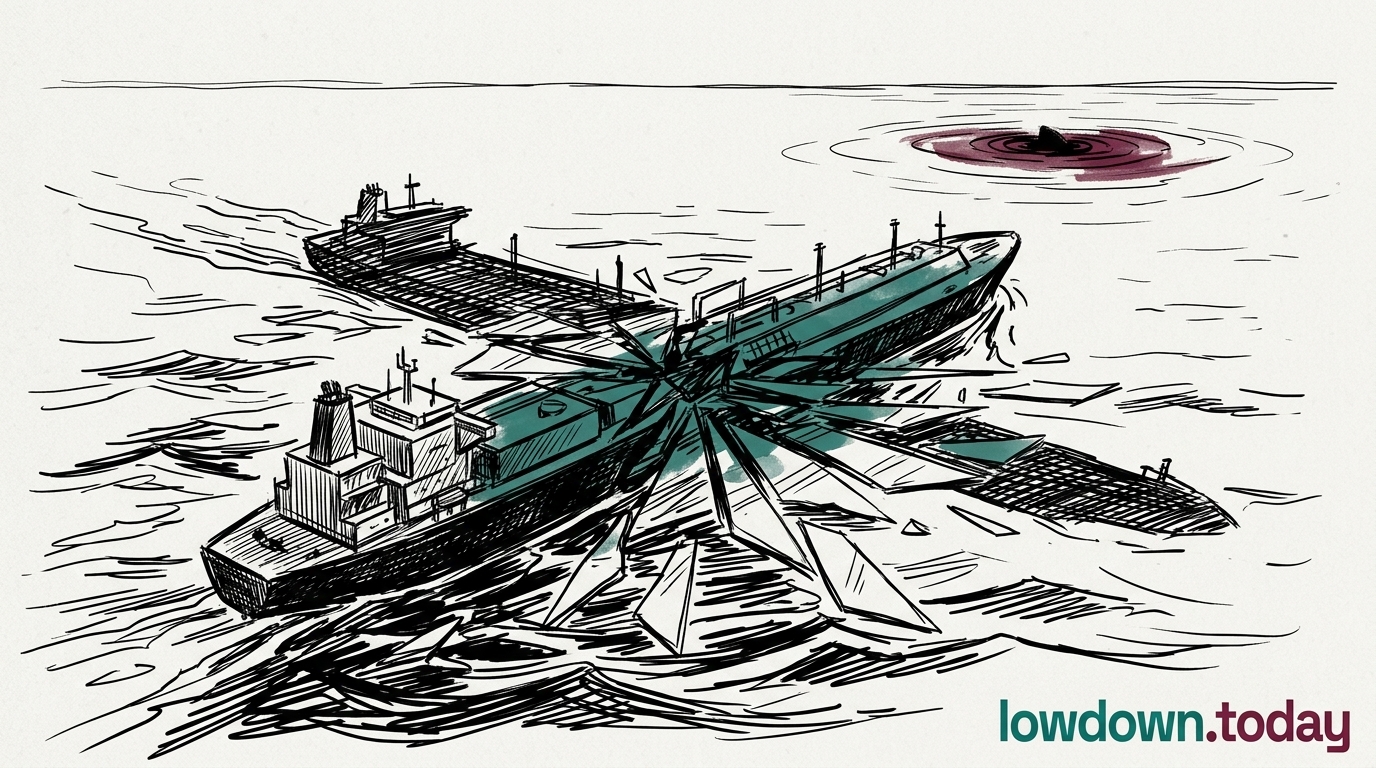
The France-Germany day-ahead power spread reached a record €96.20/MWh for Monday 8 June delivery, with France at €28.05/MWh against Germany at €124.25/MWh⁠1. That topped the €93.68 record set only five days earlier on 3 June, itself more than double the €46.58 the spread reached on 21 May. Sunday weekend renewables had cleared both markets far lower, so Monday's demand return exposed the structural gap rather than a one-off weather print.

France dispatched a nuclear fleet near zero short-run marginal cost on Monday while Germany set price on a carbon-burdened gas stack above €124, so the gap is plant mix rather than weather. Since CRE switched France from ARENH to VNU in January, the advantage passes straight through. CRE is the Commission de Regulation de l'Energie, France's energy regulator; ARENH was the legacy regulated nuclear-access scheme, and VNU, the Valorisation de la Nucleaire, is the volume-based mechanism that replaced it. French industrial buyers now pay close to the €28 print, a roughly €96/MWh day-ahead cost advantage over German peers landing at the factory gate.

EDF takes Flamanville-3, its 1.65 GW EPR reactor declared commercial on 5 May, into a one-year overhaul from September, pulling 1.6 GW of that nuclear cushion precisely as heating demand returns and dating the reversal point. Every compression of this spread through the series has been a low-demand artefact that reverses on the next working-day print; the trend is widening, not mean-reverting.

Deep Analysis

In plain English

On Monday, French power cost €28 per megawatt-hour while German power cost €124. The gap, €96, is a record. Imagine paying four times more for the same thing in the neighbouring country. The reason is simple: France runs mostly on nuclear power stations, which are cheap to operate once built. Germany shut its last nuclear plants in 2023 and relies heavily on gas-fired power stations, which are expensive right now because gas prices are high. The price difference passes directly to factories: a French car plant pays far less for electricity than a German one, which puts German manufacturers at a disadvantage. The gap should narrow in September when France takes one of its reactors offline for maintenance, but it will not close until Germany builds new, cheaper dispatchable power plants, which is what Monday's new subsidy law is designed to fund.

Deep Analysis
Root Causes

Three independent structural factors produce the €96 spread.

First, the merit-order split: France dispatches nuclear at near-zero short-run marginal cost while Germany's gas-set stack carries TTF plus EUA carbon. At €50 TTF and €76 EUA, the German marginal cost sits above €132/MWh; French nuclear sits at roughly €5-10/MWh on short-run cost.

Second, the VNU pricing pass-through: CRE's January 2026 switch from ARENH (Accès Régulé a l'Electricite Nucléaire Historique, the prior fixed-price nuclear access scheme) to VNU (Valorisation de la Nucléaire, a volume-based mechanism) means French industrial offtakers pay near the €28 day-ahead print. German industrial peers pay near the €124 print. The regulatory change turned a wholesale anomaly into a factory-gate cost gap.

Third, interconnector saturation: the France-Germany interconnectors are physically limited; when the spread exceeds transport cost plus losses, additional French exports are not possible, so the gap cannot be arbitraged away in the day-ahead session.

What could happen next?
  • Consequence

    German industrial buyers on spot-indexed power contracts face a EUR 96/MWh cost premium over French peers, a gap that feeds directly into manufacturing cost-competitiveness and accelerates production relocation discussions already underway in energy-intensive sectors.

    Immediate · Reported
  • Risk

    Flamanville-3's September 2026 overhaul removes 1.6 GW from the French nuclear fleet, mechanically narrowing the spread into a period when heating-season demand builds; the long-France short-Germany position unwinds fastest at that point.

    Short term · Reported
  • Precedent

    The consecutive record prints on 3 June and 8 June establish that the EUR 93-96 spread is not a one-off weather artefact but a repeatable condition whenever working-day demand returns to a nuclear-anchored France and gas-set Germany.

    Medium term · Assessed
First Reported In

Update #16 · TTF closes above EUR 50 on Iran risk re-rate

euenergy.live· 8 Jun 2026
Read original →
Causes and effects
This Event
France-Germany spread sets €96.20 record
Returning wind did not compress the split; the nuclear-versus-gas merit-order gap widened to a record, now flowing straight to the French factory gate.
Different Perspectives
South Korean foreign ministry
Seoul said on 20 October it will withdraw some Kyiv embassy staff, citing no constructive steps from Kyiv since it recalled its ambassador over the disclosure of two North Korean prisoners. A chargé d'affaires and consular staff stay, and Seoul says its aid continues.
Alexander Lukashenko
Lukashenko said on 22 October that talks with the US show progress despite problems, which he said were highlighted with the exchange of political prisoners for the lifting of sanctions. He said Minsk keeps its promises and wants the US to deliver its side in full.
Moldovan government (Daniella Misail-Nichitin)
Moldova has pulled its border guards and customs officers from four crossings on Ukrainian soil after Russian strikes near the border. Interior Minister Daniella Misail-Nichitin said Chisinau is weighing moving Ukrainian checkpoints onto Moldovan territory.
Péter Magyar
Péter Magyar
Magyar told RTL that Ukrainian maize may cross Hungary in sealed trains bound for Western Europe. He set one condition: the cargo must only transit the country.
Donald Tusk
Donald Tusk
Tusk said Warsaw would seek an explanation from Kyiv for the drone's route across Poland. He said Poland allows no operations over its territory without its explicit consent.
Mindaugas Sinkevičius
Lithuania's prime minister said the Ukrainian drone that exploded in Pasvalys district on 18 October carried explosives and entered from Poland through the Schengen zone. Earlier drones over Lithuania had come from Belarus, not through allied airspace.

Written with AI from Lowdown's published reporting. Not individually reviewed by an editor. Editorial standards.