Skip to content
Briefings are running a touch slower this week while we rebuild the foundations.See roadmap
Russia-Ukraine War 2026
22MAY

Russia oil revenue down 32% in January

3 min read
10:57UTC

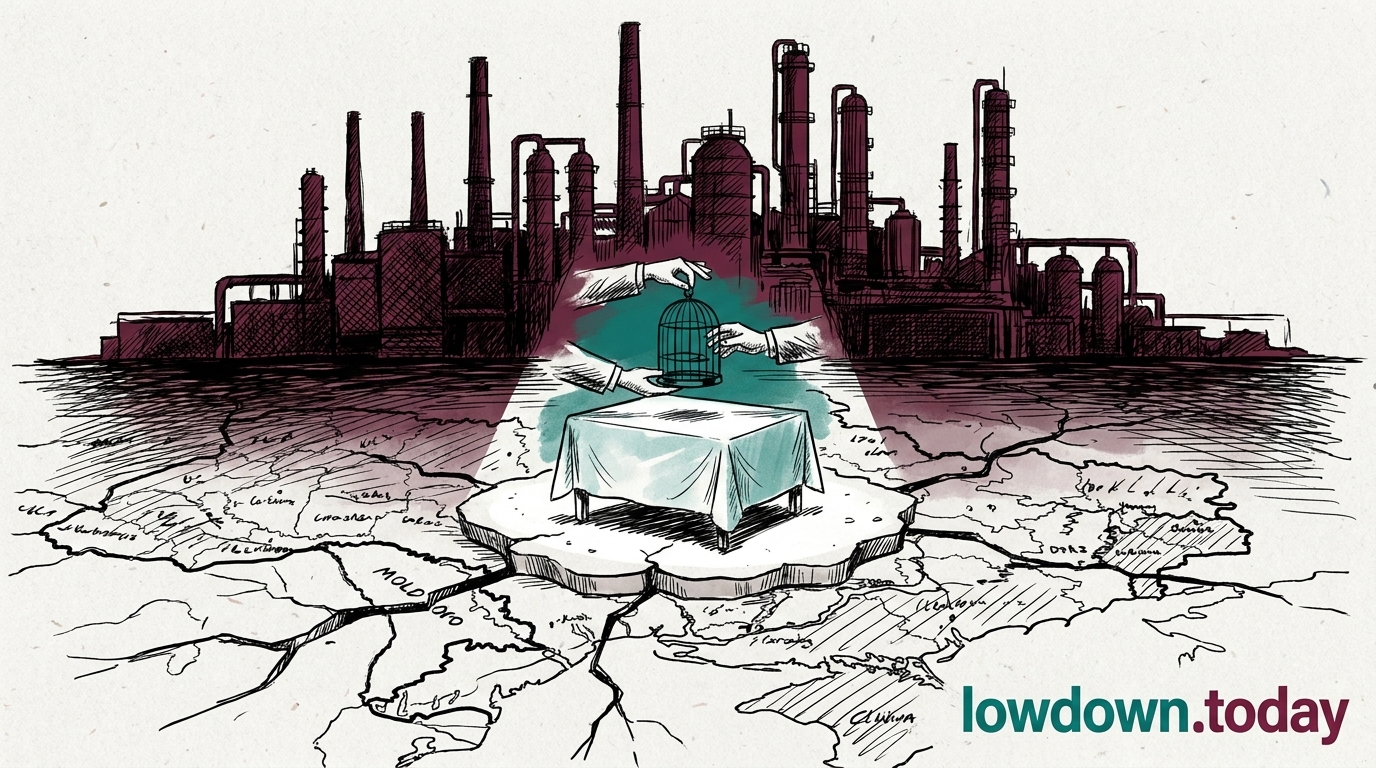
Urals crude has dropped below $38 per barrel, revenues are down 65% year-on-year, and the EU's complete gas ban takes effect in two months. Russia's defence budget consumes 40% of federal spending on a shrinking revenue base.

ConflictDeveloping
Key takeaway

Russia's National Wealth Fund faces depletion within 12–18 months at current revenue and spending rates.

Russian oil and gas revenues fell roughly 32% year-on-year in January 2026, with Urals Crude trading below $38 per barrel against a Brent benchmark of $62.50 1. The discount of roughly $24.50 per barrel reflects the cumulative weight of the G7 price cap, shipping insurance restrictions, and the progressive loss of European buyers.

The revenue collapse precedes the EU's phased ban on Russian gas imports, which begins 25 April 2026 with Liquefied Natural Gas and extends to all Russian gas by year-end 2. Gas revenues partially offset oil price erosion through 2025; that cushion faces elimination within nine months. Russia's 2026 federal budget was drafted assuming Urals Crude at $60 per barrel — a price the market has not delivered since mid-2025.

The rouble has held at approximately 95–100 to the dollar, but this stability rests on capital controls rather than market confidence. The Central Bank of Russia maintains it through mandatory conversion of foreign currency earnings, restrictions on capital outflows, and limits on retail foreign currency purchases — measures imposed in 2022 and tightened repeatedly since. These controls prevent a visible currency crisis but do not address the underlying fiscal gap. Defence spending consumed an estimated 40% of federal expenditure in 2025, according to the International Institute for Strategic Studies 3.

At current oil prices and munitions consumption rates — 8,828 kamikaze drones launched in a single 24-hour period on 2 March, triple the 2025 daily average — Russia's military expenditure is accelerating while the revenue base contracts. The approaching EU gas ban removes the last major revenue buffer. Capital controls can delay the fiscal reckoning; they cannot prevent it.

Deep Analysis

In plain English

Russia earns most of its money from selling oil and gas. That income has collapsed to roughly a third of what it was a year ago. The government has savings — a National Wealth Fund set aside for exactly these emergencies — but those savings have been drawn down continuously since February 2022. At current spending levels and income levels, Russia is burning through its financial reserves. When those run out, it faces a choice between cutting military spending, raising taxes on an already-stressed population, or printing money and accepting high inflation. None of these options is politically comfortable. The war is becoming progressively harder to finance even if it remains militarily sustainable in the short term.

Deep Analysis
Synthesis

The Urals-Brent spread of approximately $24.50 per barrel now exceeds the G7 price cap's original design intent. The cap was calibrated to allow Russian oil trade while limiting revenues; the market itself is now inflicting greater fiscal damage than the diplomatic cap mechanism. This represents an unintended success of the broader sanctions architecture — market forces achieving what negotiated price caps struggled to sustain.

Root Causes

Three compounding mechanisms explain the 65% drop beyond simple price decline. First, the G7 price cap at $60 per barrel was designed to set a revenue floor; with Brent now at $62.50 and Urals at $38, market discounting has overtaken the cap mechanism as the primary revenue suppressor. Second, India and China — Russia's primary alternative buyers — have progressively extracted steeper discounts as their combined market power grows and Russian desperation increases. Third, sanctioned tanker fleet restrictions have raised Russian export logistics costs, further compressing net revenue per barrel below the headline Urals price.

Escalation

Economic deterioration creates two divergent pressures the body does not distinguish. It incentivises Russia to seek a ceasefire that freezes territorial gains before fiscal constraints force a strategic retreat. It simultaneously incentivises intensified short-term military action — including the drone surge — to extract maximum battlefield leverage before the economic situation becomes acute. These opposing pressures are both active simultaneously.

What could happen next?
  • Consequence

    At current revenue and spending rates, Russia's National Wealth Fund faces depletion pressure within 12–24 months, forcing a structural choice between military cuts, austerity, or monetisation.

    Medium term · Assessed
  • Risk

    Economic desperation may accelerate Russian targeting of Ukrainian infrastructure to raise the cost of continued resistance, even as fiscal capacity to sustain the overall campaign shrinks.

    Short term · Suggested
  • Opportunity

    The convergence of military setbacks and fiscal pressure creates a rare window for a negotiated outcome on terms more favourable to Ukraine than 2022–2024 conditions permitted.

    Medium term · Suggested
First Reported In

Update #1 · Ukraine best month as Russia triples drones

Bloomberg· 3 Mar 2026
Read original
Different Perspectives
North Korea / DPRK
North Korea / DPRK
ISW confirmed the first mounting of DPRK Type-75 MLRS on Russian autonomous UGVs near Kharkiv on 7 June, the latest step in a supply axis that escalated from shells in 2023 to troops in 2024. Pyongyang gains live battlefield data on its ordnance and on Russia's uncrewed-systems programme.
IAEA / Rafael Grossi
Grossi confirmed Chornobyl structural damage with nuclear material metres away and could not attribute the ZNPP 15-hour blackout during the agreed repair window. Six ceasefires brokered and broken at ZNPP, compounded by Rosatom's May attack on IAEA neutrality, have eroded his ability to enforce the windows he negotiates.
Emmanuel Macron / France
Macron co-signed the E3 framework whose line-of-contact baseline marks Europe's first formal acceptance that 1991 borders are not the opening position. France's role carries weight because Macron had previously proposed a European force for Ukraine, and the framework's multinational force point is the vehicle for that.
Keir Starmer / E3
Keir Starmer / E3
Starmer, Macron and Merz met Zelenskyy on 7 June and backed a five-point framework taking the line of contact as the talks baseline, conceding roughly one fifth of Ukraine in exchange for a multinational force and frozen assets. With US mediation ended, the NATO Ankara summit on 7-8 July is the next test.
Vladimir Putin / Kremlin
Putin used SPIEF to reject Zelenskyy's summit letter, citing 'elements of rudeness', and repeated the pre-agreed treaty precondition that has frozen every diplomatic round since May. The SPIEF platform's message of investor confidence was punctured by naval fires visible from St Petersburg, which Moscow declined to dispute in scale.
Ukraine / Unmanned Systems Forces
Commander Brovdi confirmed USF units tracked and set fire to Boikyi at Kronstadt, while Code 9.2 struck the Chonhar Bridge the following day. Ukraine is sequencing strikes for rear-area interdiction and political timing rather than ground gains, trading the Baltic Fleet's home base for the logistics squeeze Russia cannot absorb without rationing its own occupied territory.
