Skip to content
Briefings are running a touch slower this week while we rebuild the foundations.See roadmap
Russia-Ukraine War 2026
22MAY

Hengli moves Singapore arm before GL V cliff

5 min read
10:57UTC

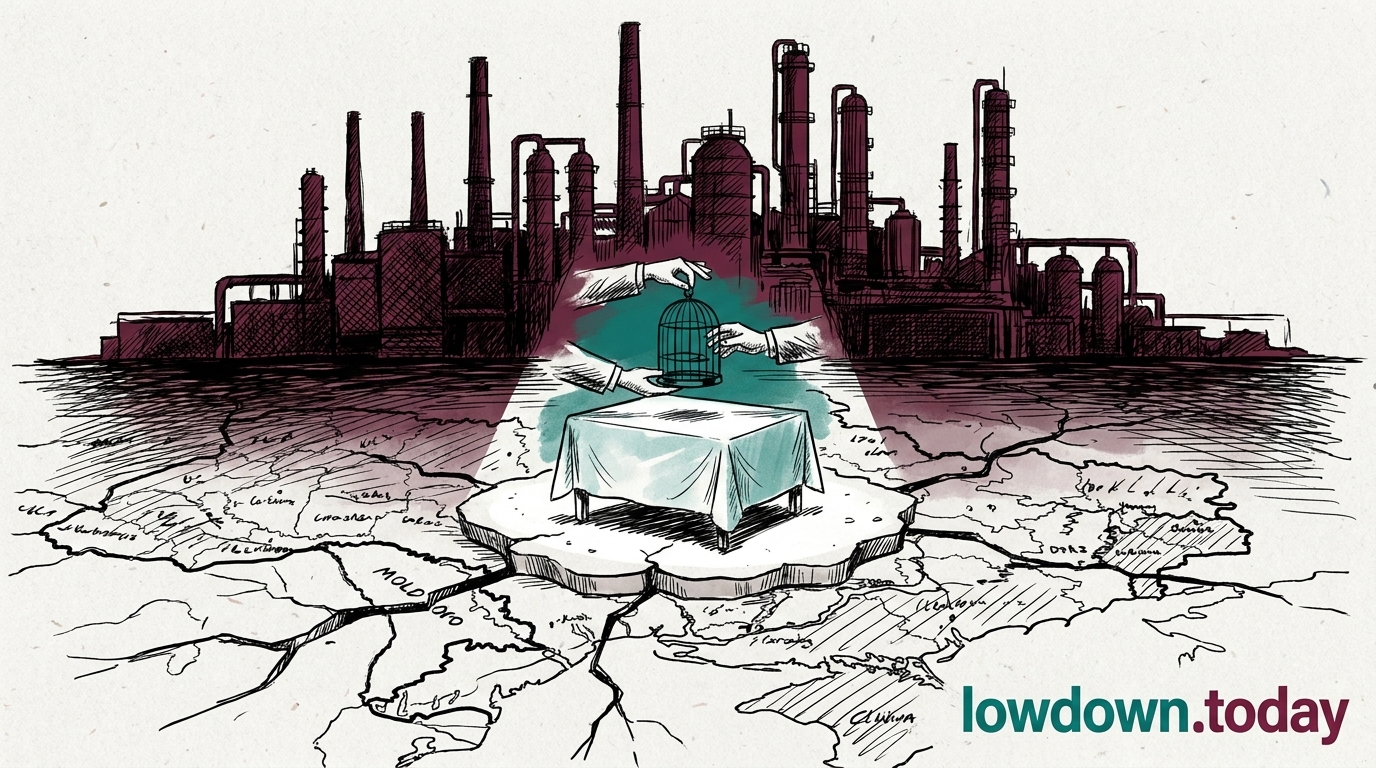
Hengli Petrochemical's Singapore unit cut its parent stake from 100% to 5% on 21 May and transferred 95% to Dalian Changxing, a Chinese state-linked trading house, two days before OFAC's General Licence V waiver expires at midnight on 24 May.

ConflictDeveloping
Key takeaway

OFAC's 50% rule meets China's state-owned-enterprise loophole; Treasury must choose by Sunday midnight.

Hengli Petrochemical International Pte, the Singapore trading arm of the OFAC-designated Dalian refinery, cut its parent-company stake from 100% to 5% and transferred 95% to Dalian Changxing International Trade Co Ltd, a Chinese government-linked trading house, two days before the Office of Foreign Assets Control (OFAC, the US Treasury sanctions bureau) General Licence V expires at midnight on Sunday 24 May . Per a client notice reported by Manifold Times, Hengli is arguing the Singapore unit is no longer majority-owned by a designated entity and should not be treated as sanctioned by association. Reuters reached out for comment; Hengli did not respond 1.

The restructure is engineered around OFAC's 50% rule, the doctrine that any entity owned at least half by a designated person is itself designated by association. A state-to-state restructure tests Treasury differently from a private divestiture. A state-linked owner can follow Beijing's blocking-order policy on dollar-clearing without formal control by the designated parent, which makes genuine independence almost impossible for OFAC to verify from the outside.

The 2018 Rusal case is the live precedent. OFAC sanctioned the Russian aluminium producer in April 2018; aluminium prices spiked 35% and dollar-clearing froze across the industrial supply chain. Designation was lifted only in January 2019, after owner Oleg Deripaska restructured the company under independent directors with binding licensing terms Treasury could verify. A swap into another state-adjacent owner without those independence undertakings did not qualify. The 2026 question is whether a Chinese government-linked counterparty acquiring 95% of a designated subsidiary counts as Rusal-style independence or as a controlled divestiture that preserves the parent's economic benefit.

The restructure also probes the reach of MOFCOM's blocking order , which directs Chinese entities to disregard US sanctions but does nothing for the dollar-clearing layer, the international banking pipework where Singapore is a major Asia hub. Sunday's midnight deadline becomes the first live test of whether Beijing's blocking architecture extends to the place where dollars actually settle. Accept the restructure and entire sanctions regimes thin out; reject it and Beijing's blocking architecture is publicly exposed as porous at the clearing layer.

Deep Analysis

In plain English

The United States has placed sanctions on a Chinese oil refinery in Dalian, which means American banks cannot do business with it and any company that does faces penalties. The refinery has a separate trading company registered in Singapore that it owns 100% of, which has been doing business on its behalf. Two days before a deadline that would have forced banks to stop clearing US dollars for the Singapore company, the Dalian refinery transferred 95% of the Singapore company's ownership to a different Chinese state-linked trading house. The argument is: the Singapore company is no longer majority-owned by the sanctioned parent, so it shouldn't count as sanctioned by association. US sanctions rules say any company owned more than 50% by a sanctioned entity is itself automatically sanctioned. Hengli transferred 95% of the Singapore unit to Dalian Changxing two days before the deadline, arguing that the new owner is not the sanctioned parent. The problem: Dalian Changxing is a Chinese government company subject to a Chinese law that directs it to ignore American sanctions. So it's not really independent. The US Treasury now has to decide by Sunday midnight whether to accept that argument or reject it.

Deep Analysis
Root Causes

OFAC's 50% rule was designed around private-sector ownership architectures, not state capitalism. The rule's logic assumes that legal ownership is a reliable proxy for economic control and that ownership restructures into independent private parties genuinely break the sanctioned entity's ability to direct operations.

In a state-capitalist system where the acquiring party is a government-linked trading house subject to a blocking order, neither assumption holds: the state can direct the subsidiary's behaviour through political channels that do not appear in the ownership register. China's MOFCOM blocking order architecture is precisely designed to exploit this gap; it creates a legal instruction for Chinese entities to defy OFAC while maintaining formal compliance with OFAC's ownership rules.

The timing pressure from GL V's 24 May expiry is a structural product of OFAC's general-licence instrument design. General licences provide wind-down periods that allow market actors to restructure before a designation becomes effective; they were not designed to provide a runway for sanction-avoidance architectures to be assembled under safe harbour.

Hengli's 72-hour pre-expiry restructure tests whether the wind-down period's protective intent extends to ownership transfers whose independence cannot be verified.

What could happen next?
  • Precedent

    OFAC's decision before Sunday midnight sets the template for every other designated Chinese refiner (Shandong Chambroad, Yulong, Rongsheng and others under MOFCOM's blocking order). If Hengli's state-to-state transfer holds, each designated refiner has a road map for escaping the 50% rule via Chinese state intermediaries.

    Immediate · Assessed
  • Risk

    Secondary sanctions applied to Singapore clearing banks would disrupt Iranian crude transactions routed through Singapore, affecting East Asian refiners whose supply chains run through the hub. Japan, South Korea and Taiwan are particularly exposed as refinery importers who source through Singapore-settled spot markets.

    Short term · Assessed
  • Consequence

    MOFCOM's blocking-order architecture is publicly tested at the dollar-clearing layer for the first time. Beijing's blocking strategy has been untested in practice because it relies on Chinese entities defying OFAC while maintaining access to dollar clearing. An OFAC rejection forces that contradiction into the open.

    Short term · Assessed
First Reported In

Update #105 · Khamenei keeps the uranium; House pulls the vote

Reuters via Yahoo Finance· 22 May 2026
Read original
Causes and effects
This Event
Hengli moves Singapore arm before GL V cliff
Treasury must decide before Sunday midnight whether a state-linked Chinese counterparty taking 95% of a designated subsidiary clears the 50% rule, with the template every other sanctioned Chinese refiner will copy if Hengli's manoeuvre holds.
Different Perspectives
Rafael Grossi, IAEA Director General
Grossi's Update 349 of 7 May recorded a drone strike on ZNPP's radiation monitoring laboratory on 3 May. Rosatom's 17 May public attack on the Secretariat's neutrality degrades the diplomatic ground Grossi needs for the sixth repair ceasefire at day 60 on the single backup line.
Indian Government / Embassy Moscow
The Indian Embassy in Moscow confirmed on 18 May that an Indian national was killed and three hospitalised at a refinery construction site in the 17 May barrage. India is among the largest buyers of discounted Russian crude; the fatality forces a diplomatic protest without changing the purchasing posture.
Recep Tayyip Erdogan, Turkish President
Erdogan met Zelenskyy in Ankara for nearly three hours on 15 May before the Istanbul session, recovering Turkey's 2022 mediator role and reducing Trump's leverage by hosting bilateral talks without Washington in the room. Turkey hosts the NATO Ankara summit on 7-8 July; the Istanbul format gives Erdogan standing at both tables simultaneously.
Viktor Orban / Hungarian Government
Budapest's new cabinet, formed 12 May, holds the institutional veto point on the EU tranche disbursement ahead of the first-half June window. Hungary has previously leveraged EU loan tranches to extract bilateral concessions; the combination of a fresh cabinet and a tight disbursement timeline makes Budapest the single highest-leverage actor in the EU track this fortnight.
European Council / Commission
The Commission is preparing a three-document disbursement package for the 9.1-billion euro first tranche of the EU loan to Ukraine, targeting first-half June, but delivery depends on the Magyar cabinet, which formed on 12 May, not blocking the mechanism. The 20th sanctions package remains in force against Russia.
Donald Trump / US Treasury
Treasury issued GL 134C with a 48-hour gap after GL 134B expired, confirming the waiver series functions as permanent monthly management rather than a wind-down instrument. Washington was absent from the Istanbul room; Treasury Secretary Bessent framed the Cuba carve-out as protecting 'most vulnerable nations', maintaining the fiction that the 30-day bridge has a humanitarian rationale.
