Skip to content
Briefings are running a touch slower this week while we rebuild the foundations.See roadmap
Russia-Ukraine War 2026
22MAY

CAIDA leak: US clouds barred from EU public data

3 min read
10:57UTC

CNBC reported on Thursday 7 May 2026, and gHacks confirmed on Tuesday 12 May, that CAIDA's leaked scope bars Microsoft, AWS and Google Cloud from processing financial, judicial and health data on behalf of EU public-sector clients. Private-sector procurement is excluded entirely.

ConflictDeveloping
Key takeaway

CAIDA as leaked is a public-sector procurement rule; the enterprise cloud market it covers represents the smaller share.

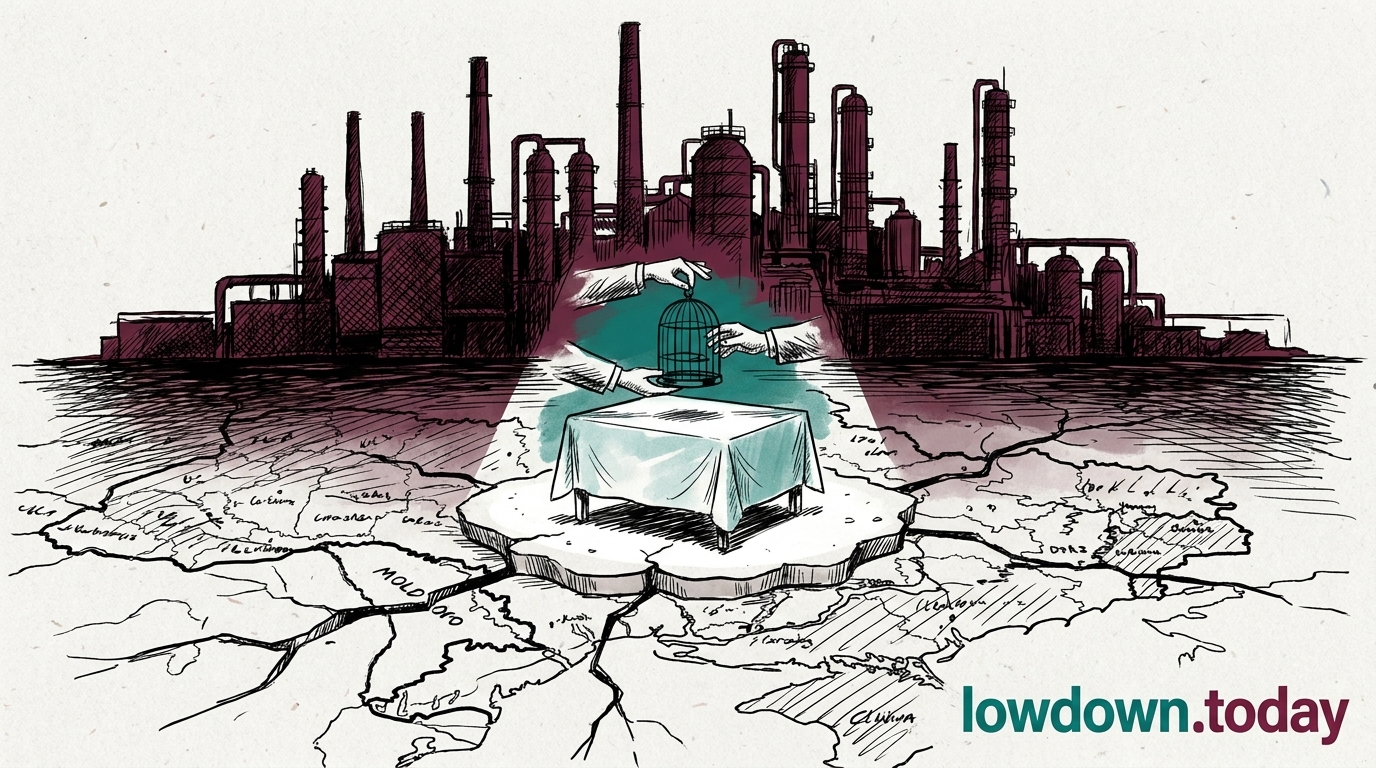
CNBC reported on Thursday 7 May 2026, and Germany's gHacks confirmed on Tuesday 12 May, that the Cloud and AI Development Act's leaked scope will bar US cloud providers from processing financial, judicial and health data on behalf of European Union public-sector clients 1. CNBC's reporting names three targeted hyperscalers: Microsoft, Amazon Web Services (AWS) and Google Cloud. The leaked outline excludes private-sector procurement entirely.

The public-sector-only scope means roughly 70 per cent of EU cloud revenue, the enterprise market the three hyperscalers dominate, sits outside the restriction. Ministries, regulators and other public-sector buyers face the procurement floor; enterprises remain free to keep AWS, Azure and Google Cloud. The shape of CAIDA as leaked is therefore a contracting rule for the slice of the market Brussels directly controls, not a competition rule that reshapes the European cloud market at large.

The leaked outline does not address the status of S3NS, the Thales-Google joint venture rated at the second tier on the Commission's Sovereignty European Assurance Level scale (SEAL-2), which sits inside the Commission's existing €180m sovereign-cloud framework . S3NS's continued eligibility under CAIDA is the file's most-watched detail at adoption. CISPE (the Cloud Infrastructure Services Providers in Europe trade body) shipped a rival pass-fail badge in April ; whether CAIDA inherits the multi-tier SEAL approach, adopts the CISPE binary, or introduces a third framework will signal whether Brussels is repeating its own April compromise or correcting for it. Neither the CAIDA text nor a leaked draft has been published; the scope is sourced from Commission officials speaking to CNBC, not from a circulated document.

Deep Analysis

In plain English

Imagine the EU government saying: 'US companies can no longer store our courts' records, hospitals' patient data, or tax information on their servers.' That is roughly what CAIDA does, but only for government agencies, not private companies. For context, about 70 per cent of cloud services used in Europe are supplied by three US companies; Microsoft, Amazon, and Google. CAIDA affects only the government slice of that market. European cloud providers like Scaleway and OVHcloud stand to win public-sector contracts when governments switch suppliers.

Deep Analysis
Root Causes

The public-sector-only scope reflects a structural constraint in EU trade law: the EU-US Trade and Technology Council framework, reaffirmed in 2025, contains a mutual commitment against 'unjustified' digital trade barriers. A restriction on private enterprise cloud services would fall directly within the USTR Section 301 criteria that triggered a parallel investigation into French digital services taxes in 2020, and Commission legal advisers would have flagged that risk as deal-breaking.

A secondary driver is the GAIA-X governance failure: the GAIA-X project, designed to provide a European multi-cloud framework applicable to both public and private sectors, produced a certification hierarchy without a private-sector mandate attached. CAIDA fills the public-sector gap that GAIA-X's voluntary model could not close.

What could happen next?
  • Consequence

    CAIDA adoption forces EU member states to develop European cloud procurement criteria for financial, judicial, and health data contracts; the first affected renewals are likely to arise in 2027-2028.

    Short term · 0.75
  • Risk

    The USTR Section 301 final determination, due 24 July 2026 (ID:3073), may classify CAIDA's public-sector cloud restriction as a digital trade barrier warranting retaliatory tariffs on EU goods, creating a Brussels-Washington standoff in the same week as the DMA Google decision.

    Immediate · 0.55
  • Precedent

    The S3NS SEAL-2 carve-out question — whether a Google-joint-venture product qualifies under CAIDA's public-sector ban — will establish whether sovereignty certifications can be used to launder US CLOUD Act exposure.

    Short term · 0.7
First Reported In

Update #5 · Brussels' 27 May package, two days before G7

gHacks· 17 May 2026
Read original
Causes and effects
This Event
CAIDA leak: US clouds barred from EU public data
The leak sets a procurement floor on US hyperscalers rather than a market transformation; roughly 70 per cent of EU cloud revenue sits outside the restriction.
Different Perspectives
North Korea / DPRK
North Korea / DPRK
ISW confirmed the first mounting of DPRK Type-75 MLRS on Russian autonomous UGVs near Kharkiv on 7 June, the latest step in a supply axis that escalated from shells in 2023 to troops in 2024. Pyongyang gains live battlefield data on its ordnance and on Russia's uncrewed-systems programme.
IAEA / Rafael Grossi
Grossi confirmed Chornobyl structural damage with nuclear material metres away and could not attribute the ZNPP 15-hour blackout during the agreed repair window. Six ceasefires brokered and broken at ZNPP, compounded by Rosatom's May attack on IAEA neutrality, have eroded his ability to enforce the windows he negotiates.
Emmanuel Macron / France
Macron co-signed the E3 framework whose line-of-contact baseline marks Europe's first formal acceptance that 1991 borders are not the opening position. France's role carries weight because Macron had previously proposed a European force for Ukraine, and the framework's multinational force point is the vehicle for that.
Keir Starmer / E3
Keir Starmer / E3
Starmer, Macron and Merz met Zelenskyy on 7 June and backed a five-point framework taking the line of contact as the talks baseline, conceding roughly one fifth of Ukraine in exchange for a multinational force and frozen assets. With US mediation ended, the NATO Ankara summit on 7-8 July is the next test.
Vladimir Putin / Kremlin
Putin used SPIEF to reject Zelenskyy's summit letter, citing 'elements of rudeness', and repeated the pre-agreed treaty precondition that has frozen every diplomatic round since May. The SPIEF platform's message of investor confidence was punctured by naval fires visible from St Petersburg, which Moscow declined to dispute in scale.
Ukraine / Unmanned Systems Forces
Commander Brovdi confirmed USF units tracked and set fire to Boikyi at Kronstadt, while Code 9.2 struck the Chonhar Bridge the following day. Ukraine is sequencing strikes for rear-area interdiction and political timing rather than ground gains, trading the Baltic Fleet's home base for the logistics squeeze Russia cannot absorb without rationing its own occupied territory.
