Skip to content
You can now search across every topic, entity and event.What's new
Russia-Ukraine War 2026
11APR

War leaves US farms 2m tonnes short

2 min read
16:48UTC
ConflictDeveloping

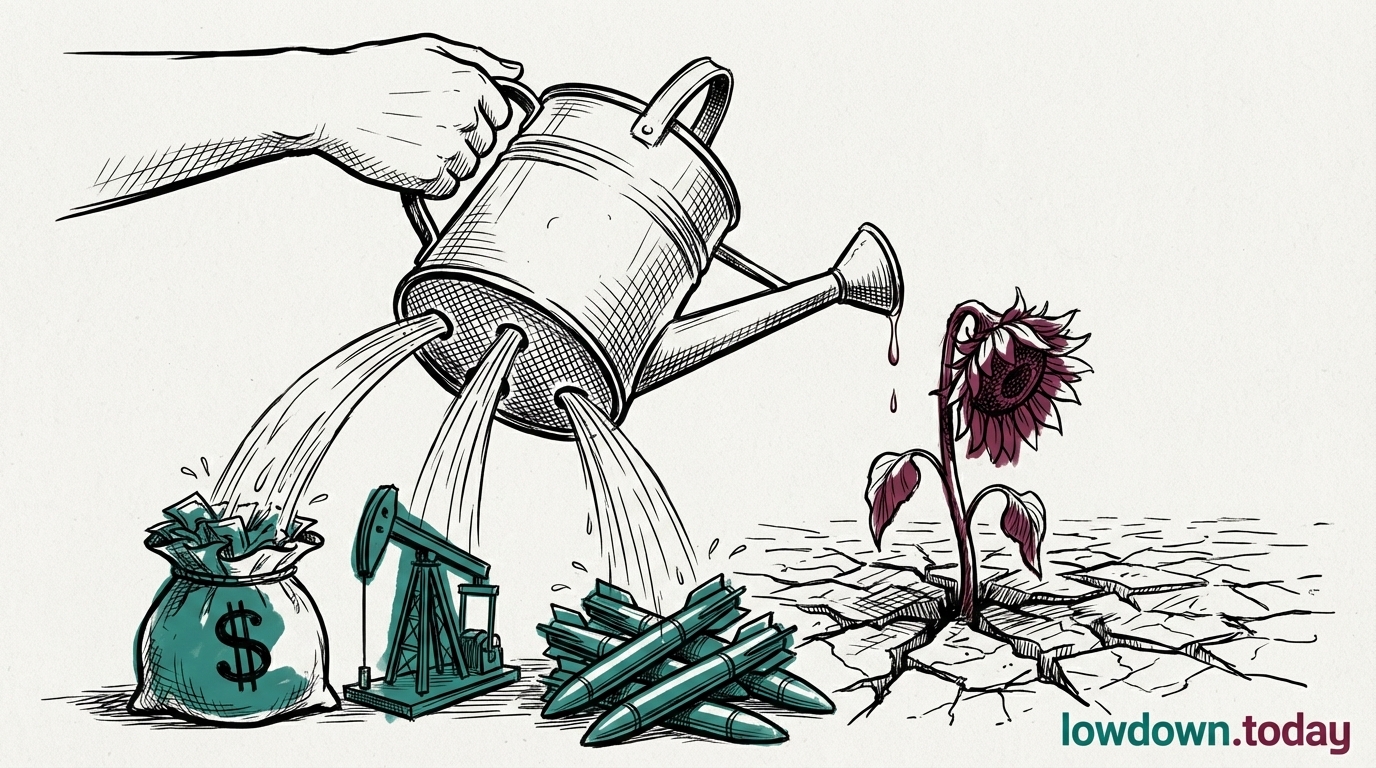
The Fertilizer Institute projects US farmers will be short 2 million tonnes of urea this spring, with urea prices up 30% since the war began. Some farmers cannot obtain supply at any price. 1 Spring planting is underway now. The shortage is not a forecast; it is a current constraint on fields being sowed this week.

The domestic economic pressure from this conflict has been building. US gasoline had already reached $3.98 per gallon , up 36% from pre-war levels. US diesel previously topped $5 per gallon . The fertiliser shortage adds a production-cost dimension to the energy-cost dimension: fuel to run farm equipment costs more, fertiliser to grow crops costs more or is unavailable, and transport costs have increased across the supply chain.

Urea is synthesised from natural gas. Iran and Russia together account for approximately 25% of global urea exports. The war has simultaneously disrupted Iranian production via strikes on petrochemical facilities and Russian supply chains via shipping insurance complications in the Gulf. The shortage is structural, not speculative: the 2 million tonne shortfall represents approximately 15% of annual US nitrogen fertiliser demand.

Corn planted without adequate nitrogen produces thin, pale stalks and reduced yields. The Fertilizer Institute's projection implies yields on affected acres could fall 10-20%, with downstream effects on global grain prices by autumn 2026. No administration response has been announced. The political dimension is acute: rural America, which supported the war at higher rates than urban centres per Pew data , is the constituency absorbing the most direct economic blow from a conflict it disproportionately endorsed.

Deep Analysis

In plain English

American farmers need fertiliser for spring planting right now. Most of it comes by ship through the Strait of Hormuz, which Iran controls. The war has disrupted those shipments. If fertiliser does not arrive in time, food prices rise for everyone.

Deep Analysis
Root Causes

US agriculture's dependency on imported fertiliser via a single maritime chokepoint.

The spring planting window is biologically fixed. Farmers who miss it cannot recover the yield later in the season.

First Reported In

Update #49 · Hormuz toll into law; Tangsiri killed

Siasat / Al Jazeera· 27 Mar 2026
Read original
Different Perspectives
Turkey
Turkey
Turkey, a major buyer of Russian diesel cargoes, loses that access under Moscow's first producer-binding export ban, in force from 8 July to 31 July. Ankara hosted the same week's NATO summit pledging EUR 70bn to Ukraine, sitting on both sides of the fuel-and-alliance ledger.
NATO
NATO
NATO leaders meeting in Ankara on 7 and 8 July pledged EUR 70bn in equipment, assistance and training for Ukraine across 2026, with a 2027 sustainment commitment and a $40bn Drone Edge counter-drone initiative. European allies now fund the vast majority of that package, filling the gap left by Washington's idled crude waiver.
India
India
India's state refiners continued buying discounted Urals crude as June's price fell to $63.18 a barrel, insulating New Delhi from the OFAC waiver gap still constraining Western buyers. Indian refiners could pick up diesel-export share as Russia's producer-binding ban shuts out its former customers.
China
China
China's independent refiners kept importing discounted Urals crude through June as the price fell to $63.18 a barrel, down 26% month-on-month per CREA. Beijing has said nothing on Moscow's new diesel ban, leaving Chinese refiners a likely beneficiary if Turkish and Brazilian buyers seek replacement cargoes.
United States
United States
No successor licence has been issued since General License 134C lapsed on 17 June, leaving a 26-day gap, the longest of the war, in the Russian crude waiver. Washington's silence is tightening the channel without any stated decision, as Treasury weighs whether to let it die.
Ukraine
Ukraine
Ukraine's long-range strike campaign shifted from refineries to seaborne fuel tankers crossing the Sea of Azov, cutting tracked vessel traffic 55% between 30 June and 11 July, per Starboard Maritime Intelligence. The shift targets Russia's export revenue directly rather than just domestic supply, adding pressure alongside the collapsing Urals price.
