Skip to content
Briefings are running a touch slower this week while we rebuild the foundations.See roadmap
Pandemics and Biosecurity
9JUN

Ituri outbreak ran undetected for weeks

3 min read
09:58UTC

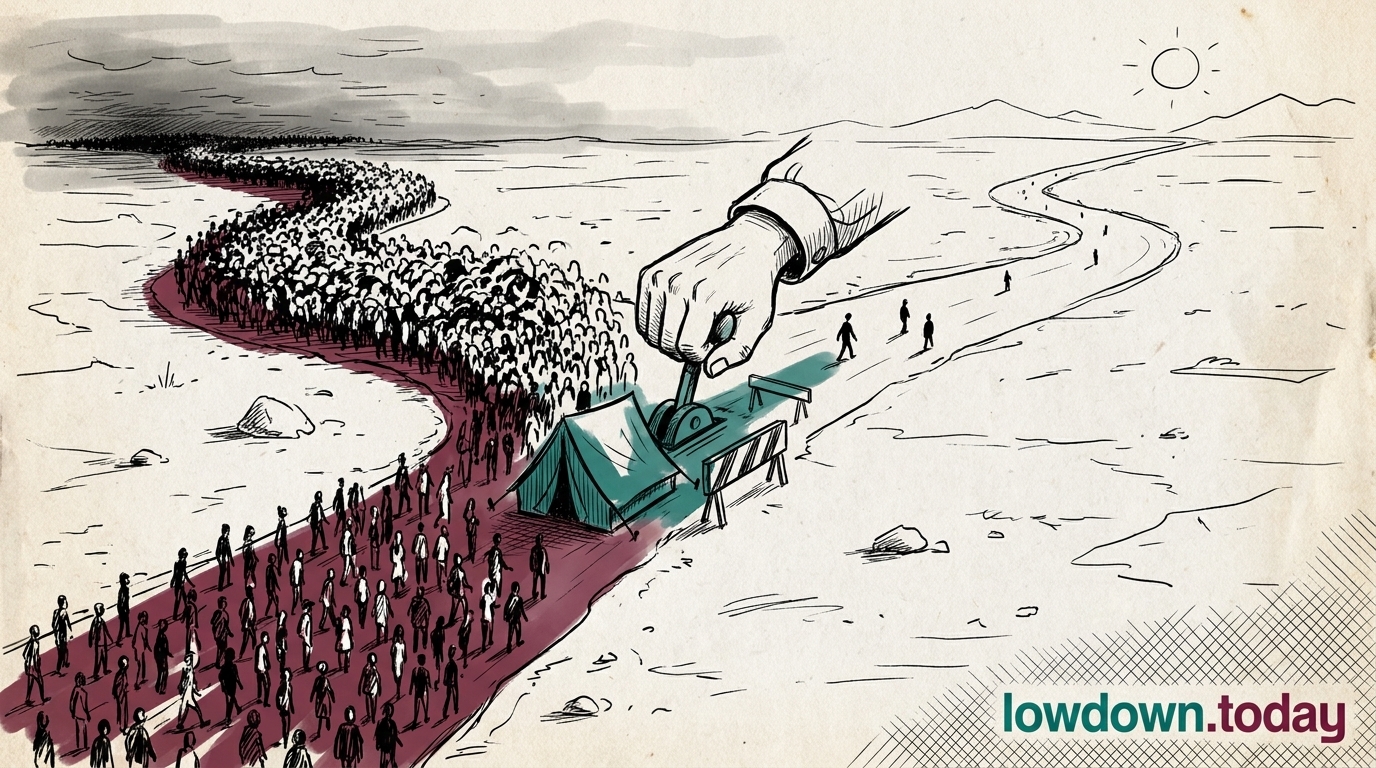
Imperial College London assessed the Bundibugyo outbreak had likely spread undetected for several weeks or months before WHO received its 5 May signal; 246 suspected cases and 80-plus deaths span three Ituri health zones.

ScienceDeveloping
Key takeaway

The largest Bundibugyo outbreak on record was already at 246 cases when international surveillance saw it.

The Bundibugyo outbreak in Ituri Province, eastern DR Congo, has reached 246 suspected cases and 80 suspected deaths across the Bunia, Rwampara and Mongbwalu health zones, per the WHO PHEIC technical assessment 1. Anne Cori, Neil Ferguson and seven Imperial College London colleagues published a Q&A on Sunday assessing the outbreak had "likely gone undetected and spread for several weeks or months" before WHO received its signal on Tuesday 5 May 2. Provincial health authorities in Ituri told RFI Afrique that the first haemorrhagic-fever deaths in Djugu and Irumu territories were recorded in April 3. April community deaths to the 5 May WHO signal is at least four weeks of undetected onward transmission.

The scale already makes this the largest documented Bundibugyo outbreak on record, surpassing the 2007 Uganda outbreak's 131 cases. Imperial's panel estimates the Bundibugyo case-fatality rate at 30 to 40 per cent, lower than Zaire ebolavirus's 50 per cent average but still in the highest tier of human-pathogen lethality. At a 35 per cent rate, 246 suspected cases imply roughly 80 to 90 deaths if the chain runs to clinical conclusion, a figure the 80-plus suspected deaths already approach. Mongbwalu sits inside Djugu Territory and Rwampara inside Irumu; both host active armed groups that constrain medical-team deployment.

The surveillance gap converts the headline figure from a story about African detection speed into a story about regional surge capacity. The pre-outbreak Filovirus roadmap had named precisely this scenario, non-Zaire Ebola species and the detection apparatus around them. The ECDC's parallel posture review of European preparedness reached compatible conclusions on detection lag. Imperial's "weeks or months" assessment is the operational consequence: by the time INRB confirmed species on 14 May, secondary chains inside the Bundibugyo 8 to 10 day incubation window were already running in three health zones, and contact tracing was opening at scale rather than at index.

Deep Analysis

In plain English

Ituri is a province in northeastern DR Congo, near the Uganda border. It has been caught in armed conflict for years, with armed groups attacking civilians and health facilities. Spotting an outbreak early is very hard there: health workers are scarce, clinics have closed, and people move around constantly because of the fighting. Bundibugyo ebolavirus spreads through direct contact with blood or bodily fluids of a sick person. It does not spread through the air. But in a setting with no hospitals and frightened communities, sick people may have contact with many family members and carers before anyone realises what they are dealing with. By the time the first samples reached Kinshasa's national laboratory on 5 May, people in Ituri had likely been dying from it since April.

Deep Analysis
Root Causes

Ituri Province sits at the intersection of three structural risk amplifiers. Alliance of Democratic Forces (ADF) armed activity in Irumu territory, directly south of Mongbwalu, has degraded healthcare infrastructure and displaced health workers repeatedly since 2019. By 17 May 2026, four healthcare workers in Ituri had died from confirmed Bundibugyo infection.

Gold mining drives internal migration between Mongbwalu (Ituri's main mining hub) and Bunia, creating a mobile population that carries transmission chains across health-zone boundaries before detection. The WHO R&D Blueprint Filovirus roadmap specifically named Ituri-type conflict-endemic zones as the highest-risk geography for non-Zaire Ebola detection failure in its March 2026 assessment.

The DRC's community surveillance network was rebuilt after the 2018-2020 Kivu Ebola crisis, but the ADF resurgence post-2021 destroyed community health worker networks in Irumu and parts of Djugu, the two territories where this outbreak is concentrated. The March 2026 Blueprint roadmap named this surveillance gap as unresolved.

What could happen next?
  • Risk

    Active ADF armed operations in Irumu territory, where part of the outbreak is concentrated, will restrict contact-tracing teams' access, potentially forcing response teams to work only in Bunia and Mongbwalu health zones.

    Immediate · 0.85
  • Consequence

    The four healthcare worker deaths already recorded in Ituri will deter local health staff from engaging with cases, compressing the already-thin response workforce further.

    Short term · 0.8
  • Risk

    If the outbreak's true onset was April rather than early May, the 30-40% of contacts who survived mild infection may have already returned to communities, mining sites, and cross-border routes without being traced.

    Short term · 0.7
First Reported In

Update #3 · WHO calls Ebola PHEIC, no treatment exists

World Health Organization· 17 May 2026
Read original
Causes and effects
This Event
Ituri outbreak ran undetected for weeks
An outbreak that surfaces at 246 cases already past four-plus weeks of community transmission has slipped the surveillance window that early countermeasures depend on.
Different Perspectives
World Health Organization
WHO's DON606 recalibration to confirmed-only reporting gives the clean baseline the CDC model rests on, but the apparent fall from 1,040 to 534 carries misinterpretation risk WHO communications have not pre-empted. The PABS deadlock ahead of IGWG7 and continuing MBP134/remdesivir assessment without authorisation make WHO the body most able to accelerate the two decisions that could change the outbreak's trajectory.
European Union (ECDC)
ECDC's Week 23 CDTR tracked four simultaneous non-Ebola signals: the Dermatophilus congolensis novel-transmission cluster across France, Germany and Spain; a 4.2-fold malaria surge in Mayotte; the Salmonella ST2045 multi-country cluster; and two new Saudi MERS cases. The continental early-warning layer is carrying a full multi-pathogen picture while Bundibugyo dominates headlines.
Uganda
Uganda
Uganda's 19 confirmed cases are concentrated in Kampala and Wakiso, an urban cluster that applied the 2022 Sudan-ebolavirus playbook; the Bwera border laboratory shortens cross-border confirmation to same-day. Uganda's regulatory authority must co-sign before MBP134 or remdesivir can dose any patient.
Democratic Republic of the Congo
Kinshasa shares Bundibugyo sequence data in real time with no treaty-guaranteed access to the vaccines that data informs, and its health minister called the US entry ban discriminatory while negotiating an early lift. DRC accounts for 515 of 534 confirmed cases and faces IS-controlled access blockades in Mambasa that health authorities cannot resolve.
United States (HHS/CDC)
HHS expanded the Ebola entry ban to green-card holders on 5 June, widening a restriction expiring around 17 June against WHO advice. The CDC simultaneously published the R0=2.51 modelling, the sharpest analytical contribution to the response, from a federal bench that holds the NIH and acting CDC director roles in one person.
Imperial College London / Cori and Ferguson
Anne Cori and Neil Ferguson place the case-fatality ratio at 30 to 40 per cent and read the 6.8-to-1 suspected-to-confirmed ratio as evidence that the laboratory figure understates true lethality. Many people die before a swab reaches them.
