Skip to content
Briefings are running a touch slower this week while we rebuild the foundations.See roadmap
Pandemics and Biosecurity
9JUN

Bundibugyo Ebola: 831 cases, 186 dead

3 min read
09:58UTC

WHO's Disease Outbreak News 603 logged 831 cases and 186 deaths from Bundibugyo Ebola on 21 May, a tripling in four days that owes more to counting than to spread.

ScienceDeveloping
Key takeaway

A 24% fatality rate measured against 21% contact tracing is a floor, not a measurement of the outbreak's true severity.

WHO's Disease Outbreak News 603, published 21 May, recorded 831 total cases (85 confirmed, 746 suspected) and 186 deaths from Bundibugyo Ebola in the Democratic Republic of Congo (DRC) 1. That is roughly triple the 246 cases on the books when WHO Director-General Tedros Adhanom Ghebreyesus declared the Public Health Emergency of International Concern (PHEIC) four days earlier , the first such declaration ever made for this Ebola species. Bundibugyo is one of six Ebola virus species, with no licensed vaccine or treatment of its own.

Read the jump with care. Most of the rise is case-finding catching up after the declaration, not the virus accelerating. The outbreak ran undetected in Ituri province for more than four weeks , so surveillance teams are now logging deaths that occurred before anyone was looking, rather than recording a sudden burst of new infections.

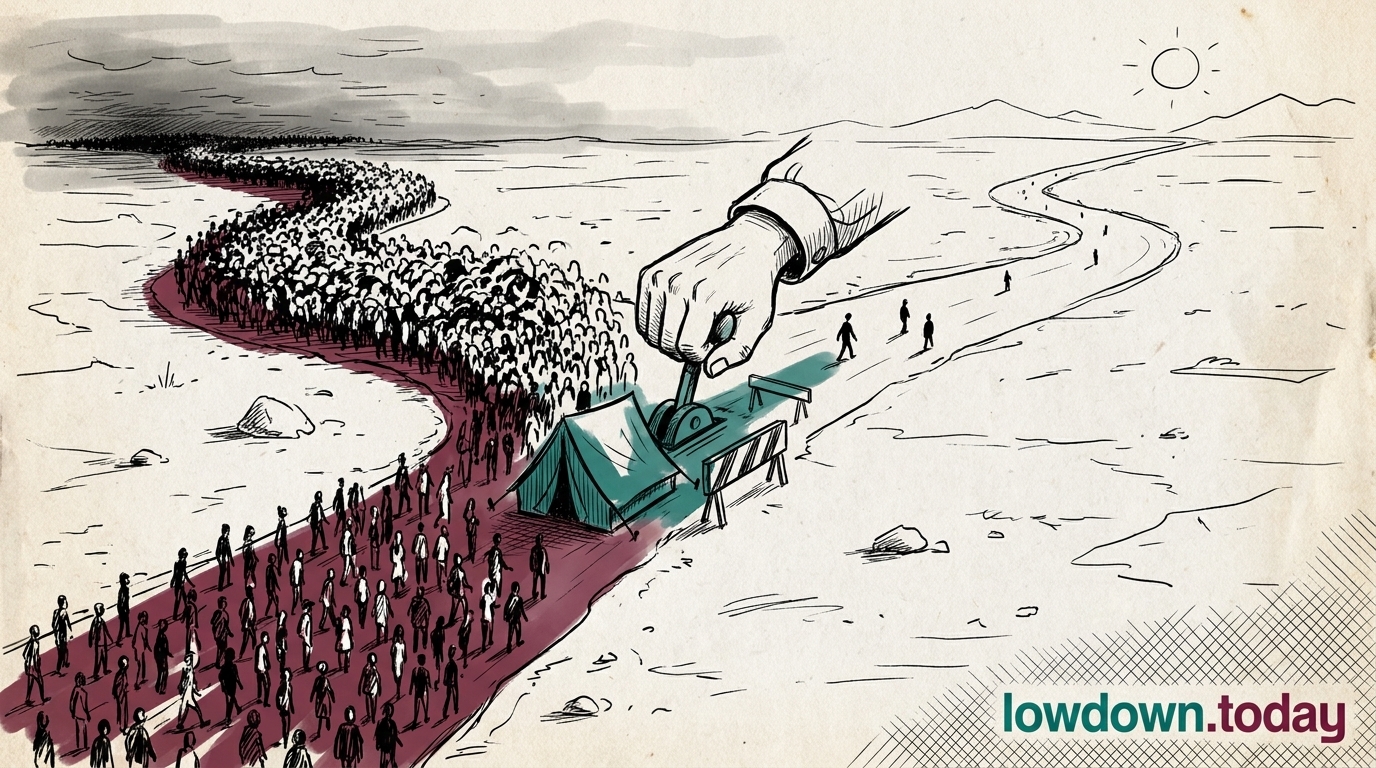
The suspected case-fatality rate sits near 24%, with 96% of cases in three Ituri health zones: Mongbwalu, Rwampara and Bunia 2. The figure that should worry a reader more is the 21% contact follow-up rate: insecurity keeps tracing teams away from most named contacts 3. A 24% fatality rate measured against a 21% tracing rate is a partial count of a poorly observed outbreak, not a settled verdict on how lethal it is.

The sharpest signal is at Mongbwalu General Referral Hospital, where four healthcare workers died in four days 4. Clustered staff deaths point to a breakdown in infection prevention and control, the gowning, isolation and barrier-nursing routines that stop Ebola spreading inside the hospitals treating it. Hospital amplification of this kind turned the 2014 West Africa outbreak from regional to catastrophic; when the people running isolation wards begin dying, the wards stop being safe.

Deep Analysis

In plain English

Bundibugyo (bun-dee-BOO-gyo) ebolavirus is one of six known Ebola species. It had only 169 recorded cases in its entire history before this year. There are no approved vaccines or treatments for Bundibugyo; the medicines that worked in previous DRC Ebola outbreaks target a different species and do not work here. The jump from 246 cases to 831 in four days is partly alarming and partly explained: when the WHO declared a global health emergency, more health workers started looking. But four hospital staff dying in four days at one facility in Mongbwalu, a gold-mining town in northeastern DRC, shows the virus has found its way into a hospital where protective equipment and isolation rooms are sparse. Only one in five known contacts is being monitored, because armed groups control the roads into many affected areas.

Deep Analysis
Root Causes

Ituri Province's gold-mining economy drives constant cross-border population movement between DRC, Uganda and South Sudan through informal routes that bypass formal health checkpoints. The Djugu and Irumu territories at the outbreak core have experienced persistent armed conflict involving the ADF (Allied Democratic Forces) and CODECO militia, which physically prevents contact tracers from operating. That is why contact follow-up stands at 21% despite a PHEIC declaration.

Bundibugyo ebolavirus had only 169 combined cases across two prior outbreaks before 2026, meaning clinical staff in Ituri had no institutional memory of managing it. The four-week undetected silent phase meant the outbreak was already seeded across three health zones before isolation protocols were triggered, creating the nosocomial amplification the DON603 figures capture.

What could happen next?
  • Risk

    If Mongbwalu General Referral Hospital cannot be stabilised as an IPC environment, the nosocomial chain will seed additional health zones as patients seek care at facilities with no Bundibugyo protocol.

  • Consequence

    The 21% contact follow-up rate means the outbreak model cannot reliably estimate R-effective; containment decisions are being made on incomplete transmission data.

First Reported In

Update #4 · Ebola triples, response misfires

World Health Organization· 24 May 2026
Read original
Different Perspectives
World Health Organization
WHO's DON606 recalibration to confirmed-only reporting gives the clean baseline the CDC model rests on, but the apparent fall from 1,040 to 534 carries misinterpretation risk WHO communications have not pre-empted. The PABS deadlock ahead of IGWG7 and continuing MBP134/remdesivir assessment without authorisation make WHO the body most able to accelerate the two decisions that could change the outbreak's trajectory.
European Union (ECDC)
ECDC's Week 23 CDTR tracked four simultaneous non-Ebola signals: the Dermatophilus congolensis novel-transmission cluster across France, Germany and Spain; a 4.2-fold malaria surge in Mayotte; the Salmonella ST2045 multi-country cluster; and two new Saudi MERS cases. The continental early-warning layer is carrying a full multi-pathogen picture while Bundibugyo dominates headlines.
Uganda
Uganda
Uganda's 19 confirmed cases are concentrated in Kampala and Wakiso, an urban cluster that applied the 2022 Sudan-ebolavirus playbook; the Bwera border laboratory shortens cross-border confirmation to same-day. Uganda's regulatory authority must co-sign before MBP134 or remdesivir can dose any patient.
Democratic Republic of the Congo
Kinshasa shares Bundibugyo sequence data in real time with no treaty-guaranteed access to the vaccines that data informs, and its health minister called the US entry ban discriminatory while negotiating an early lift. DRC accounts for 515 of 534 confirmed cases and faces IS-controlled access blockades in Mambasa that health authorities cannot resolve.
United States (HHS/CDC)
HHS expanded the Ebola entry ban to green-card holders on 5 June, widening a restriction expiring around 17 June against WHO advice. The CDC simultaneously published the R0=2.51 modelling, the sharpest analytical contribution to the response, from a federal bench that holds the NIH and acting CDC director roles in one person.
Imperial College London / Cori and Ferguson
Anne Cori and Neil Ferguson place the case-fatality ratio at 30 to 40 per cent and read the 6.8-to-1 suspected-to-confirmed ratio as evidence that the laboratory figure understates true lethality. Many people die before a swab reaches them.
