Skip to content
Welcome, thoughtbot's Giant Robots listeners!Start here
Pandemics and Biosecurity
3OCT

Cambodia, not US herds, makes cases

2 min read
13:42UTC

Global confirmed human H5N1 cases rose by seven between February and July, on ECDC's count. Cambodia supplied four of them, and the American dairy epidemic supplied none.

ScienceAssessed
Key takeaway

Four of the world's seven new bird-flu cases came from Cambodian poultry, none from US dairy herds.

Confirmed human H5N1 avian influenza cases worldwide rose from 994 to 1,001 between 16 February and 17 July, on the running count ECDC has kept since 2003⁠1. Cambodia supplied four of those seven. The most recent is a nine-month-old girl in Phnom Penh, reported by Cambodia's health ministry on 11 July and confirmed on 9 July by the National Institute of Public Health and the Institut Pasteur du Cambodge⁠2. The remaining three, two attributed to Bangladesh and one to India, come from secondary aggregation rather than a direct agency bulletin and should be treated as indicative.

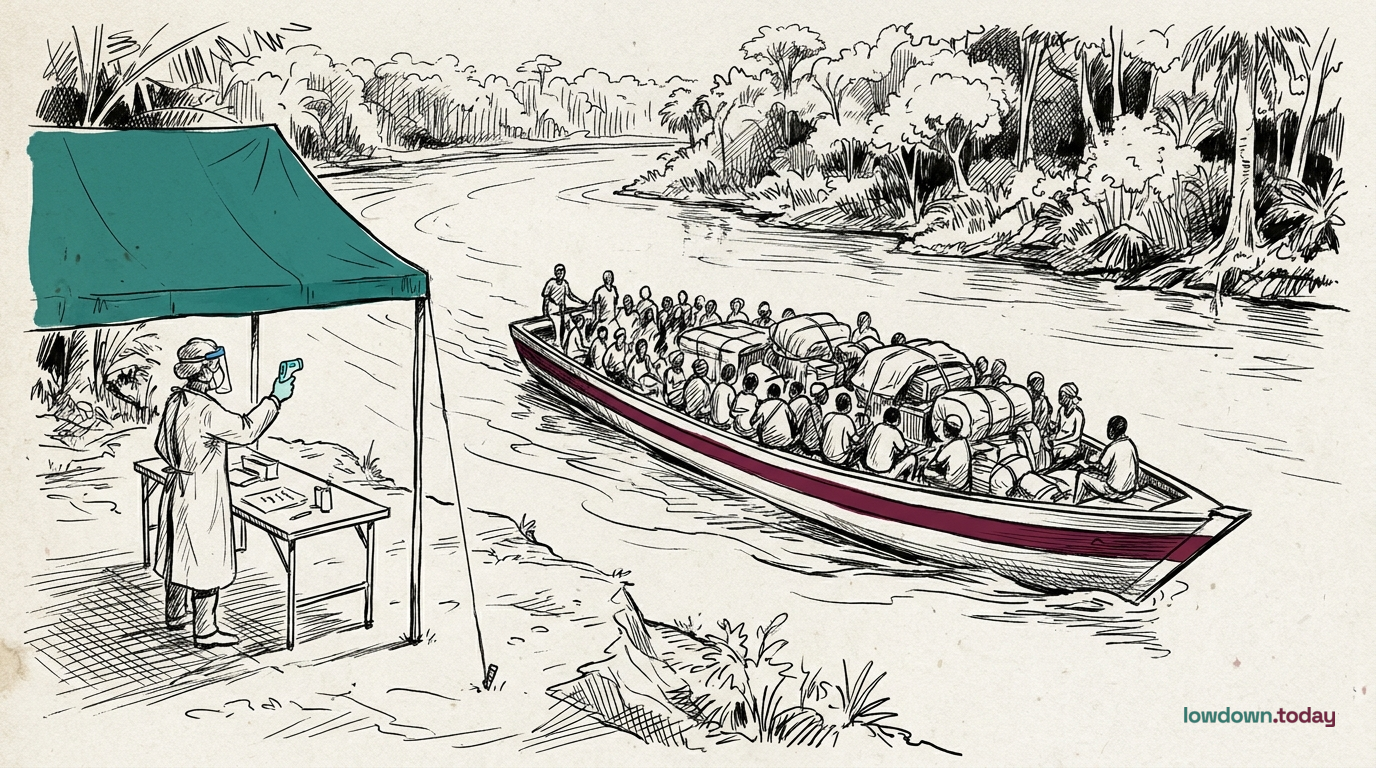
Cambodia's infections come from village poultry rather than commercial farming, and from a virus lineage that has circulated in Southeast Asian backyard flocks for two decades. That is a different epidemiological story from the one absorbing most of the world's attention, and the two are being read off a single cumulative counter.

The American count has not moved off 71 in that period. That figure reaches us via ECDC and CDC's FluView surveillance report for week 22, which recorded no new confirmed human A(H5) infections; CDC's own situation-summary page refused every request we made to it⁠3. The reporting cadence changed in May from weekly to monthly, so a stationary counter now carries less information than it appears to.

The science on mammalian adaptation remains American. The University of Pittsburgh resolved in June why the virus colonises the bovine udder, via N-linked sialic acid receptors, work done on herds that have produced no confirmed human case since March. None of Cambodia's four cases connects to any of it. Five months of global surveillance produced seven human infections, and a majority came from a country with no dairy-cattle epidemic at all.

Deep Analysis

In plain English

bird flu, known as H5N1, keeps making global headlines because of huge outbreaks in American dairy cattle. But since mid-February, only seven new human cases have been confirmed worldwide, and four of them were in Cambodia, where people catch it from backyard chickens and ducks, not cows. The US human case count has not moved since early March. Where health authorities look hardest for a disease shapes what they find.

Deep Analysis
Root Causes

Cambodia's share of new cases traces to a structural exposure pattern absent from the US picture: smallholder poultry farming, where backyard flocks live in close household proximity, is widespread across rural Cambodian provinces, creating repeated low-level human-bird contact that the commercial, biosecurity-controlled US dairy sector does not replicate.

The US count staying at 71 is not evidence the virus stopped moving in cattle; it reflects that the confirmed human-case pathway, occupational exposure among dairy workers, has produced no new confirmed infection since early March, even as the underlying herd outbreak continues.

What could happen next?
  • Meaning

    Where surveillance effort concentrates, in this case US dairy herds, does not necessarily track where human infection is actually occurring.

  • Risk

    Cambodia's poultry-exposure pathway receives less international testing infrastructure than the US dairy pathway, so its true case count carries more uncertainty despite now supplying most of the new cases.

First Reported In

Update #11 · Ebola outruns its own contact tracing

ECDC· 21 Jul 2026
Read original →
Causes and effects
Different Perspectives
IGWG co-chair Tovar da Silva Nunes
The Brazilian co-chair closed the eighth pathogen-sharing session on 18 September without an agreed annex text, the second session in a row to end that way. He presented the outcome as continued commitment, with adoption due at the World Health Assembly in May 2027.
Fraport
Fraport
The Frankfurt Airport operator has told staff to watch for fever, hessenschau reported, after six airport workers caught malaria. Germany does not require insecticide spraying of arriving aircraft cabins, and parasite genotyping to trace the source is due at the end of October.
European Centre for Disease Prevention and Control
ECDC reported the eight Frankfurt Airport malaria cases on 18 September and considers repeated arrivals of infected mosquitoes on aircraft likely. It has not ruled out local mosquitoes, and awaits genotyping due at the end of October.
Pan American Health Organization
PAHO counted 53,957 measles cases in the Americas by 19 September and is supporting Peru's response in Puno and Arequipa. It warns that October's Señor de los Milagros festivities and Pope Leo XIV's November visit could increase transmission.
Bangladesh Directorate General of Health Services
The DGHS recorded 1,030 measles-related deaths and 172,720 suspected cases by 14 September, after a campaign that reached 19.75 million children. Its disease-control director, Halimur Rashid, said further vaccination rounds were expected within two weeks.
Minapharm
Minapharm
The Egyptian drugmaker and its Berlin subsidiary ProBioGen were awarded up to US$16.5m by CEPI on 27 August to take a Bundibugyo vaccine into a Phase 1 trial in Africa. Final manufacture is planned for Cairo, making it CEPI's first Bundibugyo candidate with an African producer.
