Skip to content
You can now search across every topic, entity and event.What's new
Pandemics and Biosecurity
21JUL

Most Ebola deaths never reach a ward

3 min read
09:12UTC

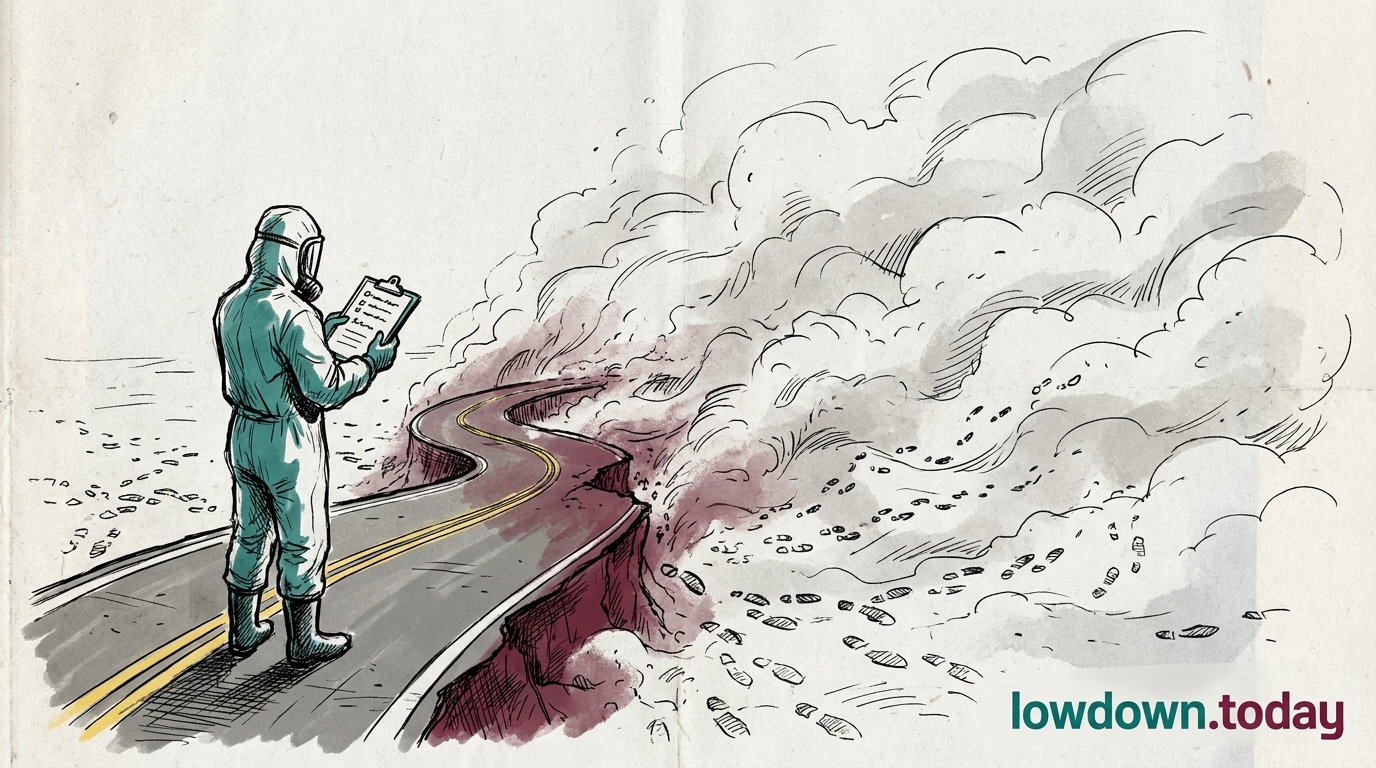
Africa CDC placed 683 of 1,033 reported Bundibugyo deaths in the community, outside any treatment or isolation centre. Two fatal cases in three never touch the care system.

ScienceDeveloping
Key takeaway

Two-thirds of Bundibugyo deaths happen at home, where relatives handle the most infectious bodies.

Africa CDC, the African Union's continental public health agency, recorded 683 of 1,033 reported deaths in DR Congo's Bundibugyo Ebola outbreak, 66% of the total, as having occurred in the Community rather than inside a treatment or isolation centre. The finding sits in situation report 71 on Bundibugyo virus disease (BVD), whose case tables run to 27 July with a flash update appended by 30 July 1. Two fatal cases in three never reached the system built to treat them.

Bundibugyo ebolavirus has been spreading through DRC's eastern provinces since May, and the Community-death share gives physical shape to two things already on the record. Jean Kaseya, Africa CDC's director-general, estimated on 16 July that true infections run two to four times the confirmed count , and WHO found that more than 80% of new cases were arising outside any known contact chain . Neither finding could name the patients it implied. Situation report 71 counts 683 of them.

Ebola makes a body most infectious at the moment it stops living, and a body that never reaches a centre is washed and dressed by relatives before burial. Each of those 683 deaths is therefore also a plausible transmission event, which is why the number matters more than its share of the mortality table. Contact tracers reached 78.9% of listed contacts, 13,882 of 17,588, against the roughly 95% coverage epidemiologists treat as the threshold for breaking chains 2. A 16-point shortfall in tracing coverage is what produces a death register like this one.

Deep Analysis

In plain English

When someone dies from Ebola at home instead of in a hospital or treatment centre, health workers usually only find out after the fact, if at all. That matters because a person is most infectious to others right around the time of death, and in many communities the body is washed and prepared for burial by family members. Two out of every three Bundibugyo Ebola deaths recorded so far happened this way, outside any medical facility. Each one is a moment where the virus could spread to whoever handled the body, without any health worker there to stop it or even record it.

Deep Analysis
Root Causes

The 66% figure is a case-finding failure with a specific mechanical cause: contact tracing has to reach a household before a death occurs, and Ituri's active ADF and CODECO conflict zones restrict where response teams can safely travel, particularly around Djugu Territory. A death in a contested area may go unreported to any surveillance system for days.

Families in outbreak-affected communities who have already lost members to prior interventions have reason to distrust health teams who arrive only to remove and cremate bodies; reporting a death voluntarily, rather than waiting to be found, requires trust the response has not yet built at scale.

Escalation

Direction: worsening. Africa CDC's own ensemble models project 342-431 further cases in the next seven days and 940-1,368 within twenty-one, built on a trend this community-death figure helps explain: the response is not intercepting cases before death, so its case-finding lags the true epidemic rather than leading it.

What could happen next?
  • Meaning

    A 66% community-death share indicates the epidemic's true size and reach exceed what confirmed case counts capture, consistent with Kaseya's two-to-four-times estimate.

    Immediate · Assessed
  • Consequence

    Every unwitnessed death in a household is a probable unrecorded transmission event, which will continue feeding new chains the response only detects retrospectively.

    Short term · Assessed
  • Risk

    If community deaths continue at this share, isolation-bed and testing capacity will keep chasing a caseload that is already several steps ahead of it.

    Medium term · Suggested
First Reported In

Update #12 · Two-thirds of Ebola deaths never reach a ward

Africa CDC· 31 Jul 2026
Read original
Different Perspectives
UK Health Security Agency
UKHSA said egg consumption remains the strongest signal in its 207-case Salmonella Enteritidis investigation. The genomic cluster and 38% hospitalisation among people with available information make exposure identification a public-health priority.
GLEWS+
GLEWS+
GLEWS+ assessed spillover risk from clade B MERS in Nile Basin camels as high if the clade establishes, while rating evidence for spread in camel populations low confidence. The joint assessment makes whole-genome sequencing the next test of the threat.
WHO Regional Office for Africa
WHO's Africa office said transmission in DR Congo is outpacing control efforts after laboratory capacity reached 19 sites and treatment capacity exceeded 1,300 beds. The assessment puts access, insecurity, community deaths and late care-seeking ahead of a simple equipment shortage.
People in Guatemala
People in Guatemala
Guatemala's population now carries the region's largest reported measles burden, with 30,371 confirmed cases and 26 deaths. The scale shifts practical attention from the Mexico-centred frame that followed the World Cup's travel consequences.
Pan American Health Organization
PAHO rated regional measles risk very high after recording 47,459 confirmed cases and 44 deaths through week 28. It names vaccination coverage, accumulated susceptibles and mass gatherings with broad international participation as general risk factors.
Chinese health authorities
China reported three human H9N2 cases to WHO between 10 and 16 July: two four-year-olds recovered, a 44-year-old man remains in intensive care, the first severity signal in a cluster that has produced 173 cases and 2 deaths globally since 2015. The subtype is distinct from the H5N1 series this topic otherwise tracks.
