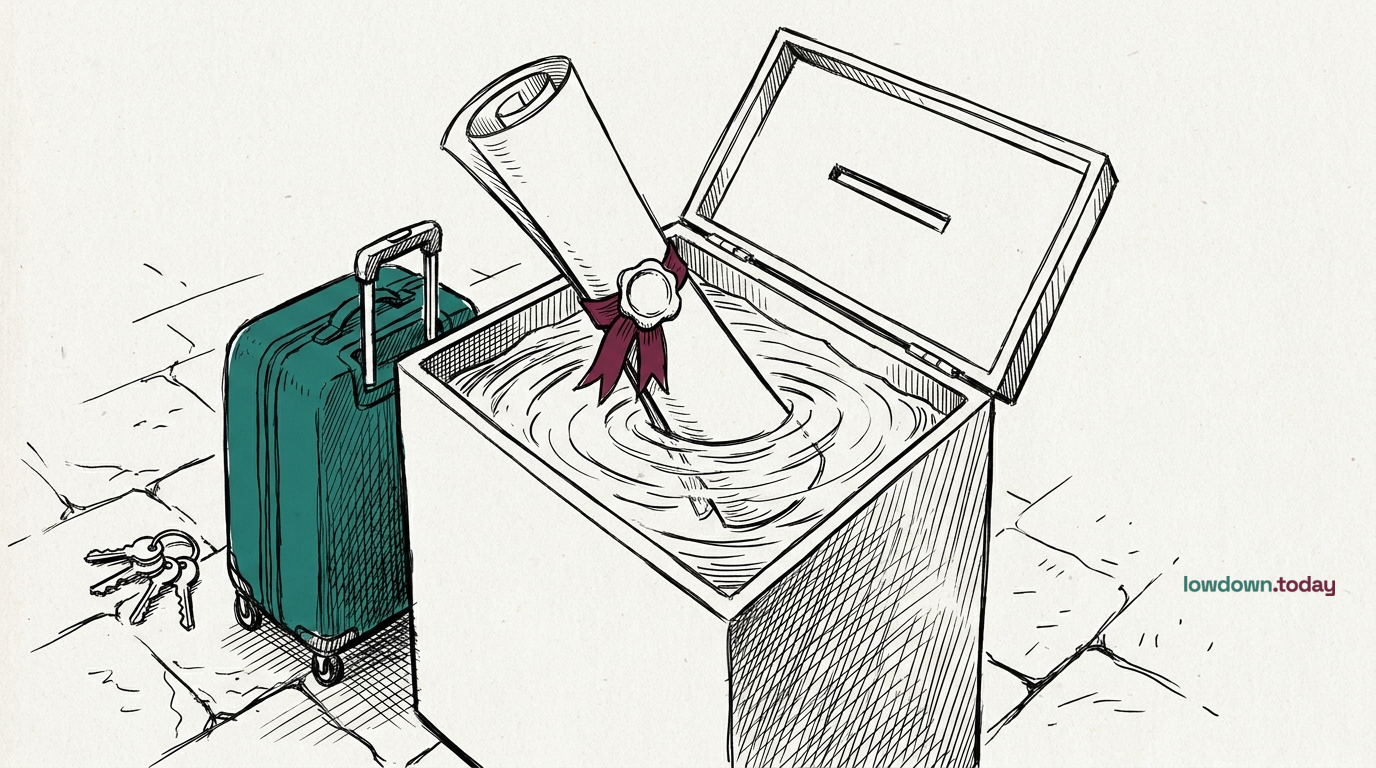
Spain's government lost both new national rental tools in one vote on 2 October. The Congress of Deputies refused to validate Royal Decree-law 26/2026 by 172 votes to 178, and Royal Decree-law 27/2026 by 166 to 1841. A Spanish government may legislate by decree-law, but the decree lapses unless Congress validates it.
Decree 26 was the seasonal-rental rule the government promised in June. Every "temporada" contract (a furnished lease of up to 12 months) and every room let had to state a provable reason the tenant was away from home and last at least 31 days. Platforms faced fines of up to €1m or 2% of global turnover for withholding listing data2. Tourist lets that had been exempt would have paid value-added tax (VAT) at 10%3. The decree named no remote-work cause, so a nomad renting for four months would have had to prove displacement. Decree 27 imposed automatic lease renewals of five years, or seven where the landlord is a company.
Junts, the Catalan nationalist party, joined the Partido Popular and Vox in voting against both. Infobae reported that the Puerta del Sol housing encampment moved to Congress for the vote4. With the Tribunal Supremo's May ruling against the national registration number, Spain has lost two national short-let instruments in five months. Regional law still stands: Navarra gazetted its own room-rental law in July while the national decree stalled.
The Instituto Nacional de Estadística (INE), Spain's statistics office, counted 12.3m foreign tourists in August, up 9.2%; those lodging mainly in a rented home rose 13.7%, hotel guests 6.6%5. Eurostat, the EU statistics office, puts Spanish nights on Airbnb, Booking and Expedia up 1.9% in April to June, after 19.2% a year earlier6. Read together, INE's and Eurostat's figures suggest the growth is going off the three big platforms. That is Lowdown's inference (the periods differ, and INE counts people where Eurostat counts nights), and on that reading the growth sits where platform data-sharing rules and registers cannot see it.


