Skip to content
You can now search across every topic, entity and event.What's new
Media's AI Pivot
10MAY

Judge probes $1.5bn Anthropic class deal

4 min read
16:44UTC

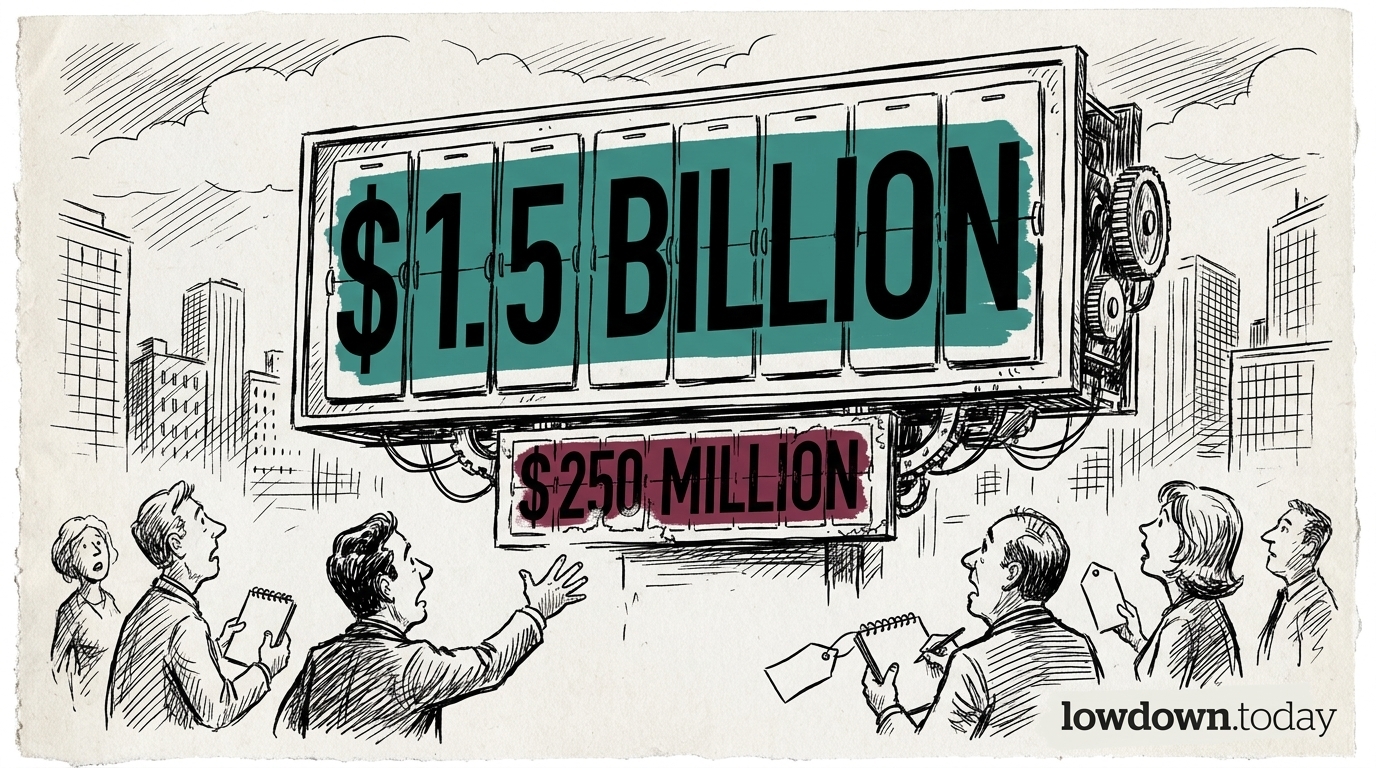
Judge Araceli Martínez-Olguín took the $1.5bn Bartz class settlement under submission with a 92.77% claims rate, then ordered fresh briefing on late opt-outs before approving anything.

IndustryDeveloping
Key takeaway

The Bartz outcome becomes the reference price for every publisher-AI licence that follows.

At the 14 May 2026 fairness hearing in Bartz v Anthropic, Judge Araceli Martínez-Olguín took the $1.5bn class settlement under submission with a claims rate of 92.77%, covering 447,576 of 482,460 works 1. On around 18 May the judge ordered supplemental briefing, due 21 May, on whether unexcused late opt-outs should be honoured. The fee petition stands at $187.5m, and final approval has not been entered.

Bartz v Anthropic is a copyright class action over authors' works used to train Anthropic's AI models, heard in the Northern District of California. A fairness hearing is the stage at which a judge decides whether a proposed class settlement is fair to the people it binds. "Taking it under submission" means the judge has reserved judgement rather than approving on the day. The late-opt-out question matters because every author who exits the class keeps the right to sue Anthropic separately, which changes both the defendant's exposure and the value of the deal on the table.

The settlement's headline figure tracks a number already circulating in the publishing industry. News Corp chief executive Robert Thomson read an anticipated $1.5bn Anthropic figure into his Q3 earnings transcript . The class-action result functions as a reference price: it sets the floor beneath which no publisher will license content to an AI developer, because litigation now offers a quantified alternative. A clean approval hardens that floor; a reopening on opt-outs leaves it provisional, and every bilateral negotiation waits on which way Judge Martínez-Olguín rules.


Deep Analysis

In plain English

Anthropic makes Claude, an AI assistant that was trained on large amounts of text from the internet and books. A group of authors sued Anthropic, arguing their books were used to train Claude without permission or payment. This type of lawsuit is called a class action: one lawsuit on behalf of many people with the same claim. Anthropic agreed to pay $1.5 billion (about £1.2 billion) to settle the case. That money would be split among roughly 480,000 books and other works whose authors registered claims. The lawyers who brought the case want $187.5 million of that for themselves. The judge has not yet approved the settlement. She is asking additional questions about authors who tried to opt out of the settlement after the deadline. Until she gives final approval, the money has not moved and the case is not closed. For media and publishing companies, this matters because the per-work settlement value, roughly $3,000 per work if the total were split evenly, will become the reference point that AI companies use when negotiating direct licensing deals.

What could happen next?
  • Precedent

    A final-approved $1.5bn Bartz settlement establishes a per-work floor of approximately $2,935 net that other AI labs will cite as the class-action alternative in bilateral licensing negotiations.

    Short term · Assessed
  • Risk

    If the judge's late-opt-out inquiry leads to a revised class definition, the settlement could be restructured or rejected, resetting the pricing benchmark downward or extending litigation uncertainty.

    Short term · Assessed
  • Consequence

    The $187.5m fee petition signals that plaintiff litigation capital is now treating AI copyright class actions as viable commercial investments, accelerating similar actions against other AI labs.

    Medium term · Assessed
  • Meaning

    The 92.77% claims rate, 447,576 of 482,460 works, reflects organised rights-holder mobilisation beyond what passive class action typically achieves, driven by the Authors Guild and comparable organisations.

    Immediate · Reported
First Reported In

Update #3 · ITV nears sale into Sky's AI stack

The Motley Fool· 27 May 2026
Read original
Different Perspectives
Media buy-vs-build strategists
IBC's nominee list and FOX's producer-level FoxNXT hiring show rights-holders choosing between buying agentic tools from named vendors or building them in-house. They read Fox's quiet hiring and the IBC pairings as the reference signals that will shape their own procurement decisions this quarter.
Eurovision Sport and European Athletics
Eurovision Sport and European Athletics ran every AI commentary stream at the U18 Championships labelled as AI-generated from 16 July, ahead of Article 50's 2 August requirement. They expect the model to extend to the senior Birmingham championships in August, pending operational sign-off.
Camb.AI and WSC Sports
Camb.AI supplied labelled AI commentary for Eurovision Sport's Rieti championships, while WSC Sports packaged its Magicrop clip-cutting into a TikTok distribution deal on 10 July. Both vendors gain reference customers and pricing power precisely while incumbent broadcasters stay unsigned on EU labelling and undecided on build-versus-buy.
European Commission and Paramount Skydance
The European Commission cleared the deal's $24bn Gulf financing under the Foreign Subsidies Regulation on 14 July, while Paramount pressed its case that the state suit is a flawed application of antitrust law. Both expect the merger to close once the 22 July competition ruling and any US injunction resolve.
Rob Bonta and the twelve-state coalition
Twelve Democratic state attorneys general, led by California's Rob Bonta, sued in San Francisco on 13 July seeking a TRO to block the Paramount-WBD merger, arguing federal clearance does not resolve state-level antitrust claims. They expect the suit to bite even without a final win, by holding the deal shut past Brussels' 22 July ruling.
Red Bull Ventures
Red Bull Ventures
Red Bull Ventures joined TwelveLabs' $100m Series B on 1 July to back its sports-video vertical, the one capital move that shipped on schedule this fortnight. Investing in the vendor layer rather than waiting on regulators lets it back the tooling broadcasters queue behind Brussels and the FCC to use.
