Skip to content
Briefings are running a touch slower this week while we rebuild the foundations.See roadmap
Media's AI Pivot
10MAY

BuzzFeed bets the company on Branch Office AI apps

5 min read
16:44UTC

BuzzFeed unveiled Branch Office, an AI consumer-app spinoff led by Bill Shouldis, at SXSW on 17-19 March, shipping BF Island, Conjure and Quiz Party; the same investor disclosure recorded substantial doubt about the company's ability to continue as a going concern after a $57.3m 2025 net loss.

IndustryDeveloping
Key takeaway

BuzzFeed's Q1 results on 11 May are the first hard test of whether AI-spinoff revenue can clear the going-concern threshold.

BuzzFeed Inc unveiled Branch Office, an AI consumer-app spinoff led by Bill Shouldis, at SXSW in Austin on 17-19 March 2026, shipping three products: BF Island (group messaging with AI image editing), Conjure (daily prompted photos), and Quiz Party 1. The same investor disclosure that announced the spinoff recorded "substantial doubt about its ability to continue as a going concern" after a $57.3 million net loss in 2025 2. Q1 2026 results were scheduled for release on Monday 11 May 2026, within 24 hours of this briefing's publication; consensus forecast a roughly $0.27 loss per share on revenue near $35 million.

BuzzFeed is the most visible named US digital publisher betting survival on an AI pivot. Branch Office sits inside the same investor disclosure as the going-concern language, which means the spinoff is not separable from the question of whether BuzzFeed Inc as a corporate entity continues to operate beyond the next reporting period. "Substantial doubt about its ability to continue as a going concern" is verbatim US GAAP-defined disclosure language under ASC 205-40, triggered at a specific accountant's threshold rather than as a marketing flourish. The reading investors apply on 11 May turns on whether Branch Office revenue is large enough to materially shift the going-concern assessment for the next reporting period, not on absolute revenue. Anything below the GAAP threshold reads as restructuring cover; anything that clears it reads as genuine pivot.

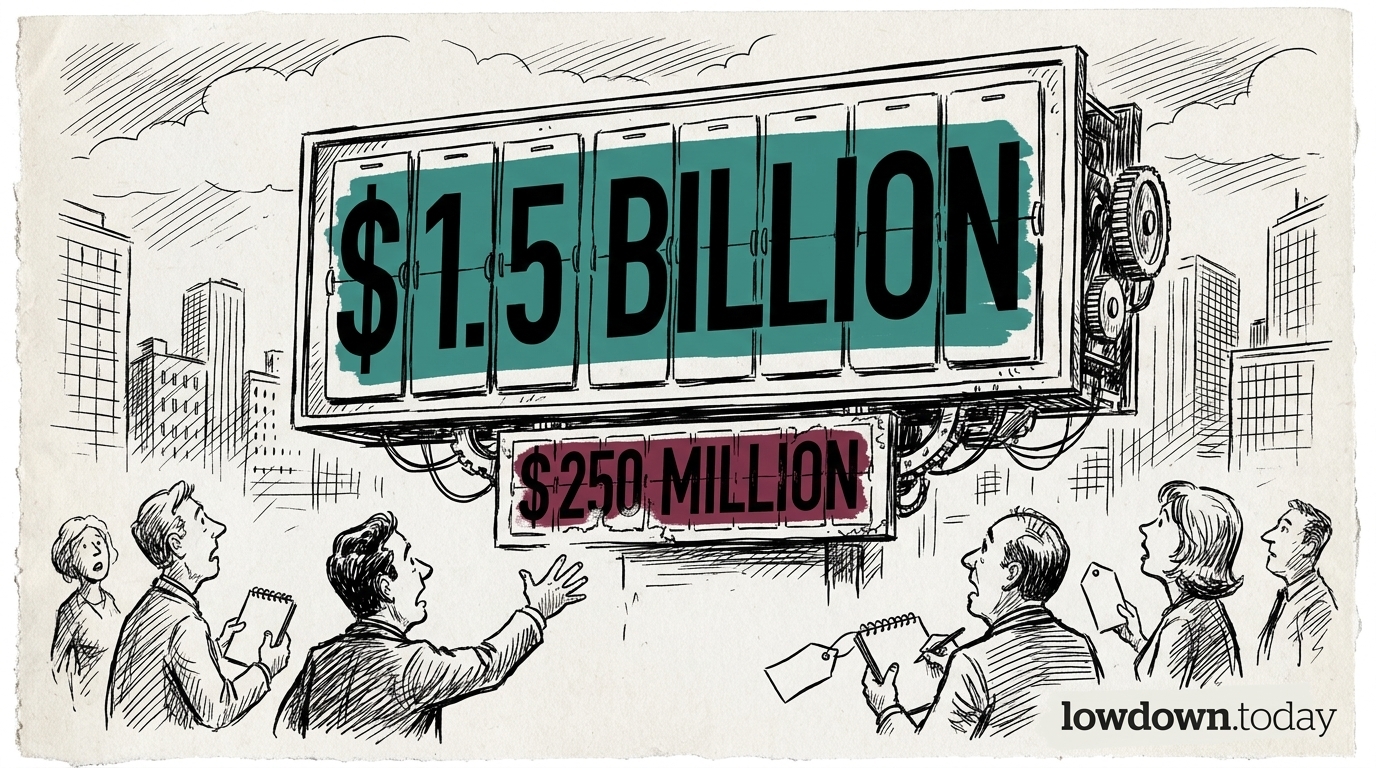
Mid-tier publishers across the BZFD-shaped peer group are watching the same earnings call. Vox Media, Forbes and Newsweek will be measured against BuzzFeed's outcome by the same investor base. If Q1 confirms Branch Office is generating revenue, AI-spinoff financing structures become a templated playbook for digital-native publishers; if not, the model gets a public failure case with the going-concern figure as the headline. BuzzFeed sits outside the tier-1 settlement template, with no $1.5bn-class litigation exposure of the kind News Corp converted into the Anthropic figure , and below the audience scale at which a pay-per-usage AWS deal of the kind Reach disclosed generates material revenue. The AI consumer-app spinoff is the third option for publishers boxed out of the lump-sum and pay-per-usage templates, and 11 May is the first datapoint on whether the third option works. The standard for reporting the Q1 number is to wait for it. Predicting the outcome before the earnings drop is editorial overreach; framing the date as the imminent test is the work the disclosure already supports.


Deep Analysis

In plain English

BuzzFeed, the website known for quizzes and viral lists, lost $57 million in 2025. Its accountants have now put a formal warning in its accounts saying they are not sure the company can survive the next 12 months. That warning has a specific name: a 'going concern' disclosure. To try to turn things around, BuzzFeed launched Branch Office, a separate AI app business. It has three products: a group messaging app with AI image editing, a daily photo-prompt app, and a quiz game. The idea is that these apps might generate a new kind of revenue (subscriptions, in-app purchases) that does not depend on Facebook or Google sending traffic to BuzzFeed articles. The test comes fast. BuzzFeed publishes its Q1 2026 results the day after this briefing. Those numbers will show whether the core business has stabilised enough to give Branch Office time to grow.

Deep Analysis
Root Causes

BuzzFeed's structural problem predates the AI pivot. The company was built as a viral-content aggregator whose distribution depended entirely on Facebook's news feed algorithm. When Meta de-prioritised news content in 2017-2018, BuzzFeed's referral traffic fell and never recovered.

The $57.3 million 2025 net loss reflects two compounding pressures: advertising CPMs on social-distributed content collapsed as brands shifted programmatic budgets to TikTok and YouTube, while the content operation still required editorial headcount and IP investment. The going-concern disclosure means BuzzFeed's auditors (Marcum LLP) concluded in their Q4 2025 review that the company had material uncertainty about meeting obligations over the next 12 months.

Branch Office as a strategy bets that BuzzFeed's brand can recruit Gen Z users to a consumer AI app suite faster than cash runs out. The bet is structurally identical to Vice's 2019 VICE TV pivot: use residual brand equity to enter an adjacent product category before the advertising revenue fully drains.

What could happen next?
  • Risk

    If BuzzFeed files for bankruptcy protection within 12 months, Branch Office's AI apps will likely be sold to a platform competitor, removing one independent AI consumer-creativity entry and concentrating the market further around Meta and Snap.

    Medium term · 0.5
  • Precedent

    BuzzFeed's going-concern disclosure alongside an AI pivot formalises the pattern: established digital media brands are using AI product launches as restructuring cover, reframing financial distress as strategic transformation for investor audiences.

    Short term · 0.75
  • Consequence

    The Q1 2026 earnings due Monday will reset the going-concern debate. A beat on the $35 million revenue consensus buys 1-2 quarters; a miss accelerates the auditors' timeline on the qualification.

    Immediate · 0.8
First Reported In

Update #1 · News Corp names $1.5bn AI settlement

BuzzFeed Inc Investor Relations· 10 May 2026
Read original
Different Perspectives
Sport rights holders (DAZN and Genius Sports)
DAZN's 30 April TikTok Serie A livestream and Genius Sports' Moment Engine launch mark the shift from social as the clip-reel to social as the live channel. Rights holders are ceding first-window distribution control in exchange for monetisation share and audience access, with DAZN's AI Delta Protocol reducing transport costs to make free livestreams viable on a P&L.
SMART STORIES consortium (IBC Accelerator)
Nine organisations including AP, BBC, NBCUniversal, Sky and ITV are building an open standard for story-context portability across agentic editing vendors. NBCUniversal VP Alex Bassett called the target 'something close to a minimum viable product rather than a simple proof of concept', with demonstrations due at IBC Amsterdam in September 2026.
EU regulators (AI Act Article 50)
Article 50 transparency obligations take effect 2 August 2026, with 84 days remaining and no major EU broadcaster publicly signed to the Code of Practice. The enforcement window coincides with the Q1 2026 earnings cycle, compressing the compliance decision horizon for RTL Group, M6 and ProSiebenSat.1.
Reach plc (UK mid-tier publisher)
Reach's April trading update disclosed a pay-per-usage AWS deal alongside Q1 group revenue down 6.9% and digital revenue down 8.1%. The framing treats usage-based licensing as a structural hedge against ad-revenue decline, with 'active discussions with several other tech platforms' signalling deliberate counterparty diversification.
News Corp (US tier-1 publisher)
Robert Thomson named the $1.5bn anticipated Anthropic settlement on the Q3 FY2026 earnings call, using 'anticipated' rather than 'agreed' as the settlement remains live. Reading a specific dollar figure into an SEC-filed transcript closes the information asymmetry that kept bilateral AI deal terms private across the industry.
