Skip to content
Welcome, thoughtbot's Giant Robots listeners!Start here
Is Britain Actually Broke?
28NOV

UK inflation hits 3.6%, debt bill rises

4 min read
11:43UTC

Fuel pushed CPI inflation to 3.6% in October, and the faster RPI measure added £4.2bn to an £11.2bn debt interest bill, the highest October since 1997.

EconomicAssessed
Key takeaway

index-linked gilts pass rising prices straight into the state's interest bill, a few months late.

Consumer prices index (CPI) inflation, the headline measure, rose to 3.6% in the year to October, up from 3.5% in September, the Office for National Statistics (ONS) said on Wednesday 18 November⁠1. Lowdown had called a rise above September's rate: a hit. Motor fuels were up 33.2% on the year and transport supplied 1.06 points of the 3.6; food rose only 0.9%. A basket that cost £100 in October 2025 now costs £103.60 (£100 x 1.036, our sum), with fuel the fast part and food the slow part.

The National Institute of Economic and Social Research (NIESR), an independent forecaster, put diesel inflation at 39.5% and petrol at 29.7% on 18 November⁠2. A diesel driver pays about two-fifths more per litre than a year ago; weekly pump prices are tracked on another page. Core inflation, which leaves out energy, food, alcohol and tobacco, held at 2.8%, which NIESR read as energy, not wages, driving the rise: it found "little evidence of second-round effects", meaning prices have not yet set off a round of pay rises that push prices up again.

The Retail Prices Index (RPI), the older measure that index-linked Gilts track, rose faster: 4.2%, from 3.9% in September⁠3. Gilts are the government's bonds, and an index-linked gilt's repayment value rises with RPI. Central government debt interest was £11.2bn in October, the highest October since monthly records began in 1997, and £4.2bn of it was the RPI uplift on those Gilts⁠4. Most of that £4.2bn is not cash paid in October: it is added to the sum repaid when each gilt matures, but it counts in the month's borrowing all the same.

The uplift runs on a lag. October's mainly reflects the 0.6% RPI rise between July and August, so the climb to 4.2% has not yet reached the bill; September's bill was £10.9bn with a £4.0bn uplift, on figures published a month earlier. The OBR's ready reckoner, the Office for Budget Responsibility's rule of thumb for interest costs, puts a lasting one-point rise in inflation at £8.6bn more debt interest in 2027-28 and £9.7bn in 2029-30, before any lift to tax receipts⁠5. That 2029-30 figure is about two-thirds of the £15bn headroom set at the Budget, the margin by which the OBR expects the Chancellor to meet his own borrowing rule (£9.7bn ÷ £15bn = 65%, our sum).

Deep Analysis

In plain English

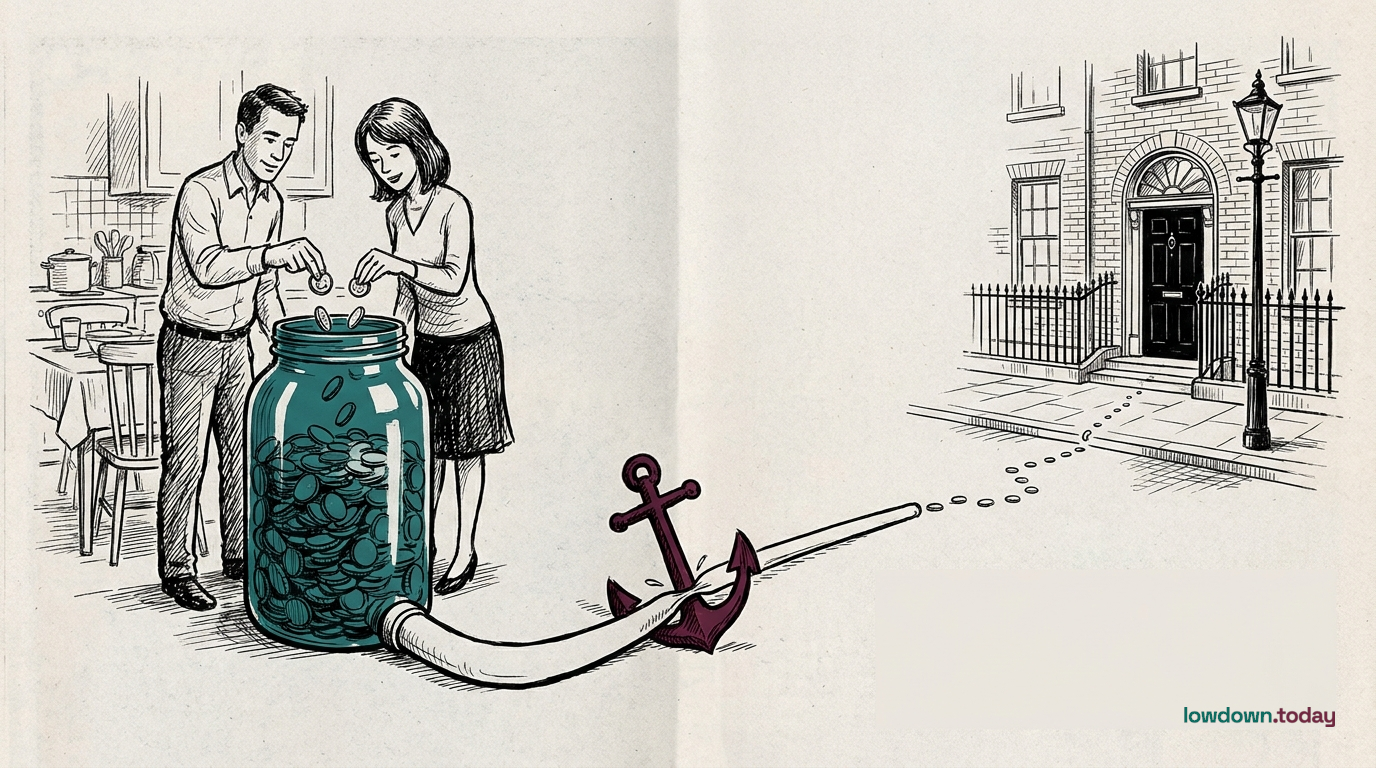
Inflation measures how fast prices rise. The main measure, the Consumer prices index (CPI), rose to 3.6% in October, mostly because petrol and diesel cost far more than a year ago. Food prices barely moved. About a quarter of the government's Gilts are index-linked: loans whose value rises with an older inflation measure, the Retail Prices Index (RPI). When RPI rises, the amount the government owes on those loans grows, and the official figures count that growth as interest. So higher inflation raises the cost of the national debt straight away, even though most of that extra is only paid when each loan falls due.

Deep Analysis
Root Causes

RPI runs above CPI because of how it averages prices within each item, and the UK Statistics Authority said in 2019 that RPI is not a good measure of inflation. In October the gap was 0.6 points (4.2 - 3.6 = 0.6, our sum), and every index-linked gilt is uprated on the higher measure.

The lag sets the timing. The uplift in any month reflects RPI from several months earlier, so the rise from 3.9% to 4.2% is still to feed through to the bill.

The source of the rise sits outside wages: transport supplied 1.06 points of the 3.6 and food only 0.9% inflation. A fuel-led rise lifts debt interest at once, while any lift to tax receipts from higher pay comes later.

What could happen next?
  • Consequence

    RPI readings above the 0.6% July to August rise will feed larger monthly debt interest figures into the winter releases.

    Short term · Assessed
  • Risk

    If fuel prices stay high into 2027, RPI uplift on index-linked gilts could erode the current-budget headroom before the 2030 change to RPI methods takes effect.

    Medium term · Suggested
  • Opportunity

    A fall in pump prices would cut the RPI uplift within months, because transport supplied 1.06 points of October's 3.6% CPI rate.

    Short term · Suggested
First Reported In

Update #7 · Four months over plan, debt at 95.8% of GDP

Office for National Statistics· 28 Nov 2026
Read original →
Different Perspectives
The fiscal hawk case
Borrowing has run over the March plan for four months, October's £11.2bn interest bill was the highest October since 1997, and the OBR's ready reckoner adds £8.6bn of interest in 2027-28 for each lasting point of inflation. Hawks argue £15bn of headroom leaves little room for another shock before taxes rise again.
The not-broke case
The not-broke case
HMRC receipts are up £33.4bn on a year earlier, the current budget is about £0.5bn under the March plan, GDP grew 0.7% in the third quarter, and the OBR calls borrowing broadly in line. On this reading Britain is paying more to borrow while its power to raise money holds.
Ministry of Housing Communities and Local Government
The housing ministry gave English councils over £80bn of core spending power for 2027/28 on 26 November, over £3bn more, and kept Exceptional Financial Support only on a temporary footing with outside checks on the books. A council in trouble can still get help, but not open-ended help.
National Institute of Economic and Social Research
The independent forecaster said on 19 November that policy is pushing households out of cash, most recently through the Budget's higher tax on savings interest, and that this alone will do little for UK firms. On October's inflation it found energy the main driver, with little sign of a wage-price spiral.
Resolution Foundation
The centre-left think tank said on 17 November that real pay growth, 0.2% in July to September, will go negative this winter as inflation heads towards 5% by spring. On its reading, household budgets tighten while the Treasury's tax take grows.
Bank of England
Bank of England
The Bank said on 26 November that about 6.5 million mortgages face higher payments as fixes end, by about £100 a month for a typical borrower, but arrears are close to their long-run average. It judged the banking system well capitalised, so lenders can absorb the squeeze without pulling credit.

Written with AI from Lowdown's published reporting. Not individually reviewed by an editor. Editorial standards.