
Skip to content
Welcome, thoughtbot's Giant Robots listeners!Start here
Is Britain Actually Broke?
28NOV

Four months over plan, debt at 95.8% of GDP

3 min read
11:43UTC

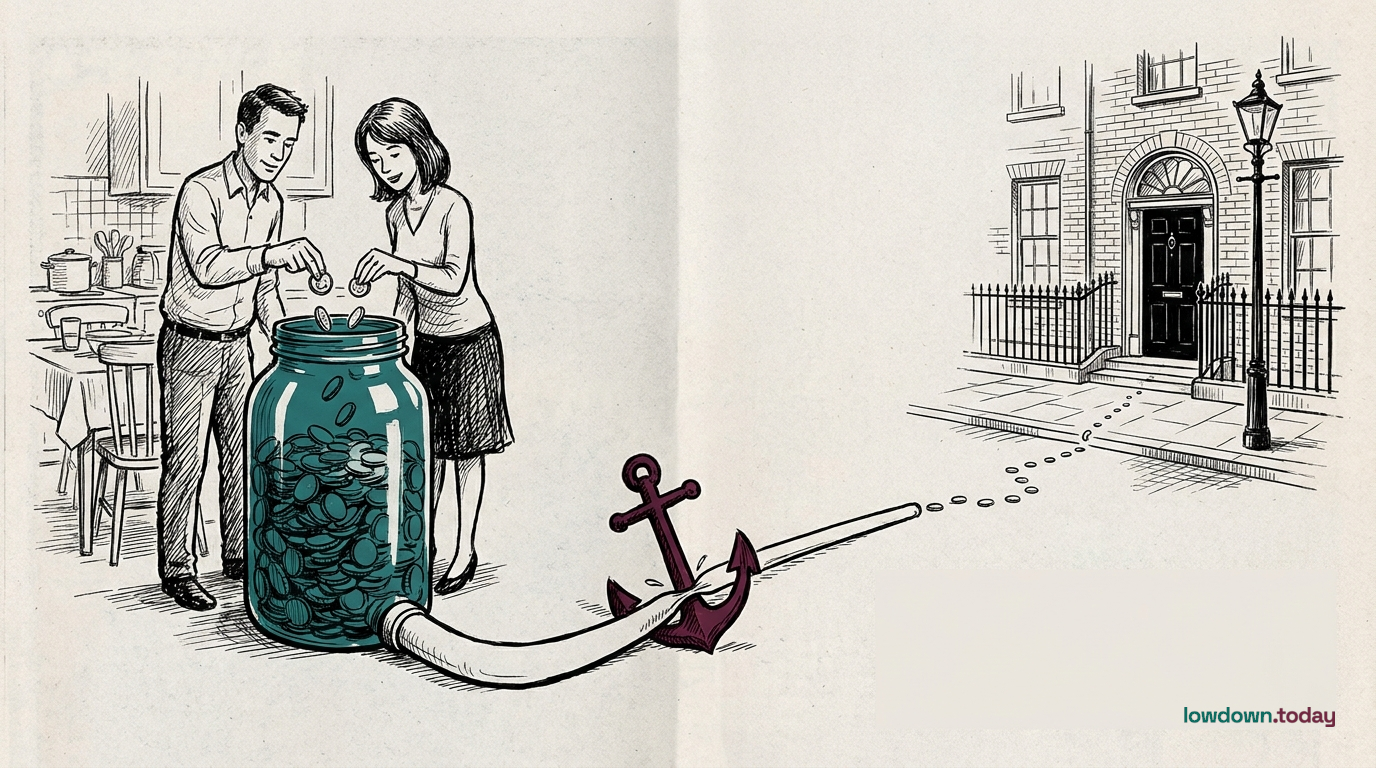
Government borrowing ran over the official March plan for a fourth month in October, and net debt reached 95.8% of GDP, the ONS said on 20 November. Inflation rose to 3.6%, and £4.2bn of October's £11.2bn interest bill was the price uplift on index-linked bonds. Tax receipts are up £33.4bn and the day-to-day budget is slightly under plan, so Britain is paying more to stand still, not running out of money.

Key takeaway

Fuel-led inflation is lifting the state's tax take and interest bill together, while households absorb the real squeeze.

This briefing mapped
Economic
Domestic

The ONS put October borrowing at £17.036bn, £0.8bn over the March plan, as net debt climbed to £3,058.3bn, a level last seen in the early 1960s.

Sources profile:This story draws on neutral-leaning sources from United Kingdom
United Kingdom
LeftRight

Britain borrowed £17.036bn in October, about £0.8bn more than the official forecaster planned in March. July, August, September and October have all now come in over that plan.

Day-to-day spending ran slightly under plan, so the whole overshoot went on investment such as roads and buildings. Net debt reached 95.8% of GDP, a ratio last seen in the early 1960s. 

Fuel pushed CPI inflation to 3.6% in October, and the faster RPI measure added £4.2bn to an £11.2bn debt interest bill, the highest October since 1997.

Sources profile:This story draws on neutral-leaning sources

Consumer price inflation rose to 3.6% in October, from 3.5% in September. Petrol and diesel did most of the work, while food prices rose just 0.9% on the year.

Higher inflation also raises what the Treasury owes on index-linked gilts. That uplift supplied £4.2bn of October's £11.2bn central government interest bill, a record for the month. 

Lenders bid £10.67bn for £3.25bn of a 15-year gilt on 17 November, the thinnest cover of ten auctions since 29 September, and yields fell in the week after.

Sources profile:This story draws on neutral-leaning sources

On 17 November the Debt Management Office sold £3.25bn of a gilt maturing in 2041. Bids covered it 3.28 times, the weakest of ten auctions since 29 September.

Buyers still offered more than three times the amount on sale, so lenders are not walking away. The price matters more: the government pays 5.591% a year on that loan. 

HMRC collected £546.6bn from April to October, £33.4bn up on a year earlier, and payslip taxes supplied £20.9bn of the rise.

Sources profile:This story draws on neutral-leaning sources

The Bank of England now expects 6.5 million owner-occupier mortgages to cost more as fixed deals end, with the typical rise doubling to about £100 a month.

Sources profile:This story draws on neutral-leaning sources

The Bank of England said on 26 November that about 6.5 million mortgages face higher payments as fixed deals end by December 2029. The typical rise is about £100 a month.

Few borrowers have fallen behind so far: about 0.8% of mortgages are in arrears. The Bank also judged UK banks strong enough to keep lending through the squeeze. 

Regular pay beat CPIH inflation by just 0.2% in July to September, down from 0.6%, as public sector pay growth cooled to 5.4%.

Sources profile:This story draws on neutral-leaning sources

Regular pay rose 3.5% in July to September, the Office for National Statistics said on 17 November. Once rising prices and housing costs are counted, pay grew only 0.2%.

Public-sector pay rose 5.4% and private-sector pay 3.1%. With inflation forecast to near 5% by spring, the Resolution Foundation expects real pay to start falling this winter. 

Personal insolvencies in England and Wales rose 25% on the year to 13,187 in October, while company insolvencies fell 15%.

Sources profile:This story draws on neutral-leaning sources

In October 13,187 people in England and Wales went insolvent, 25% more than a year earlier, The Insolvency Service said on 17 November. Repayment plans for people with some income drove the rise.

Over a year, one adult in 352 has now entered insolvency, the most since May 2011. Company insolvencies fell 15%, so households are under more strain than firms. 

MHCLG put councils' core spending power for 2027/28 at over £80bn, up more than £3bn, and said emergency support must be time-limited.

Sources profile:This story draws on neutral-leaning sources

English councils will get over £80bn of core spending power in 2027/28, over £3bn more than this year, the housing ministry said on 26 November. Emergency borrowing support for struggling councils continues.

That support must now be temporary, with outside checks on each council's books. Because the total counts council tax, part of any rise may land on household bills. 

The ONS first estimate put July to September growth at 0.7%, up from 0.5%, with output per person 1.7% higher than a year earlier.

Sources profile:This story draws on neutral-leaning sources

The UK economy grew 0.7% in July to September, after 0.5% in the spring, the Office for National Statistics first estimated on 12 November. Services and household spending led, while construction shrank.

Growth helps shrink debt as a share of the economy, but not yet. Debt rose faster than the cash size of the economy over the year to October. 

Closing comments

Sideways for the state, upward for households. The state's next test is 22 December, when the ONS prints November borrowing against a March plan of £13.314bn; the OBR has said borrowing is broadly in line with its October forecast, and its own monthly profile, once published, becomes the sharper test. For households the tipping point is the ONS inflation figure of 16 December. A reading at 3.6% or above keeps real pay near zero while 6.5 million mortgages reprice, and The Insolvency Service's 18 December release shows whether the one-in-352 rate keeps rising.

Different Perspectives
Office for Budget Responsibility
The OBR wrote on 20 November that borrowing so far this year is broadly in line with its October forecast, though it has not yet published that forecast's month-by-month plan. Until it does, four months over the March plan test an older forecast than the one now in force.
Office for National Statistics
The ONS put net debt at £3,058.3bn at the end of October, 95.8% of GDP, and revised end-September up from 94.0% to 94.6%. The same release cut April to September borrowing from £97.8bn to £94.3bn, a reminder that monthly figures stay provisional.
Bank of England
Bank of England
The Bank said on 26 November that about 6.5 million mortgages face higher payments as fixes end, by about £100 a month for a typical borrower, but arrears are close to their long-run average. It judged the banking system well capitalised, so lenders can absorb the squeeze without pulling credit.
Resolution Foundation
The centre-left think tank said on 17 November that real pay growth, 0.2% in July to September, will go negative this winter as inflation heads towards 5% by spring. On its reading, household budgets tighten while the Treasury's tax take grows.
National Institute of Economic and Social Research
The independent forecaster said on 19 November that policy is pushing households out of cash, most recently through the Budget's higher tax on savings interest, and that this alone will do little for UK firms. On October's inflation it found energy the main driver, with little sign of a wage-price spiral.
Ministry of Housing Communities and Local Government
The housing ministry gave English councils over £80bn of core spending power for 2027/28 on 26 November, over £3bn more, and kept Exceptional Financial Support only on a temporary footing with outside checks on the books. A council in trouble can still get help, but not open-ended help.