Skip to content
Welcome, thoughtbot's Giant Robots listeners!Start here
Is Britain Actually Broke?
28NOV

HMRC takes £33.4bn more, mostly from pay

4 min read
11:43UTC

HMRC collected £546.6bn from April to October, £33.4bn up on a year earlier, and payslip taxes supplied £20.9bn of the rise.

EconomicAssessed
Key takeaway

Most of the extra tax comes through payslips, as frozen thresholds catch each pay rise.

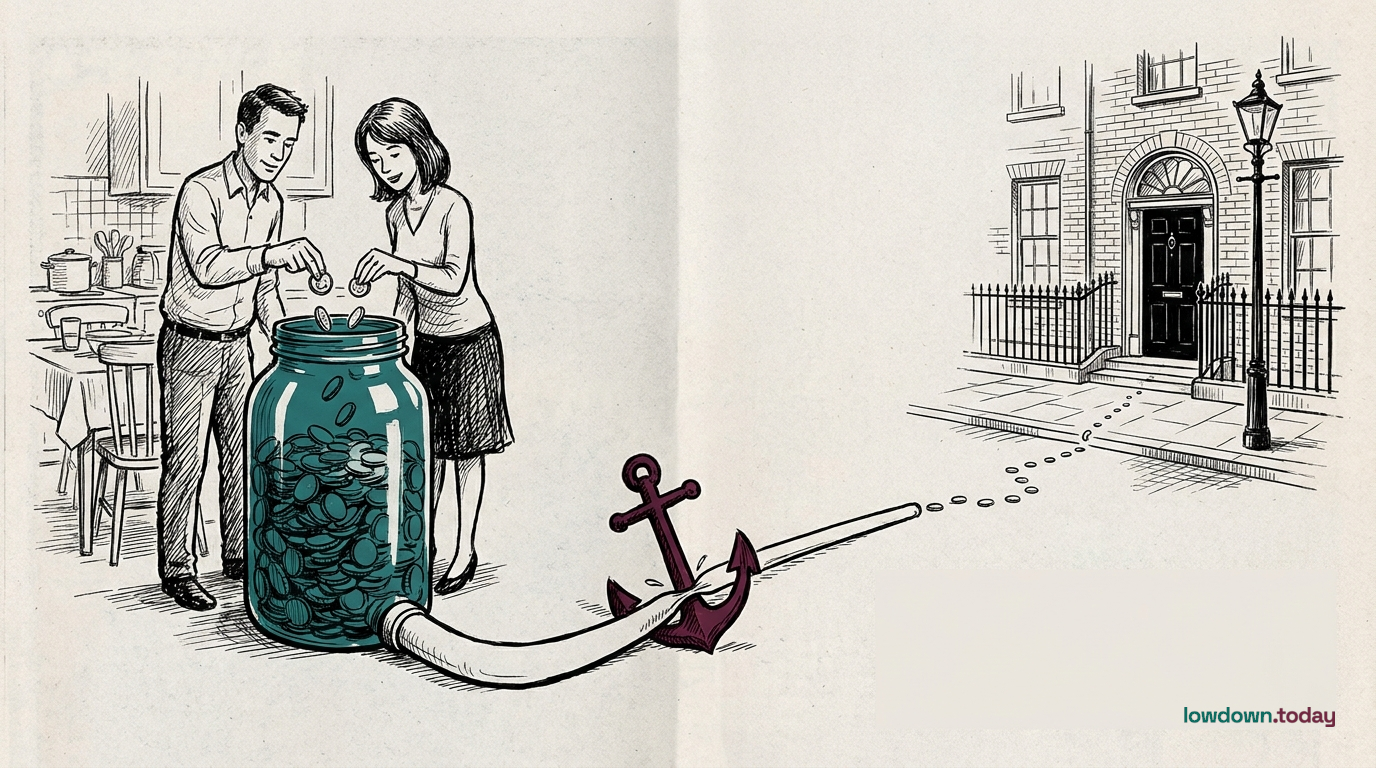
HMRC, the tax authority, collected £546.6bn from April to October, £33.4bn up on April to October 2025, on provisional figures published on 20 November⁠1. Income tax, Capital Gains Tax and National Insurance brought in £311.5bn, up £20.5bn: 61% of the rise (£20.5bn ÷ £33.4bn = 61%, our sum). Income tax and National Insurance taken through payslips (PAYE, pay as you earn) rose £20.9bn, more than the group as a whole, so the group's other lines fell in total. HMRC's notes name the April 2025 rise in employers' National Insurance, which has lifted receipts since May 2025; they do not mention frozen thresholds.

A frozen threshold means each pay rise pulls more of a wage into tax, and some earners into a higher band, with no rate going up. Chancellor John Healey ruled out raising the rates of VAT, income tax and corporation tax before the Budget; with thresholds frozen, rising pay does part of that work instead. The Resolution Foundation, the living-standards think tank, had already credited higher tax with all of the planned improvement in the government's finances to 2028-29. Divided by 29.0 million households, that extra £33.4bn is about £1,150 each over seven months (£33.4bn ÷ 29.0m = £1,152, our sum), and the £20.9bn from payslips about £720 (£20.9bn ÷ 29.0m = £721, our sum): scale, not a bill sent to any one home.

VAT, paid in shop prices, rose £3.7bn to £110.7bn, about £128 per household over seven months (£3.7bn ÷ 29.0m = £128, our sum), and business taxes, mostly corporation tax, rose £7.9bn to £60.8bn. Stamp taxes, mainly the duty paid on buying a home, have run below a year earlier since August as fewer homes changed hands. HMRC warns that from its August release it changed how it dates monthly income tax, National Insurance and VAT, matching them to its accounting data back to April 2026, so year-on-year comparisons need care. The National Institute of Economic and Social Research said on 19 November that policy is "pushing households out of cash", most recently through the Budget's higher tax on savings interest⁠2.

Against the March forecast of the Office for Budget Responsibility, the official forecaster, the Office for National Statistics put central government receipts for April to October £10.2bn higher, led by corporation tax (£7.0bn) and income tax (£5.1bn), while central government spending ran £11.4bn higher: £5.7bn on debt interest, £3.4bn on net investment and £2.6bn on benefits including pensions⁠3. These cover central government only, so they do not net to the overshoot for the whole public sector.

Deep Analysis

In plain English

HMRC, the government's tax collector, took in £546.6bn from April to October, £33.4bn more than in the same months last year. Most of the extra came from taxes on wages: income tax and National Insurance, taken from pay before it reaches the bank. One reason is that employers have paid more National Insurance on each worker since April 2025. Another is that wages are rising, and the tax-free part of pay has not risen with them. More tax coming in is the main reason the government is not running out of money, even though it still borrows each month.

Deep Analysis
Root Causes

The April 2025 change did two things at once: it raised the employer rate from 13.8% to 15% and cut the pay level at which employers start paying from £9,100 to £5,000 a year. The lower starting point makes the rise bite hardest, in proportion, on part-time and lower-paid jobs.

Cash pay growth of 3.5% feeds income tax directly, and the personal allowance has stayed at £12,570 since April 2021, so more of each pay rise is taxed.

Corporation tax, the other strong line, has had a 25% main rate since April 2023. Large firms pay it in quarterly instalments based on expected profits, so its strength this year rests on profit forecasts that can be revised.

What could happen next?
  • Risk

    Falling payrolls could slow PAYE receipts in 2027 even if pay growth holds near 3.5%.

    Medium term · Suggested
  • Consequence

    Corporation tax running £7.0bn above forecast rests on instalment payments, so a cut in firms' profit expectations would reverse part of it within a quarter.

    Short term · Suggested
  • Meaning

    Tax rising faster than spending accounts for the improvement in the government's day-to-day position, so the fiscal repair rests on households and firms paying more.

    Long term · Assessed
First Reported In

Update #7 · Four months over plan, debt at 95.8% of GDP

Office for National Statistics· 28 Nov 2026
Read original →
Causes and effects
This Event
HMRC takes £33.4bn more, mostly from pay
Rising receipts are the strongest evidence that Britain is not running out of money, and most of the extra comes out of household pay.
Different Perspectives
The fiscal hawk case
Borrowing has run over the March plan for four months, October's £11.2bn interest bill was the highest October since 1997, and the OBR's ready reckoner adds £8.6bn of interest in 2027-28 for each lasting point of inflation. Hawks argue £15bn of headroom leaves little room for another shock before taxes rise again.
The not-broke case
The not-broke case
HMRC receipts are up £33.4bn on a year earlier, the current budget is about £0.5bn under the March plan, GDP grew 0.7% in the third quarter, and the OBR calls borrowing broadly in line. On this reading Britain is paying more to borrow while its power to raise money holds.
Ministry of Housing Communities and Local Government
The housing ministry gave English councils over £80bn of core spending power for 2027/28 on 26 November, over £3bn more, and kept Exceptional Financial Support only on a temporary footing with outside checks on the books. A council in trouble can still get help, but not open-ended help.
National Institute of Economic and Social Research
The independent forecaster said on 19 November that policy is pushing households out of cash, most recently through the Budget's higher tax on savings interest, and that this alone will do little for UK firms. On October's inflation it found energy the main driver, with little sign of a wage-price spiral.
Resolution Foundation
The centre-left think tank said on 17 November that real pay growth, 0.2% in July to September, will go negative this winter as inflation heads towards 5% by spring. On its reading, household budgets tighten while the Treasury's tax take grows.
Bank of England
Bank of England
The Bank said on 26 November that about 6.5 million mortgages face higher payments as fixes end, by about £100 a month for a typical borrower, but arrears are close to their long-run average. It judged the banking system well capitalised, so lenders can absorb the squeeze without pulling credit.

Written with AI from Lowdown's published reporting. Not individually reviewed by an editor. Editorial standards.