Skip to content
Welcome, thoughtbot's Giant Robots listeners!Start here
Is Britain Actually Broke?
16NOV

£4bn of £10.3bn defence funding is a budget cut

3 min read
13:49UTC

HM Treasury and the Ministry of Defence published the £10.3bn Defence Investment Plan breakdown on 30 June 2026. £3.5bn of it comes from asset sales and Treasury support, neither of which can happen twice.

EconomicDeveloping
Key takeaway

£3.5bn of the defence package cannot repeat next year, and the commitment it funds does.

HM Treasury and the Ministry of Defence published the funding breakdown for the Defence Investment Plan on 30 June 2026, identifying £10.3bn: £4.0bn from a 1p-in-every-£1 cut to departmental capital budgets, £1.1bn from asset sales, £2.4bn of Treasury support for international objectives and procurement, £0.8bn of savings from the Department for Transport and £2.0bn from the Department for Energy Security and Net Zero⁠1. A further £4.7bn is deferred, in the government's own words "to be funded at Budget 2026".

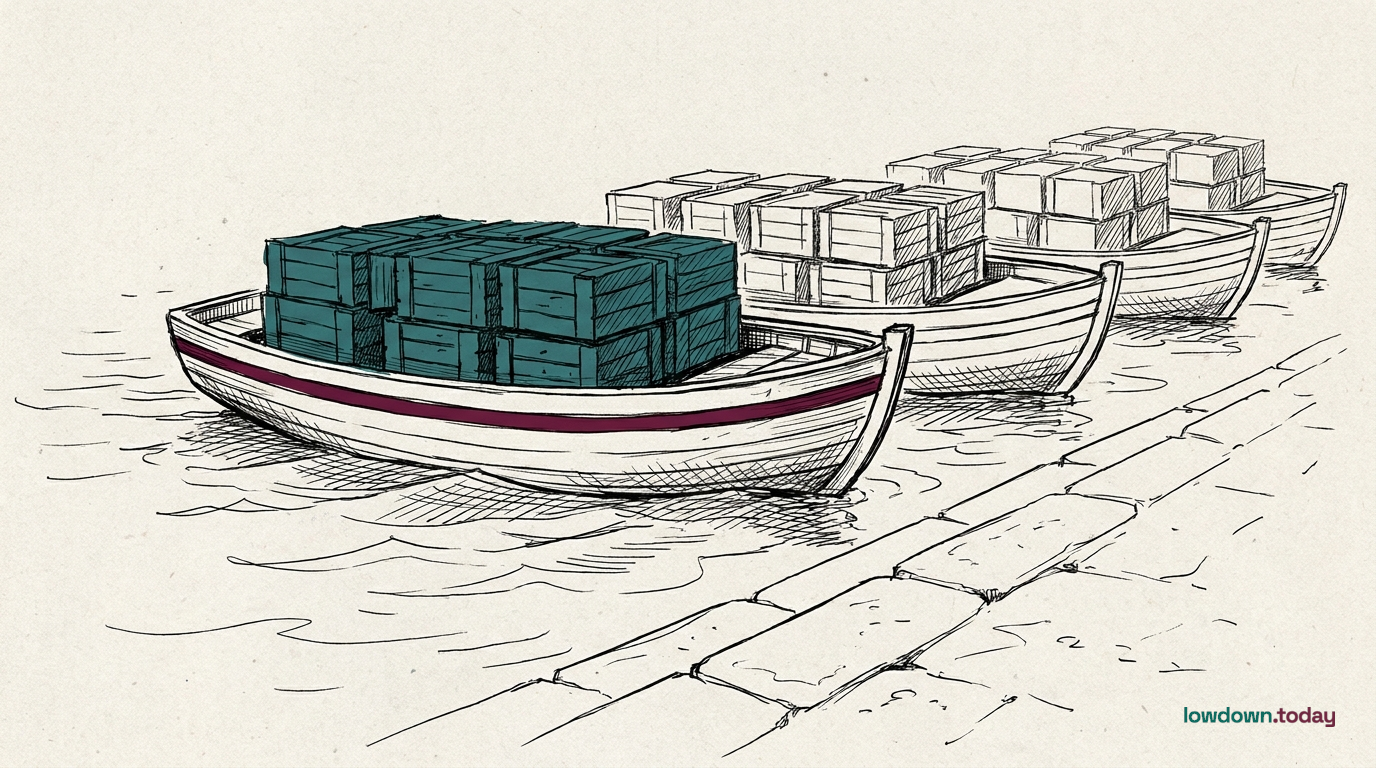
The parts do not behave the same way, which is why the single total is the misleading version. Asset sales and Treasury support come to £3.5bn between them, roughly a third of the package, and neither can be repeated next year. You can sell a building once. The defence bill arrives every year. Funding a permanent commitment with one-off receipts is a recognised presentational device in UK fiscal accounting, and it has form: the same structure appeared in the privatisation receipts of the 1980s and in local authority capital receipts through the 2010s. It ends the same way each time, when the saleable assets run out.

The capital budget cut behaves differently again. Reducing departmental investment by a penny in the pound produces a clean saving now and a cost that surfaces years later as a maintenance backlog on roads, schools and estates that were not renewed on schedule. Whether the 1p cut saves money or merely defers it depends on which projects were dropped.

One consequence has already been made explicit. A written ministerial statement of 19 March 2026 confirmed official development assistance falling to 0.3% of gross national income by 2027/28 to help pay for defence, with a stated intention to return to the long-standing 0.7% target when finances allow⁠2. The autumn Budget is where the remaining £4.7bn either becomes money or becomes another round of reprioritisation.


Deep Analysis

In plain English

The government needed to find £10.3bn to help pay for the higher defence spending it has committed to. Some of that money is a genuine ongoing saving, cutting a small share of every department's capital budget every year. But a third of it, £3.5bn, comes from selling assets and one-off Treasury support, money that can only be raised once. That matters because the defence commitment itself keeps rising every year, this one included. Money you can only raise once cannot pay for a bill that arrives annually; eventually the government has to find a repeatable source, more tax revenue or a different ongoing saving, to replace the one-off money once it is spent.

What could happen next?
  • Risk

    The £3.5bn of one-off funding (asset sales and Treasury support) cannot recur, so an equivalent gap will reopen in a future year against a defence commitment that keeps rising.

First Reported In

Update #1 · The distress moved from banks to councils

HM Treasury and Ministry of Defence· 27 Jul 2026
Read original →
Different Perspectives
Institute of Economic Affairs
The Institute of Economic Affairs, a free-market think tank, proposed on 19 October, in a plan published before the Budget, suspending the state pension triple lock for three years and freezing welfare in cash terms. It looks to spending restraint where Tax Justice UK looks to tax; both plans are campaign positions, not findings.
Tax Justice UK
Tax Justice UK
Tax Justice UK, a left-leaning campaign group, called the Budget "another round of aimless tinkering" on 30 October and, on 4 November, said its new 10% capital gains rate for founders and investors was "difficult to justify". It argues ten tax reforms would raise over £60bn a year: a campaign position, not a finding.
National Institute of Economic and Social Research
The National Institute of Economic and Social Research, an independent forecaster, expects growth of 1.6% in 2026, against the Office for Budget Responsibility's 1.2%. It puts headroom at £14.5bn, down from £23.6bn in March, measured from a different starting point, so its figure does not confirm the official £15bn.
Institute for Government
The Institute for Government, a non-partisan think tank, judged on 30 October that the Budget delayed the hard choices rather than making them. In its words, "most of the difficult decisions have been punted forward into 2027".
Resolution Foundation
The Resolution Foundation, a centre-left think tank, said on 29 October that higher taxes do all the work in the Budget's numbers. The £76bn improvement in the primary balance from 2023-24 to 2028-29 "is more than fully accounted for by £107 billion of higher tax revenues", it wrote.
Bank of England
Bank of England
The Bank of England's Monetary Policy Committee raised Bank Rate to 4% on 5 November, with all nine members backing a rise and one wanting 4.25%. The Bank projects inflation, 3.5% in September, at about 5% by the middle of 2027, so it is tightening while the government borrows more.

Written with AI from Lowdown's published reporting. Not individually reviewed by an editor. Editorial standards.