Skip to content
Welcome, thoughtbot's Giant Robots listeners!Start here
Is Britain Actually Broke?
16NOV

IFS puts £25bn a year of defence unfunded

3 min read
13:49UTC

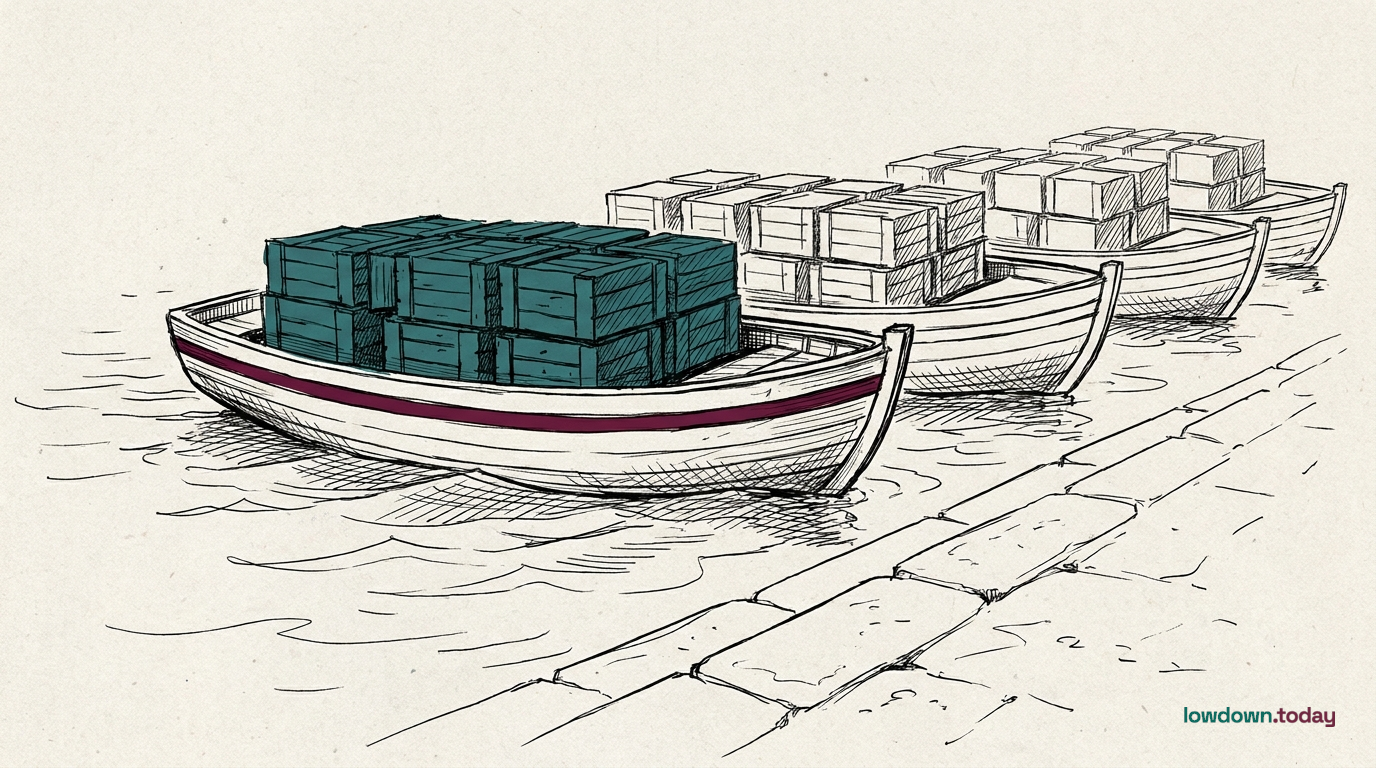
The OBR costs Britain's path from 2.6% of GDP on defence to the NATO target of 3.5% by 2035 at roughly £40bn a year. The IFS says about £25bn a year of it has no funding attached.

EconomicAssessed
Key takeaway

Nine budgets remain in which to fund a defence commitment that has no revenue attached to three-fifths of it.

The Office for Budget Responsibility costs the path from defence spending of 2.6% of GDP in 2026 to 3.5% by 2035, the target agreed through the North Atlantic Treaty Organisation (NATO), at roughly £40bn a year of extra spending in 2025/26 prices. The Institute for Fiscal Studies (IFS), an independent research institute specialising in tax and public spending, puts about £25bn a year of that still unfunded against the plans announced so far⁠1.

Unfunded does not mean unaffordable. It means no revenue source or offsetting cut has been identified, so the money has to come later from tax, from borrowing, or from something else being reduced. For a sense of scale on this register's own terms, £25bn a year is roughly three-quarters of the sovereign ledger's entire interest bill for the quarter to June 2026.

What makes a commitment like this different in kind from the distress on the other ledgers is that it is voluntary and dated. A council's deficit arrives whether anyone decides anything; the 2035 defence path is a political undertaking with nine budgets left in which to fund it or quietly not. Ten years is long enough for the arithmetic to be deferred repeatedly and short enough that each deferral compounds what the later years have to carry. Watch which of the two numbers moves in the coming fiscal events. If the £25bn shrinks because money was found, the commitment is real; if it shrinks because the 3.5% date slides, it never was.


Deep Analysis

In plain English

NATO, the Alliance of Western countries including the UK, has a target for how much of a country's economic output (GDP) should go towards its military. The UK has committed to raising that share from 2.6% today to 3.5% by 2035. The government has said how it will pay for some of that rise, but independent forecasters at the Office for Budget Responsibility and the Institute for Fiscal Studies both calculate that roughly £25bn a year of the eventual cost has no identified funding source yet. That does not mean the plan will fail, but it means a further round of tax rises, borrowing or spending cuts elsewhere will be needed to close the gap before 2035.

What could happen next?
  • Risk

    If the £25bn a year gap is not closed through revenue or reprioritisation, defence procurement and training programmes are the more likely near-term casualty than an abandonment of the 3.5% target itself.

First Reported In

Update #1 · The distress moved from banks to councils

Institute for Fiscal Studies· 27 Jul 2026
Read original →
Different Perspectives
Institute of Economic Affairs
The Institute of Economic Affairs, a free-market think tank, proposed on 19 October, in a plan published before the Budget, suspending the state pension triple lock for three years and freezing welfare in cash terms. It looks to spending restraint where Tax Justice UK looks to tax; both plans are campaign positions, not findings.
Tax Justice UK
Tax Justice UK
Tax Justice UK, a left-leaning campaign group, called the Budget "another round of aimless tinkering" on 30 October and, on 4 November, said its new 10% capital gains rate for founders and investors was "difficult to justify". It argues ten tax reforms would raise over £60bn a year: a campaign position, not a finding.
National Institute of Economic and Social Research
The National Institute of Economic and Social Research, an independent forecaster, expects growth of 1.6% in 2026, against the Office for Budget Responsibility's 1.2%. It puts headroom at £14.5bn, down from £23.6bn in March, measured from a different starting point, so its figure does not confirm the official £15bn.
Institute for Government
The Institute for Government, a non-partisan think tank, judged on 30 October that the Budget delayed the hard choices rather than making them. In its words, "most of the difficult decisions have been punted forward into 2027".
Resolution Foundation
The Resolution Foundation, a centre-left think tank, said on 29 October that higher taxes do all the work in the Budget's numbers. The £76bn improvement in the primary balance from 2023-24 to 2028-29 "is more than fully accounted for by £107 billion of higher tax revenues", it wrote.
Bank of England
Bank of England
The Bank of England's Monetary Policy Committee raised Bank Rate to 4% on 5 November, with all nine members backing a rise and one wanting 4.25%. The Bank projects inflation, 3.5% in September, at about 5% by the middle of 2027, so it is tightening while the government borrows more.

Written with AI from Lowdown's published reporting. Not individually reviewed by an editor. Editorial standards.