Skip to content
Briefings are running a touch slower this week while we rebuild the foundations.See roadmap
Iran Conflict 2026
16MAY

Three military options, no signed order

3 min read
12:41UTC

Donald Trump told reporters from the Oval Office on Monday 11 May that the ceasefire was on massive life support and called Iran's 10-point proposal a piece of garbage. Axios reported three military options on the table; the presidential-actions index logged zero new Iran instruments.

ConflictDeveloping
Key takeaway

Trump went hottest from the Oval Office on Monday and signed nothing; three military options sit as briefings, not orders.

Donald Trump told reporters from the Oval Office on Monday 11 May that the Iran ceasefire was on massive life support, characterised Tehran's 10-point counter-proposal as a piece of garbage and the weakest right now, and added that he had not even finished reading it 1. He said Iran would give the United States the nuclear dust. Iran Foreign Ministry spokesman Esmaeil Baqaei had defended the proposal as reasonable and responsible: end of war on all fronts, war-damage compensation, lifting of sanctions, removal of the oil-sales ban, Strait of Hormuz sovereignty and safe-passage guarantees, with no uranium handover provision in the published text 2.

Axios reported, citing two unnamed US officials, that Trump was weighing three military options: resume bombing the remaining 25% of identified targets; a Special Forces operation to seize Iran's enriched uranium stockpile, requested by the Israeli government and one Trump was hesitant about due to high casualty risk; and a ground takeover of part of the strait of Hormuz to reopen commercial shipping 3. None of the three carries an executive order, a deployment directive or a United States Central Command (CENTCOM) operational order.

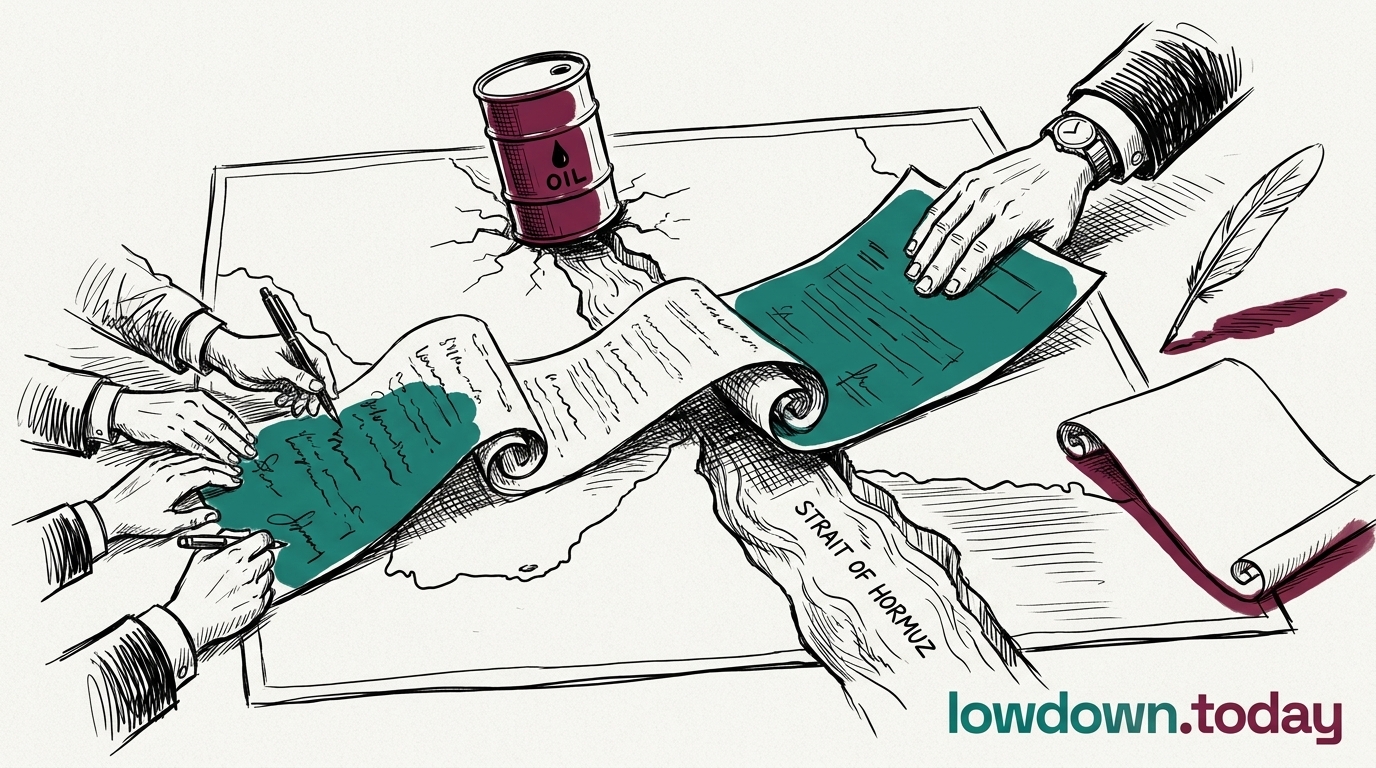
The White House presidential-actions index recorded no new Iran instrument on Monday. That is the 74-day pattern: the signing mechanism is operational (Trump signed a Cuba executive order on 1 May), but Iran-specific signing is a political choice the President has not made. The 1 May War Powers Resolution termination letter argued with same-day OFAC sanctions , the 8 May Truth Social run posted three contradictory positions in a single day , and Senator Lisa Murkowski cited the same paper-versus-post mismatch when she declined to file her AUMF on 9 May . Monday extended the pattern rather than breaking it.

The three options exist as Axios briefings, with no signed paper anchoring them. A strike directive issued on Trump's Friday return would land cold, without the documented chain of decision that prior US military operations carried. Six consecutive days have run with zero new signed Iran instruments while the President's verbal output has reached its loudest pitch of the war.

Deep Analysis

In plain English

Trump made a series of aggressive statements about Iran on 11 May. He said peace talks were barely alive, called Iran's negotiating proposal worthless, and suggested Iran would ultimately hand over its nuclear material; the 'nuclear dust' comment. Separately, a news website called Axios reported that US officials are weighing three possible military options: restarting the bombing campaign, sending Special Forces to seize Iran's enriched uranium, or taking control of part of the Strait of Hormuz by force. None of those options had been officially ordered. The gap between Trump's tough words and the absence of any signed orders is something Congress has noticed; Senator Lisa Murkowski has said she will not formally authorise military action until the White House produces a written plan with clear objectives.

Deep Analysis
Root Causes

The 1973 War Powers Resolution created a structural incentive for presidents to avoid paper commitments in conflict. If no executive instrument formally declares a military operation, the 60-day WPR clock never clearly starts. Trump's zero signed instrument track for 74 days exploits this ambiguity: verbal escalation signals intent without triggering the legal clock or requiring congressional authorisation.

The nuclear dust claim; that Iran would give the US the enriched uranium; has no verification mechanism. The IAEA has been locked out of Iranian nuclear facilities for eight months . Without IAEA access, any uranium surrender is unverifiable, which makes the claim function as a political statement rather than a concrete offer or threat.

Escalation

Trump's verbal escalation on 11 May is consistent with the established verbal-only pattern and does not represent a genuine escalation step without a signed instrument.

The Axios military options leak is directionally significant because it introduces the uranium-seizure and Hormuz ground-takeover concepts into the public record, raising their political cost if either is subsequently abandoned. The ceasefire 'life support' framing raises the baseline for what constitutes a credible deal.

What could happen next?
  • Risk

    Labelling the ceasefire 'on massive life support' publicly raises the cost of any subsequent deal: Trump must now credibly revive a framework he has pronounced near-dead.

    Short term · 0.8
  • Precedent

    Leaking three military options via Axios without executive orders demonstrates that public disclosure of option-space can function as a signalling tool that does not require a presidential signature.

    Medium term · 0.7
  • Consequence

    The Special Forces uranium-seizure option; even as a leaked consideration; forces Iran's IRGC to factor physical security of enriched uranium stockpiles into operational planning, regardless of whether the order is ever signed.

    Immediate · 0.65
First Reported In

Update #95 · OFAC opens the Hong Kong door

Al Jazeera· 12 May 2026
Read original
Causes and effects
This Event
Three military options, no signed order
Verbal escalation has reached its loudest pitch of the war while the paper trail stays empty, forcing markets and Congress to price words rather than orders.
Different Perspectives
India (BRICS meeting host, grey-market beneficiary)
New Delhi hosted the BRICS foreign ministers' meeting on 14 May that Araghchi attended under the Minab168 designation, giving India a front-row seat to Iran's diplomatic positioning. India's state refiners have been absorbing discounted Iranian crude through grey-market routing since April; Brent at $109.30 means every barrel sourced outside the formal market generates a structural saving.
Hengaw / Kurdish human rights monitors
Hengaw's daily reports from Iran's Kurdish provinces remain the sole independent cross-check on Iran's judicial activity during the conflict. Two executions across Qom and Karaj Central prisons on 15 May and five Kurdish detentions on 15-16 May indicate the wartime judicial pipeline is operating independently of military tempo.
Pakistan (mediator and bilateral partner)
Islamabad spent its diplomatic capital as the US-Iran MOU carrier to secure LNG passage for two Qatari vessels through a bilateral Pakistan-Iran agreement, spending its mediation credit for direct economic gain. China's public endorsement of Pakistan's mediatory role on 13 May is the structural reward.
China and BRICS bloc
Beijing endorsed Pakistan's mediatory role on 13 May, one day after the BRICS foreign ministers' meeting in New Delhi. Chinese state banks are processing PGSA yuan toll payments; China has not commented on its vessels' continued Hormuz passage, but benefits structurally from a non-dollar toll system it did not design.
Iraq (bilateral passage partner)
Baghdad negotiated a 2-million-barrel VLCC transit without paying PGSA yuan tolls, offering political alignment in lieu of cash. Iraq's position inside Iran's adjacent bloc makes it the natural first bilateral partner and a template for how Tehran structures passage deals with states that cannot afford Western coalition membership.
Bahrain and Qatar (Gulf signatories)
Both signed the Western coalition paper while hosting US Fifth Fleet and CENTCOM's Al Udeid base, respectively. Qatar occupies the sharpest contradiction: it is on coalition paper while simultaneously receiving LNG passage through the bilateral Iran-Pakistan track, a position Doha has tacitly accepted from both sides.