Skip to content
You can now search across every topic, entity and event.What's new
Iran Conflict 2026
11MAY

Ten states join US-run Pax Silica

3 min read
14:01UTC

Ten countries joined Pax Silica in June, the US State Department chip alliance the EU entered with a $40bn American-chip commitment; the new members include the Netherlands and Germany.

ConflictDeveloping
Key takeaway

Ten more states, including the Netherlands and Germany, joined the US-run Pax Silica chip alliance in June.

Ten more countries joined Pax Silica in June, the chip-coordination alliance run from the US State Department that the EU signed up to with a $40bn American-chip commitment . The new members include the Netherlands and Germany, home respectively to ASML and the TSMC-led Dresden fab, alongside Greece, several Latin American states and Estonia as an observer.

Pax Silica exists to harmonise export-control policy across allied chip producers around a US-set agenda. The June intake brings into one Washington-run framework the two European states that matter most to advanced chipmaking: the Netherlands, which hosts the only maker of leading-edge lithography tools, and Germany, where Europe's flagship new fab is rising. Their semiconductor policy now sits inside an American coordination structure at the very moment Brussels is trying to pin down what European sovereignty means.

The arrangement reads oddly beside the US bill targeting ASML: a country can be a Pax Silica partner and a target of American chip legislation in the same week. Members are already uneasy about how much discretion they have handed Washington, a worry that sharpens once the same alliance reaches into the EU's own compute funding.

Deep Analysis

In plain English

Pax Silica is a club of countries organised by the US State Department to coordinate policy on computer chips, especially on which countries can buy the most advanced chips and which ones are blocked. Think of it as a trade alliance specifically about semiconductors. The EU joined in June as part of a deal that committed Europe to buying at least $40bn worth of American chips. Ten more individual countries joined in the same month, including the Netherlands, which is home to ASML, and Germany, which is building a major new chip factory with Taiwan's TSMC. The awkward part is that both countries joined this alliance at exactly the time the US is advancing a bill that would override the Netherlands' own right to decide what ASML can sell to China.

What could happen next?
  • Consequence

    Germany and the Netherlands' Pax Silica membership creates a political obligation to support US chip-supply policy that directly conflicts with their stated objection to the MATCH Act's override of Dutch export licensing authority.

    Short term · Assessed
  • Risk

    The $40bn American-chip commitment locks EU procurement toward US AI accelerator suppliers for the period in which EU-designed alternatives from ESMC or other European fabs are not yet at volume.

    Medium term · Reported
  • Precedent

    A US-convened chip alliance with purchase commitments and a Cooperation Agreement carve-out into EU compute funding establishes a template for technology blocs that bypass WTO procurement neutrality without treaty obligations.

    Long term · Reported
First Reported In

Update #10 · Digital euro to trilogue; Senate bars CBDC

Electronics Weekly· 30 Jun 2026
Read original
Different Perspectives
Oil market and P&I insurers
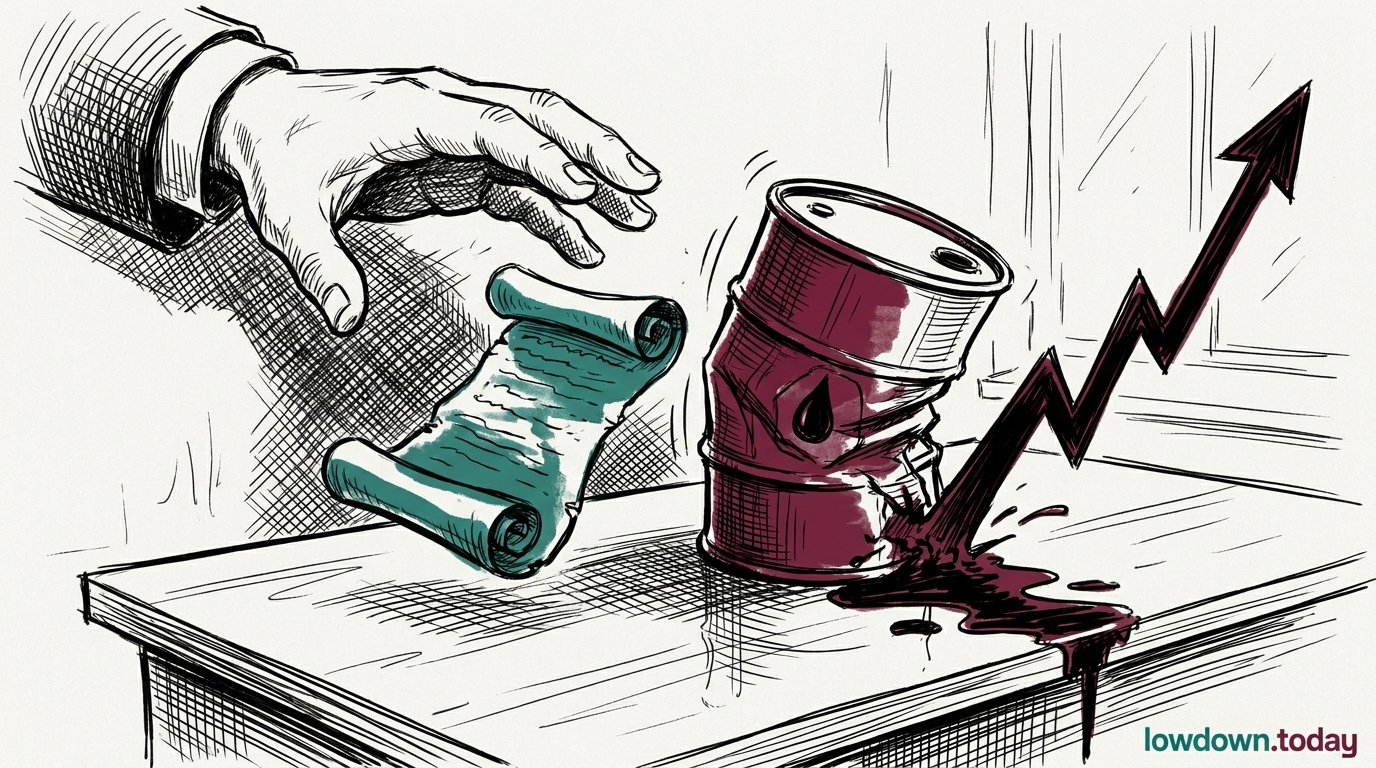
Brent cleared $87 intraday only once CENTCOM's blockade became physical rather than declared, even though P&I Clubs had already excluded Hormuz war risk a week earlier on 7 July: capital hedged ahead of enforcement, but prices moved only after it.
UAE reporting
UAE reporting
UAE reporting placed the Omani tanker deaths at one seafarer against the International Maritime Agency's count of two, the first time in this war that a Gulf state's casualty figures have diverged from an international monitor's.
Jordan
Jordan
Iranian strikes reached Jordan again on 14 July as part of the Gulf-wide retaliation for the Hormuz blockade, extending the conflict's geographic footprint to a state with no direct stake in the strait itself.
Bahrain
Bahrain
Bahrain sounded air-raid sirens on 14 July during Iran's Gulf-wide retaliation, the same day CENTCOM's blockade order and fourth night of strikes pushed the conflict's physical reach into the wider Gulf littoral.
Kuwait
Kuwait
Kuwait intercepted Iranian missiles and drones on 14 July as Tehran's blockade retaliation reached Gulf states beyond Iran's immediate shoreline, confirming Kuwaiti airspace now sits inside Iran's retaliatory envelope.
Oman
Oman
Oman absorbed the war's first tanker casualties in its own waters on 14 July, with two supertankers disabled and seafarers killed, putting the sultanate's shipping lanes directly in the path of the blockade fight for the first time.